Thirty years of Defiance
In the hot summer of February this year, over 400 guests flocked to Defiance Gallery in celebration of its thirtieth anniversary. A line-up of collectors, artists, curators, writers, critics and friends spilled out onto Mary Place, Sydney. This support is testament to the gallery’s outstanding reputation. The founder and director, Campbell Robertson-Swann, was shocked by the sheer numbers in attendance. “It took me right back to the old days,” he said, referring to when he first opened Defiance at 47 Enmore Road, Newtown, back in 1995.
Campbell’s full-strength, unrestrained character exemplifies his artistic idioms when it comes down to doing serious art business. The naming of Defiance matches too, his ideological traits, as Campbell recently told me, “Anyone saying it can’t be done, you just watch.”
Notable artist Ann Thomson, who shows with Defiance, tells me that the gallery has “always been special and different, with Campbell at the helm. He put together an interesting mix of sculptors and painters, made it different.” She adds, “There is no one like Campbell.”
The prototype of Defiance stemmed from Campbell’s Outside In shop that operated in the 1980s at 58 William Street, Paddington. It was one of the most original shops for handcrafted furniture and furnishings in Sydney, selling bush-designed tables, couches, chairs, garden seats and more. The table lamps were “made from burnished sections of telegraph poles and topped with plain black shades,” reported The New York Times in 1988. The venture was so successful that Campbell was invited to exhibit his works and those of others he represented at the Australian Fortnight exhibition staged at the American chain store Neiman Marcus in Dallas, Texas.
Gigs followed in San Francisco and Atlanta. Outside In challenged the status quo of the Americanisation of our society at that time, promoting the permutations and worth of local handcrafted items to an American export market. The shop became a victim of its own success, it could not keep up with the increasing demand and closed. However, its underlying aspirations soon after transitioned into what would become Defiance Gallery, opening at the other end of town.
Campbell’s passion and intelligence for sculpture remained at the forefront. “I want to start to look after sculptors the right way. I’m one of them—and that makes a difference. But I need their help,” he told Sebastian Smee in 1996 in The Sydney Morning Herald. Just a year into the opening of Defiance, Campbell initiated the exhibition Size Is Not Important, 1996, inviting forty-three sculptors to make works of under six inches. It was literally a tight and uncompromising brief.
“The brief was to make a sculpture that had to fit inside a six-inch cube,” says sculptor Paul Hopmeier. “This is much harder than it sounds. There were not strictures on material, weight or subject, but the dimensions were critical. The process of making a sculpture, particularly abstract sculpture, rarely involves being constrained by a precise size,” he contends.
The following year, in 1997, the opening of The Biggest Little Sculpture Show in Town, a landmark exhibition in retrospect, where Campbell broadened the scope. He invited a kaleidoscope of sixty-eight sculptors to make sixty-eight works no more than six inches high, in what was informally referred to as the “miniatures in sculpture” exhibition. Due to its popularity the Miniature exhibition became an annual event. It translated into a collective intellectual treatise on the historical legacies of sculpture. It was the first time Tom Bass had shown in a commercial gallery for more than thirty years. “The miniature show . . . is also a mini history of the evolution of modern sculpture in Sydney, featuring several generations of artists who have taught at the National Art School, passing on their expertise in one unbroken chain,” John McDonald wrote in the Financial Review in 2002. “The story begins with Lyndon Dadswell in the years after World War II, and continues through Tom Bass and Ron Robertson-Swann, to Nigel Harrison, and on to present students such as Abby Parkes.” In 2002 collector Michael Nock purchased the entire exhibition of ninety-six works, it became known as the Lady Ethel Nock Sculpture Collection.
Campbell’s recoding of curatorial discourses using the group thematic model with such exhibitions as Five Easy Pieces, 1999, and Tribal Echo, 2000, presented within the context of a commercial gallery space, were groundbreaking. The collective process “rocketed . . . with a special energy and a competition,” Campbell recounts.
In between Defiance activities Campbell was rallying for deeper public awareness of the values, aesthetics and narratives that sculpture could bring to wider communities locally and internationally. Dallas Moore, general manager of Defiance Gallery, reveals “He was tireless in his effort to take sculpture to the people . . . Campbell and sculpture kind of became one . . . he is a major reason why Sculpture by the Sea got off the ground; I know that because I was national exhibitions coordinator for Sculpture by the Sea at the time.”
Campbell was also a tough contender, with his tactical responses likened to being on “boot camp, where your sculptures were studied like forensic toponomy, especially after he had been living with your work, for close to a month in the gallery,” recalls Nigel Harrison. Defiance’s first solo exhibition was with Nigel Harrison—he and Campbell go a long way back. “There were times he was like a prophet to us, telling sculpture parables of the demise of many a good sculptor, destroyed by the ravages of the art industry, and how to prepare oneself,” Harrison says.
By the early 2000s Defiance had diversified its operations by encapsulating artists of painting, drawing and prints into its stable. “I knew just a sculpture gallery would be too hard and asking too much . . . turning out work once a year, and nothing happening to it . . . not selling, not going anywhere,” said Campbell.
When Mary Place gallery became available for lease in 2018, Campbell “snapped up the chance,” says Moore. “Mary Place has got a long history with Australian art. The space gave the opportunity for us to do two different exhibitions on each level of the gallery.”
Mary Place is grounded within vibrant histories in relation to artists showing there. The list startling, includes Brett Whiteley, John Olsen, Janet Dawson and Peter Powditch. The memories and oral histories have never faded. “I came home,” Campbell recalls.
The Mary Place site set Defiance on a new pathway and was rebranded with a more outward looking approach. Amalgamating commercial with educational activities and charity work that would lengthen and strengthen its support of emerging and established artists has produced astounding results. Defiance’s mission to bring more people into the space has been achieved. The gallery is a thriving and popular place for artists and collectors to congregate, particularly at the In Conversation events. These sessions enable vibrant discussion and debate about all things art to take place in a communal setting.
In refuelling Defiance, Campbell has put together a highly experienced outfit with Dallas Moore as the general manager and Saskia Howard as the gallery manager. This level of professionalisation has enabled Defiance to expand its network and take on a greater public role in promoting its artists. It is using an integrated approach to create new collectors and audiences.
Over eight years, Defiance has forged international exchanges with Messums gallery in London. This arrangement has presented sculptor Laurence Edwards at Defiance and Ann Thomson at Messums. Defiance has also sought local partnerships with public galleries such as the Art Gallery of New South Wales, S.H. Ervin Gallery, Drill Hall Gallery and Orange Regional Gallery which have deepened the credibility of Defiance’s operations throughout the sector.
One of Defiance’s proudest achievements has been its connection with the Australian Wildlife Conservancy (AWC). The AWC’s work is vital in saving fragile ecosystems, buying up land in its efforts to revitalise those environments that support a variety of native habitats. Over the past ten years, Defiance has devised a collaboration in which selected artists (now twenty-five in total) have worked alongside AWC’s scientists, spending seven days together at different sites. In what are referred to as “love-ins,” six women artists are now creating works in response to their Newhaven Wildlife Sanctuary expedition, opening at Defiance in August. To date the project has raised just under $800,000, it is anticipated to reach one million dollars of artwork sales this year.
In the spirit of the thirtieth anniversary, the inaugural Defiance Award will be announced this June, calling for artists unrepresented in NSW to enter. The finalist’s exhibition will take place next February at Defiance. Moore reveals the award consists of a “two-week residency at Giverny Art Residency in Queenstown, New Zealand, supported by the Nock Art Foundation, return airfares to NZ, twelve months mentoring and a solo exhibition with Defiance Gallery.”
As for the future of Defiance, “I’ve always got to have something happening. I can’t help myself,” exclaims Campbell. No doubt its current renaissance period will see it through many decades to come.
This essay was first published in Artist Profile Issue 71, 2025.

Under the auspices of Geelong Gallery’s director, Humphrey Clegg, and co-curated by Marianne Mathieu, former scientific director of the Musée Marmottan Monet, and Claire Durand-Ruel...
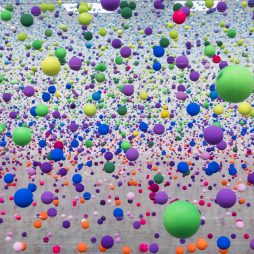
Nike Savvas: Purple Haze presents intimate screen prints and immersive large-scale installation and video work by Savvas from 2005–2026, each evocative of different places and...
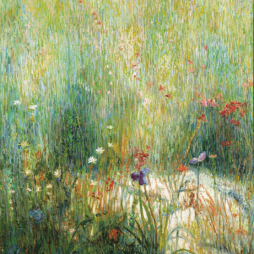
Although physically he is of modest stature, Zofrea has devoted much of his life to grand projects that have been conceived and executed on a...
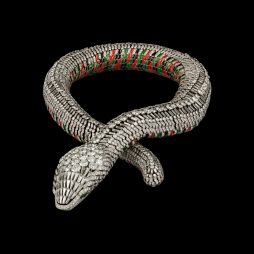
Through a multidisciplinary collaboration between Rotterdam-based curators, architect Paul Cournet of CLOUD and artist-designer Sabine Marcelis of Studio Sabine Marcelis, the exhibition explores the interplay...
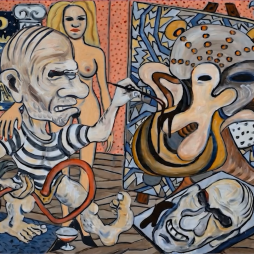
Artificial intelligence will be used by young artists who started using it as kids on their phones. They will see it as a natural extension...

This year’s Biennale arrives under more complex circumstances than most. It is shaped by the profound loss of its curator, Koyo Kouoh (1967–2025), whose exhibition...
No artist creates in isolation. Every painting carries traces of the conversations, places and histories that shaped it, preserving within its surface a particular moment...
The weekend markets at Fairfield Showground have been one of Western Sydney’s great institutions for more than fifty years. Fresh fruit and vegetables, children’s clothes,...
In recent times, Yorgos Lanthimos has shifted toward photography, noting in a Guardian interview, 2026, that he needs respite, saying, “it might be a couple...