REVIEW | Simone Slee: Light Time
Boundaries between interior and exterior are not fixed but permeable within Heide II, where Simone Slee’s 'Light Time' unfolds. Presented at the Heide Museum of Modern Art, the exhibition inhabits the 1967 building conceived by David McGlashan as both a residence and exhibition space. Its raw limestone walls and expansive windows sustain an ongoing dialogue with the surrounding landscape, a condition Slee intensifies by drawing the outside inward until distinctions between inside and out begin to dissolve.
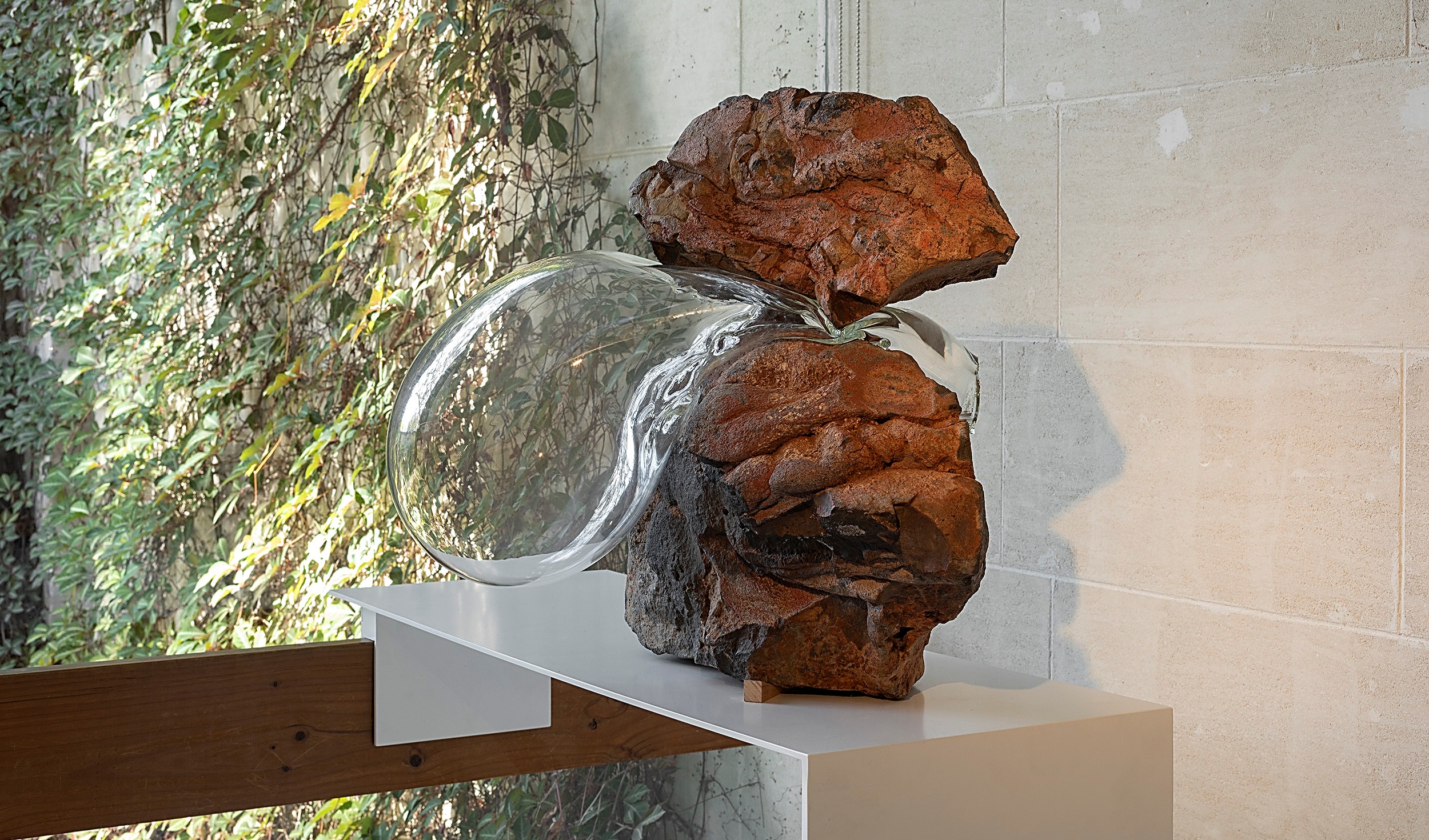
The exhibition unfolds as an ode to Country, grounded in careful engagement with land and the ongoing presence of First Nations custodians. Slee returns, in a sense, to the material of the building itself, limestone sourced from the Berrin Mount Gambier region, embedding her work within the geological and cultural histories that underpin the site.
Curated by Melissa Keys, the exhibition is shaped through light, materiality, and spatial sensitivity. Keys emphasises the dialogue between Slee’s works and Heide II, producing a deeply sensory experience. It recalls an earlier exhibition of Izabella Pluta’s work, Lumina, 2025, at Heide, also curated by Keys, where a similar attentiveness to space, energy, light, and materiality guided the encounter. Here again, there is a clear understanding of how works can inhabit and activate architecture.
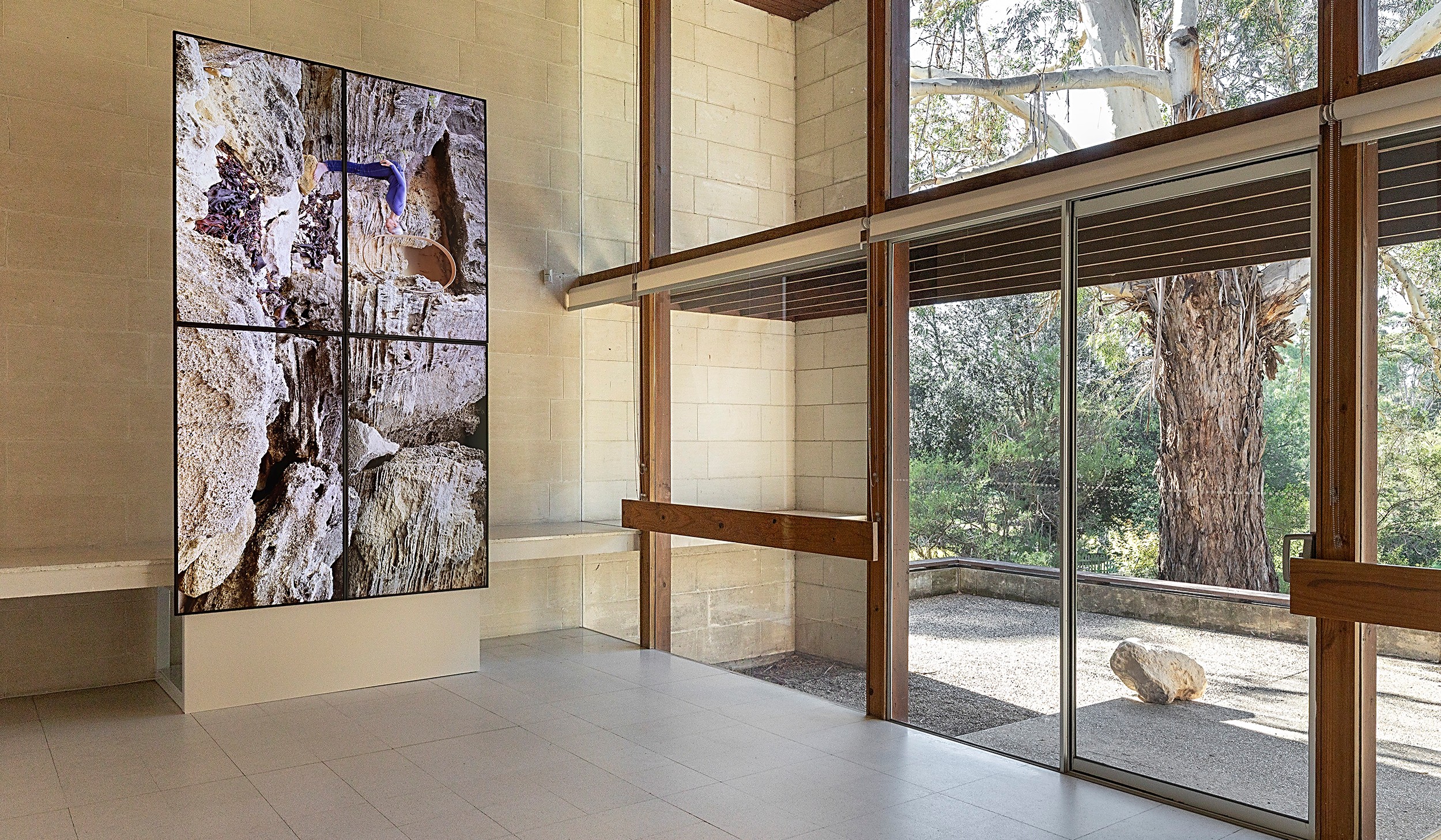
Installation view, Simone Slee, Light Time, 2026, Heide Museum of Modern Art. Photographed by Christian Capurro.
Slee’s practice, spanning sculpture, video, and image, coheres as a total environment rather than a series of distinct works. The installation extends across the building, each element responding to the architecture’s textures and rhythms. The limestone walls and reflective glass create a setting in which the works do not merely occupy space but become part of it. Similarly to Pluta’s Light Ledger, 2025, Slee worked in situ and intentionally within Heide II. Pluta’s installation captured the changing light and shadows over the seasons, bringing the outdoors indoors and creating a work in harmony with both space and Heide II itself.
Across three video works, a mood of stillness and softness prevails. Sound and image evoke an environment that is immersive yet restrained, never overwhelming the sculptures but extending them, carrying the viewer into a heightened awareness of time, movement, and material.
The sculptural works operate within a charged tension between fragility and resistance. Glass, blown at high temperatures, creates resistance and precarious forms from pressure and contact with stone. These combinations feel improbable and at times unstable. Heavy forms appear delicately balanced, as though on the verge of collapse. This vulnerability echoes landscape itself, its erosion, fracture, and persistent forces of change.
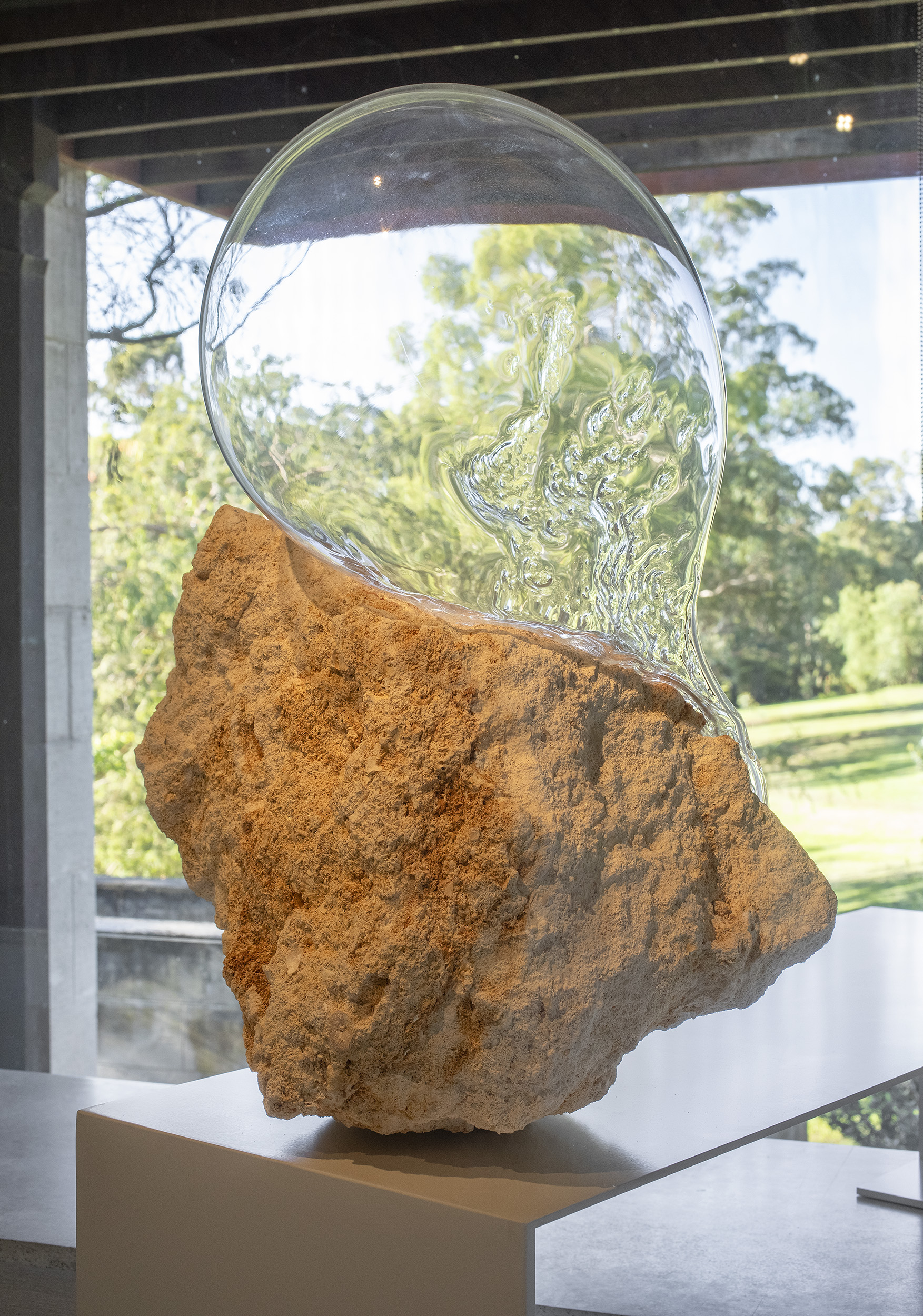
Installation view, Simone Slee, Light Time, 2026, Heide Museum of Modern Art. Photographed by Christian Capurro.
Slee’s attention to material is both methodical and intuitive. Glass elements, produced at the JamFactory, retain traces of their making: bubbles, distortions, and moments where heat and gravity have left their mark. In dialogue with the solidity of limestone, these forms register a push and pull between permanence and transience.
This interplay extends to structural elements including plinths, supports, and architectural interventions, which heighten the sense of suspension and balance. Objects are assembled, held, and tested at their limits, suggesting both endurance and the possibility of imminent failure.
Moving through the gallery, I sensed air and motion as though the atmosphere itself has shifted. Despite the enclosure of the building, the space seems to breathe. This effect is intensified by the video works, which introduce the rhythms of wind, water, and vegetal movement. In one sequence, the artist’s body drifts in tension with the landscape, suspended and oscillating like waves against rock, quietly defying gravity. Unlike the Melbourne Museum’s Forest Gallery, a literal encapsulation of Victoria’s mountain landscape, Slee does something more seamless, blurring interior and exterior and blending with the surroundings. Her practice intentionally and carefully works with materials, land, and culture. She does not displace or appropriate nature, evoking colonial or ethnographic practices. Instead, she works with care, collaboration, and intentionality.
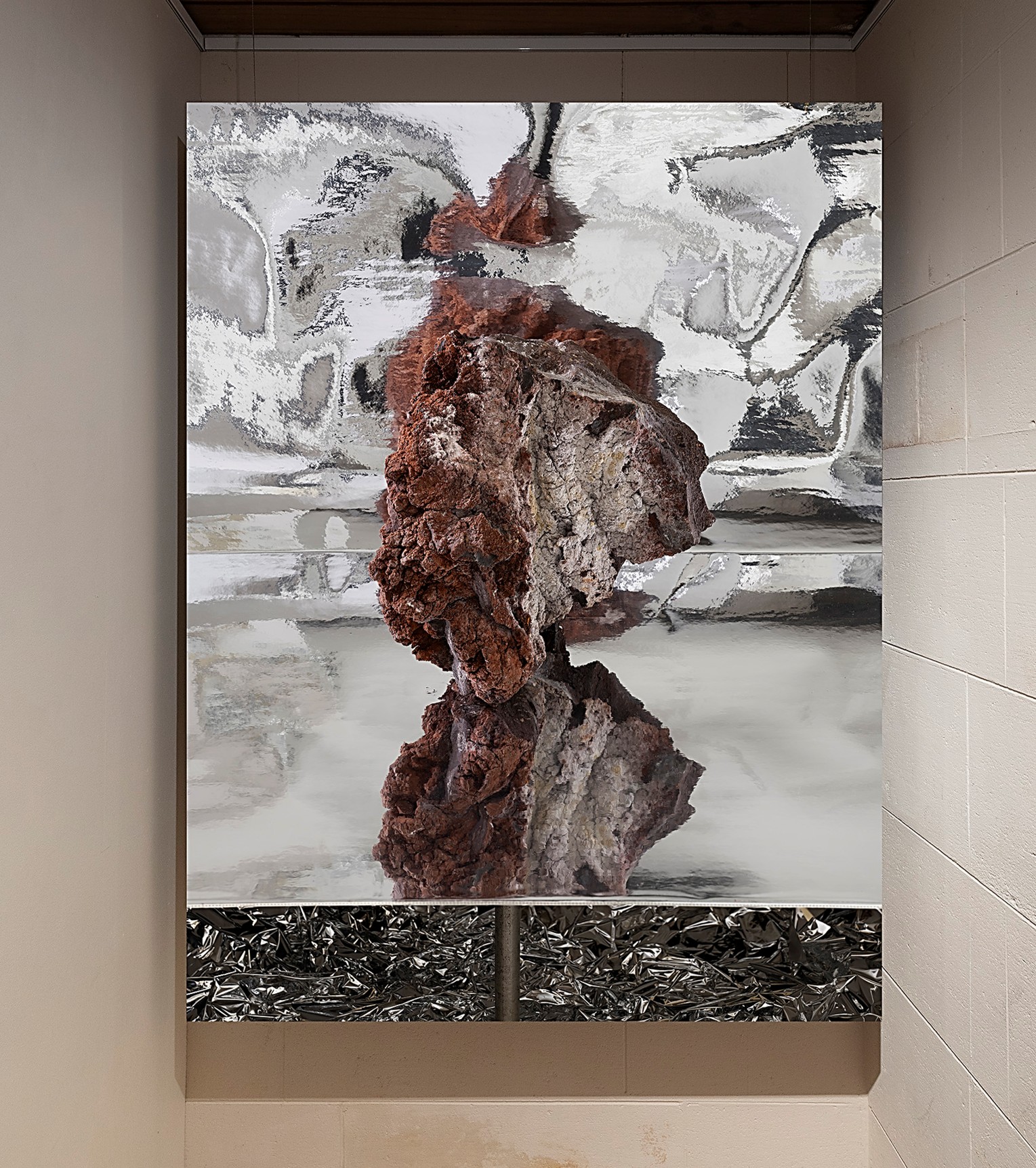
Installation view, Simone Slee, Light Time, 2026, Heide Museum of Modern Art. Photographed by Christian Capurro.
The exhibition is grounded in a framework of respect and collaboration. Slee acknowledges the Boandik Traditional Owners of the land, working with Aunty Michelle Jacquelin-Furr, whose guidance informs the project’s engagement with land and place. This is embedded within the work’s material and conceptual foundations. Her approach is sensitive and non-dominant, foregrounding listening, reciprocity, and consultation, in line with contemporary Australian practices for working responsibly on Country.
Similarly, in the holes in the land, 2015, Judy Watson engages with heritage and land distinct from her own, from Waanyi country, with care and ethical consideration. Watson works with Aboriginal cultural objects from various regions held in the British Museum, repositioning them as layered etchings that acknowledge both their removal from Country and their ongoing cultural and historical significance. From a position of European descent working on unceded land, Simone Slee operates in accordance with Traditional Owners, resisting the histories of removal, theft, and displacement that Watson’s work reveals. In doing so, Slee similarly foregrounds the affective presence of materials in relation to place, memory, and colonial histories.
Slee’s works attune me to the rhythms of light, material, and architecture, creating a sense of both grounding and suspension. The exhibition is deeply aware of its site, its materials, and the presence of Country. What Slee constructs is not just an installation but an environment that recalibrates perception. Landscape is no longer outside, observed at a distance. It is present, active, and felt within the gallery. Stone, glass, light, and movement converge, held together in a state of continuous negotiation.
Exhibition:
Simone Slee: Light Time
28 March – 28 June 2026
Heide Museum of Modern Art, Naarm Melbourne
Images courtesy Heide Museum of Modern Art and Christian Capurro.
Amélie Blanc is an art writer based in Naarm Melbourne.
Edwards was born on Kaurna Yarta in 1998 and raised on Nauo Country in the small seaside community of Tulka, on the Lower Eyre Peninsula....

Under the auspices of Geelong Gallery’s director, Humphrey Clegg, and co-curated by Marianne Mathieu, former scientific director of the Musée Marmottan Monet, and Claire Durand-Ruel...
Nike Savvas: Purple Haze presents intimate screen prints and immersive large-scale installation and video work by Savvas from 2005–2026, each evocative of different places and...
Although physically he is of modest stature, Zofrea has devoted much of his life to grand projects that have been conceived and executed on a...
Through a multidisciplinary collaboration between Rotterdam-based curators, architect Paul Cournet of CLOUD and artist-designer Sabine Marcelis of Studio Sabine Marcelis, the exhibition explores the interplay...
Artificial intelligence will be used by young artists who started using it as kids on their phones. They will see it as a natural extension...

This year’s Biennale arrives under more complex circumstances than most. It is shaped by the profound loss of its curator, Koyo Kouoh (1967–2025), whose exhibition...
No artist creates in isolation. Every painting carries traces of the conversations, places and histories that shaped it, preserving within its surface a particular moment...
The weekend markets at Fairfield Showground have been one of Western Sydney’s great institutions for more than fifty years. Fresh fruit and vegetables, children’s clothes,...