A Difficult Artist
The ancient idea of combining reality with the world that placed greater importance on the soul than the body eventually led Socrates to ask: “What am I?” What is the self? Who is the self, watching all the changes or lack of changes in one’s life? These questions seem to touch an acute chord in MIRRORSCAPE, 2025, at Hobart’s Museum of Old and New Art.

MIRRORSCAPE, by French artist Théo Mercier, is the first presentation of his work in Australia. MIRRORSCAPE is a sculpture delicately and masterly carved from tonnes of compressed Tasmanian sand into debris by four sculptors: Enguerrand David from Belgium, US based Sue McGrew, the Italian Leonardo Ugolini and Australian sculptor Kevin Crawford. The sculpture is installed behind a concave glass wall more than thirteen metres long and over two metres in height and four metres width, a space which previously housed a component of Mona’s library. The sculpture is lit above by an even white light against a concave stainless steel wall that made it appear as a medical specimen in a tray. The light and its reflection from the sculpture filled the exhibiting space like a monitor in a dark room.
Even with the glass barrier the sense of movement in and around the sculpture wasn’t obstructed. The use of a 1:1 scale in the sculpture linked the composed debris with a peculiar elegance, movement and intimacy to the once violently tossed and turned materials and objects now resting silently behind the glass.
Nothing from the debris in MIRRORSCAPE specifically located the objects to one region. The collective age of the debris looked narrow—this century and the last. This collected rubbish implied a borderless and lawless corporate global trade with a devoted carelessness to colonise and destroy nature. The pace of destruction over just two centuries reaffirms the need for urgent global change.
From the Mercier and Mona camps a considered effort was made to explain in detail the process of presenting MIRRORSCAPE. The transparency of the presentation added to the air of intense integrity of Mercier’s work. For instance, I have rarely seen a visual artist acknowledges in all their credits everyone involved in the realisation of their artwork. Most artists would have a viewer believe that they’re the entire artistic energy and presenter behind the making of their work. Mercier’s performance practice as a choreographer is an expected part of the acknowledgement culture, however in conversation with the artist it went beyond a cultural procedure; it was about respecting the contributions of others to realise what his work needed.
Seldom does an artist’s work, in which they have devoted a significant part of their life, connect so explicitly to our times. The apocalyptic vision in MIRRORSCAPE is both describing and prophesying to us the changes in the world and the lack of change in our reality. The depicted force on the sculptured, overturned battered steel vehicles, jagged concrete blocks, severed structural beams, split tree trunks and soil sedimentation appears to encapsulate aspects if not all of the horrifying images past and current, such as the wars in Gaza and Ukraine; the recent record-breaking floods in Birdsville, Queensland, or in Lismore New South Wales; or the past tsunamis in Tōhoku, Japan, and Aceh in northern Sumatra, Indonesia. Mercier may not be telling us how to view our reality or the world, yet it’s difficult to be calm about the future in MIRRORSCAPE as its relativism is seemingly saying that humans like to favour the entombed debris of chaos.
There is seemingly little respite from Mercier’s imagined horror in MIRRORSCAPE’s. It also appears that the artist is measuring our level of desensitisation to violence and our inability as humans to transform or to end the destruction to the world. Here lies the paradox in MIRRORSCAPE; the more humans build the more humans destroy. Mercier has used the ancient material of sand as a metaphor to express sand’s centuries of importance in the building of cites: the concrete, glass etc., and sand in this century is now an endangered material.
Mercer has also used the metaphor of sand as a measure of the fragility of time. MIRRORSCAPE will be exhibited for twelve months. The compacted sand which removes the air between the grains that are held together only by water, will change in colour and over the period of the exhibition each grain of sand will crumble until eventually there is only a heap of sand, probably devoid of any of the sculpted forms.
The beauty in the idea of watching each grain of sand change the appearance of the sculpture successfully removes any weird fetishisation of the horror in MIRRORSCAPE. Mercer’s sensitive, nurturing reality is exposed with profundity. The artist has resisted the depiction of any human and animal remains. Instead, he has relied on the suggested remains of humans and animals expressed via the industrialised and organic objects. The experimentation with the decaying sculpture can speak to the notion of change as an illusion. Over the period of MIRRORSCAPE’s existence it will naturally change, yet even within its transformation the artist’s reality for the sculpture’s existence will remain the same, even when each grain of sand is finally returned to its Tasmanian place of origin, Beauty Point.
There is hope beneath Mercier’s heavy, apocalyptic vision. There is an alternative reality to the cycle of just life and death. MIRRORSCAPE’s alternative idea is a salvation through the healing of nature by walking lightly in the world. “What am I?” is what Mercier’s MIRRORSCAPE is, a challenge to the entire foundations of our reality.
EXHIBITION
MIRRORSCAPE
15 February 2025 – 16 February 2026
Mona, Hobart
This essay was first published in Artist Profile Issue 71, 2025.
Images courtesy of the artist and Museum of Old and New Art, Hobart
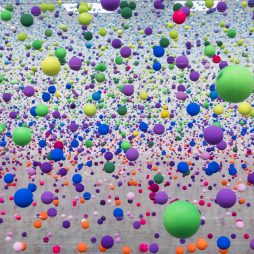
Nike Savvas: Purple Haze presents intimate screen prints and immersive large-scale installation and video work by Savvas from 2005–2026, each evocative of different places and...
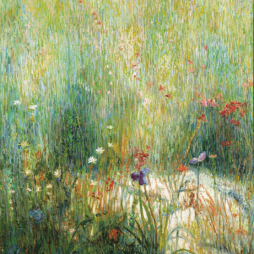
Although physically he is of modest stature, Zofrea has devoted much of his life to grand projects that have been conceived and executed on a...
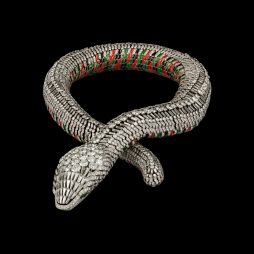
Through a multidisciplinary collaboration between Rotterdam-based curators, architect Paul Cournet of CLOUD and artist-designer Sabine Marcelis of Studio Sabine Marcelis, the exhibition explores the interplay...
Artificial intelligence will be used by young artists who started using it as kids on their phones. They will see it as a natural extension...

This year’s Biennale arrives under more complex circumstances than most. It is shaped by the profound loss of its curator, Koyo Kouoh (1967–2025), whose exhibition...
No artist creates in isolation. Every painting carries traces of the conversations, places and histories that shaped it, preserving within its surface a particular moment...
The weekend markets at Fairfield Showground have been one of Western Sydney’s great institutions for more than fifty years. Fresh fruit and vegetables, children’s clothes,...
In recent times, Yorgos Lanthimos has shifted toward photography, noting in a Guardian interview, 2026, that he needs respite, saying, “it might be a couple...
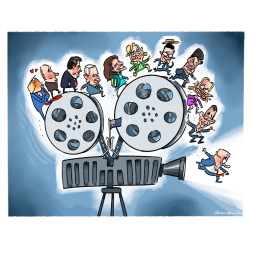
In Australia, political cartoons were altered by several events during the 1960s: the arrival of Les Tanner’s (1927‒2001) instinctual wit at The Bulletin, Bruce Petty’s...