Found and Gathered: Lorraine Connelly-Northey and Rosalie Gascoigne
If art tends not to exist (well) in a vacuum, the same may be said of artists. This is particularly true for the Australian sculptors Rosalie Gascoigne and Lorraine Connelly-Northey, who are the subject of an upcoming, carefully focussed survey at the National Gallery of Victoria (NGV): Found and Gathered.
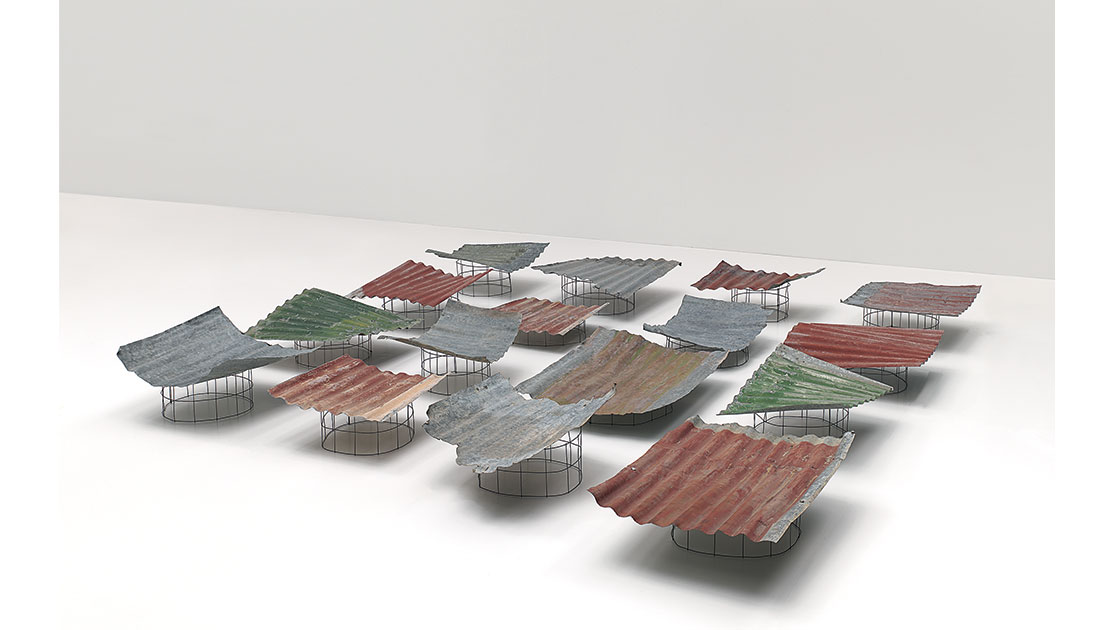
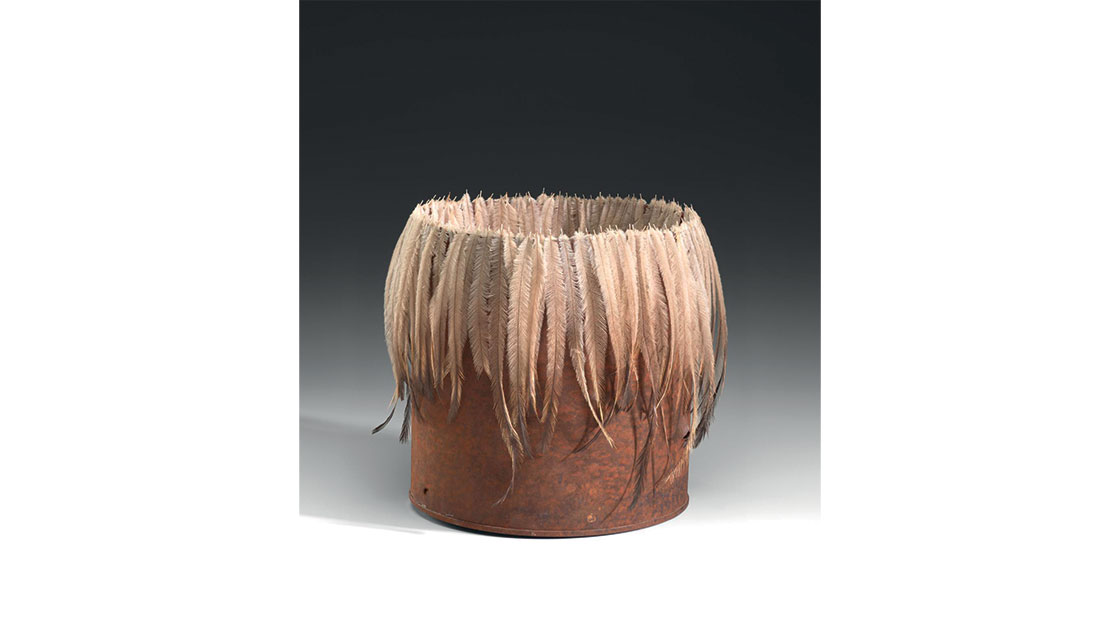
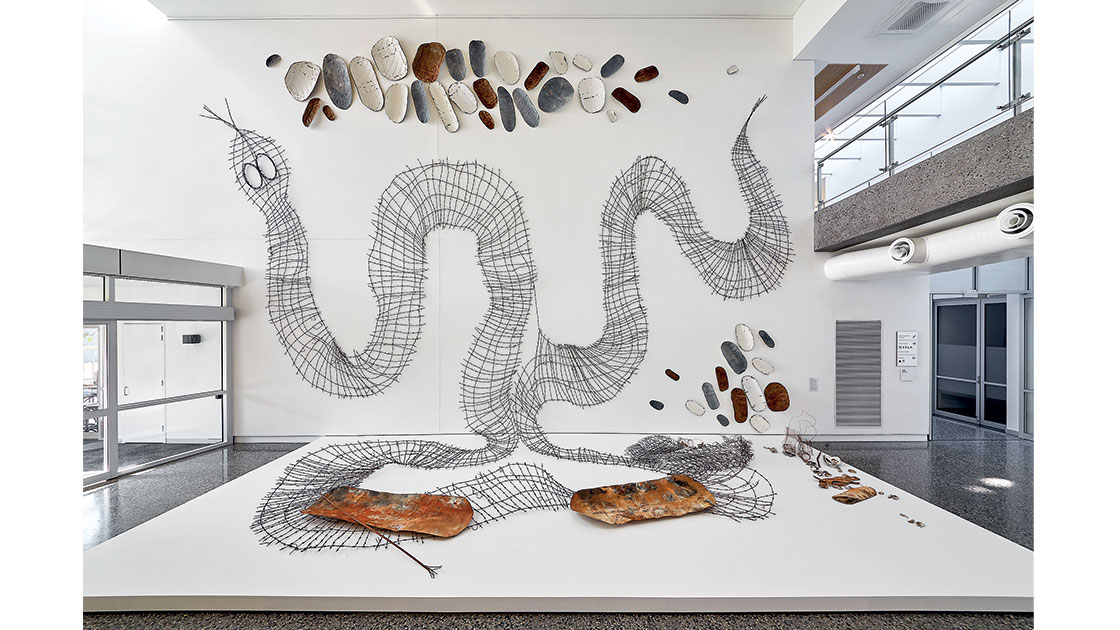
I use the term “survey” loosely, however, as the exhibition is staged far from chronology. Instead, it centres on a series of sets: the diametric themes, subjects, and visual devices employed by both artists in their biographically discrete careers.
Yet, while these sets suggest that, methodologically, a parallel can be drawn, the curators are quick to stress that the exhibition “is not a comparison.” Rather than being a retrospective of both women’s practices, Found and Gathered focuses on a particular use of discarded objects and explores how each practitioner uses these to make works of art, disassociating objects from their original function via a system of obsessive collecting. The exhibition will encompass seventy-five works, organised around aspects of each artist’s life, work, and emotional register: ordered by materiality and process, transformation and surprise.
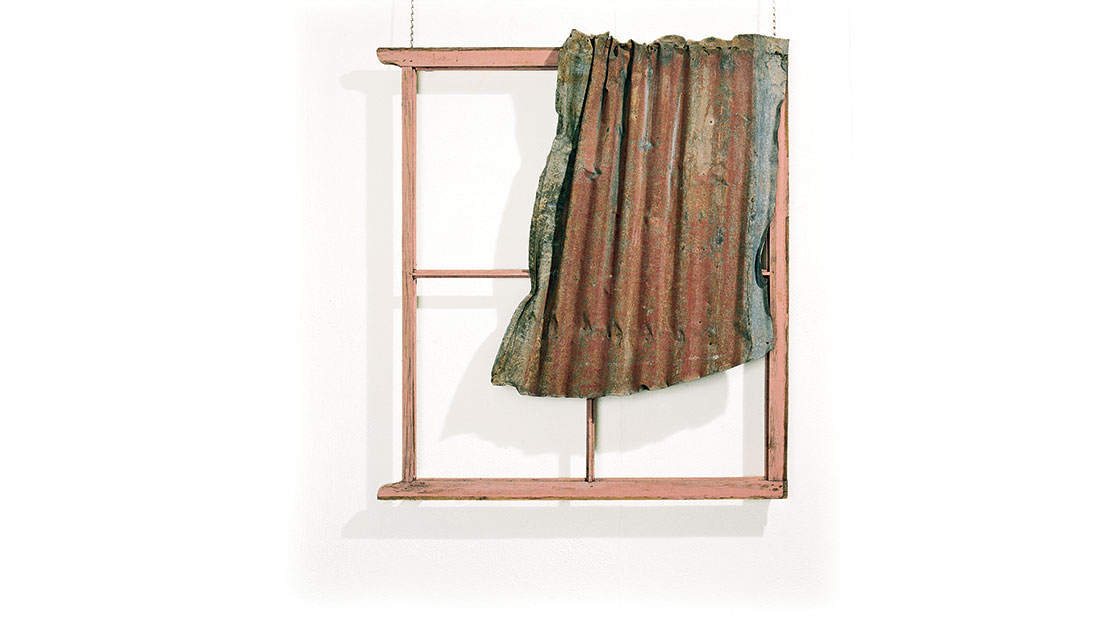
Although they are often compared, Gascoigne and Connelly-Northey are separated conceptually and chronologically. For a start, despite being two Australian women artists working with landscape, they never met. This fact is less surprising when one remembers that Connelly-Northey’s practice only matured towards the later stages of Gascoigne’s life. Gascoigne came to prominence late and rapidly, with her first exhibition in 1974, when she was fifty-seven years old, and it was only eight years later that she represented Australia at the Venice Biennale. Connelly-Northey started exhibiting seriously in the mid-nineties, shortly before Gascoigne passed away in 1999. However, Connelly-Northey has herself commented on a nuanced relationship to the historical comparison with Gascoigne, pointing out in a recent conversation with Jeremy Eccles that “I’ve worked too hard for people to think I borrowed it all from Rosalie. Our use of corrugated iron is the only thing we have in common.” In some ways, then, the fact they never met may have been fortuitous, with both artists driven to probe their subject matter in distinct and complete ways.
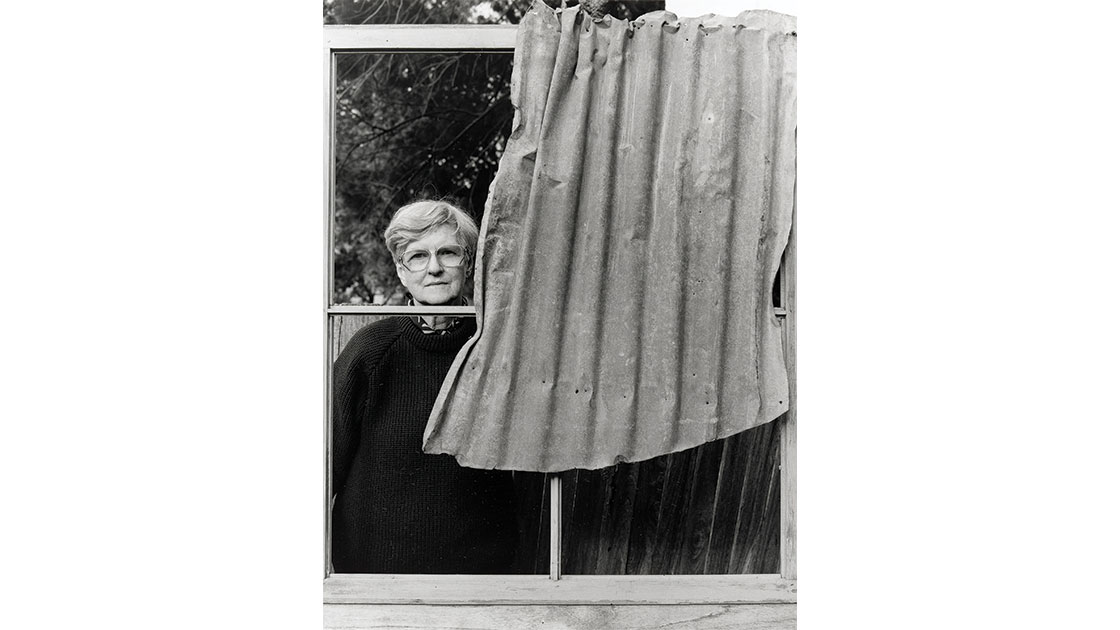
There are also significant biographical differences. Gascoigne was born in New Zealand in 1917, first studying teaching before moving to Australia’s Mount Stromlo region in her early adulthood. The move was prompted by the professional trajectory of her husband, an astronomer placed at the Mount Stromlo Observatory. Located west of Canberra, Stromlo was an otherwise remote regional community, and Gascoigne experienced an unplanned-for degree of isolation. It was there that she forged her unique relationship to the land; in particular, the Southern Tablelands and Lake George regions.
Going on to reside in Canberra, Gascoigne later transposed some of the ideas of Japanese ikebana (the art of arranging flowers and other natural elements) to her practice of bricolage and sculptural assembly. “Gascoine was very inspired by line and form,” comments Rozentals, “Her first assemblages were made out of discarded rural machinery. It was a look at how she could take on found objects.” In doing this, Rozentals explains that “she was a real obsessive in her collecting practice” and “was just completely in awe of the landscape around her, the view of the sky, the open space, all light, all air.”
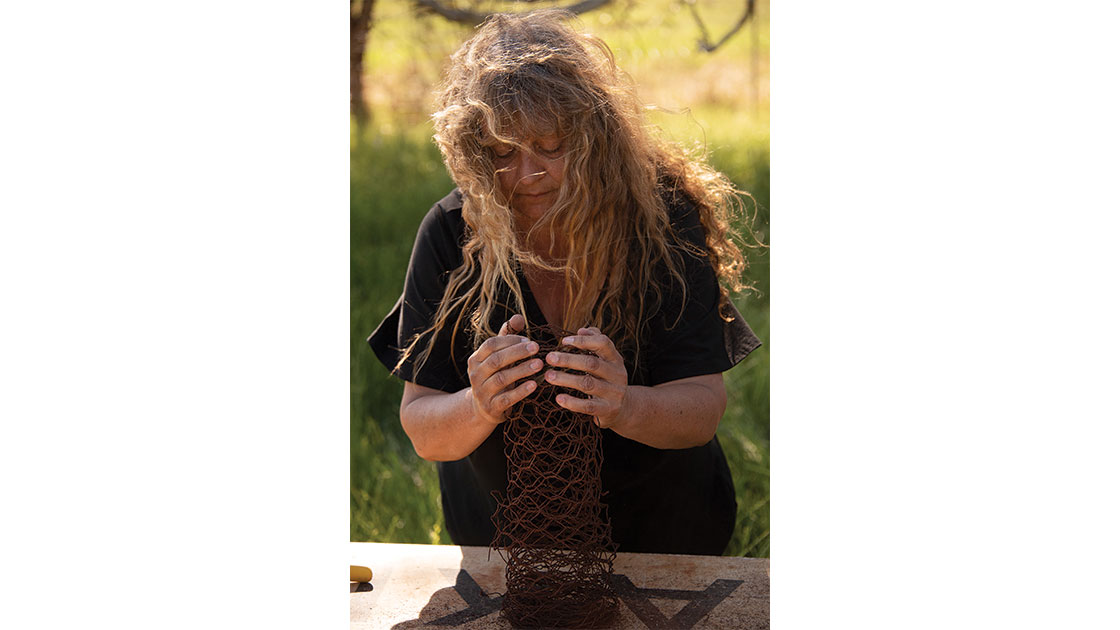
Connelly-Northey was born at Victoria’s Swan Hill, on Wamba Wamba lands. Now in her fifties, her artwork is influenced by her upbringing by an Irish father and Waradgerie (Wiradjuri) mother, and she is known for her investigation into post-colonial settlement and the industrial world, as well as her interpretations of Australian Indigenous objects of ritual and culture.
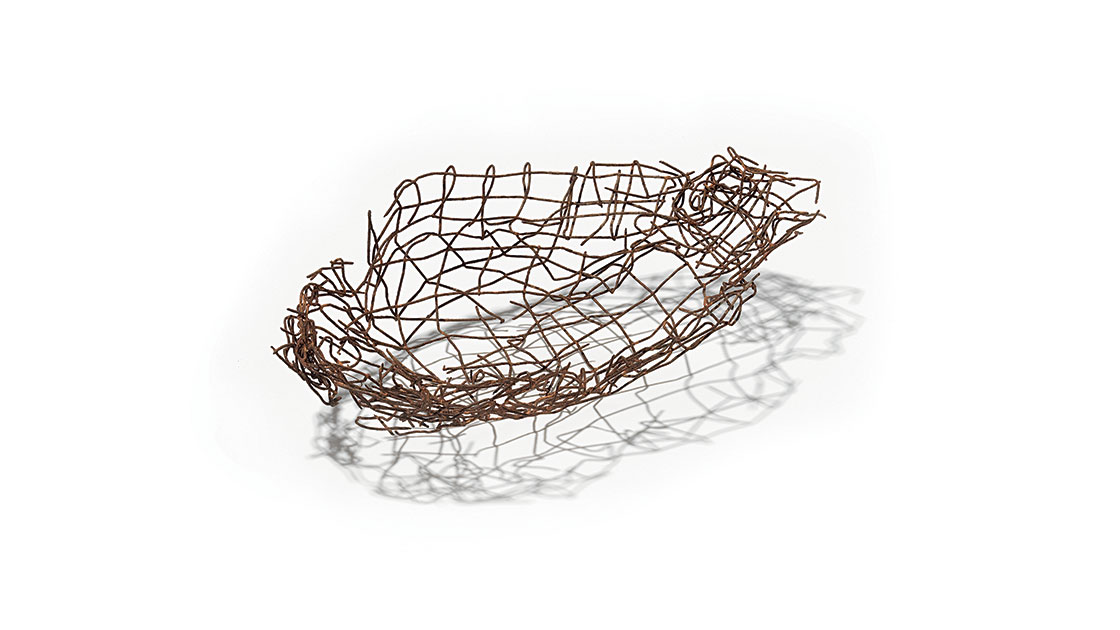
Surrounding built and natural environments are a recurring prompt for Connelly-Northey, who often merges organic and inorganic forms. She investigates the intricate dilemmas and complexities that arise when two cultures meet. Co-curator Myles Russell-Cook explains that the artist “is using her work to explore the connection between her multiple heritages, as well as her experience living on Country. Take her work On Country, 2017; in that installation, Connelly-Northey explores the relationship between the twin cities of Albury and Wodonga, depicting the river a living being, which she imagines as a snake repurposed out of chicken wire and rusted and industrial scrap metal. It’s a dioramic representation of the landscape, but it is also so embedded with references to Aboriginal custodianship of Country.” As a result, Russell-Cook argues, Connelly-Northey proposes “a really different way of being in Australian landscape.”
Beyond these conceptual and chronological differences, however, Russell-Cook points out that “I think that what unites the two artists is the shared materials they use, but not a ‘shared-use of materials.’ They are both fascinated by the artistic possibilities of found objects, but they use those materials to tell contrasting stories.” As Rozentals notes, for Gascoigne, “the objects had to be just right – what she collected, for instance, with shells. There could be no cracks and they had to be of a particular colour and a particular shine; she would collect the feathers of different species of birds from particular locations.” For Russell-Cook, “At the heart of what Connelly-Northey does, is the act of cleaning up Country: going out and collecting up bits of discarded and refuse machinery, and then working with that to create customary forms. She makes a lot of possum-skin cloaks, narrbong-galang, which are a type of string bag, as well as koolimans (coolamons), lap-laps, and other types of cultural objects . . . she repurposes them to create a juxtaposition between cultural memories.”
The NGV has undertaken a few curatorial projects pairing artists (Ai Weiwei and Andy Warhol, George Baldessin and Brett Whiteley, Keith Haring and Jean-Michel Basquiat), yet this will be its first venture drawing together two women. Though a viewing of Gascoigne and Connelley-Northey may reveal more differences than synergies, the visual dynamic between the two is an important and critically underexamined juncture in Australian history.
This essay was originally published in Artist Profile, Issue 57, 2021.
Images courtesy the artists and National Gallery of Victoria, Melbourne.
EXHIBITION
Found and Gathered: Rosalie Gascoigne | Lorraine Connelly-Northey
30 October 2021 – 20 February 2022
National Gallery of Victoria, Melbourne
The first work you encounter in Edge City is a gate, Settlement #8, 2025. Not one to pass through (not anymore), but a threshold nonetheless....
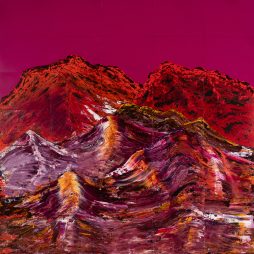
Designed to impress, the number and size of paintings—twenty-nine at nine square metres each and one even bigger—are a spectacle, lifting the exhibition from an...
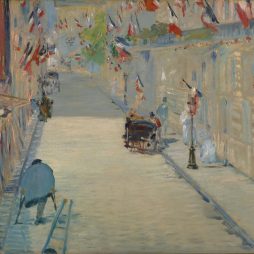
Skilfully assimilating secondary sources throughout Paris in Ruins, Smee at the conclusion of Part One, “Salon of 1869,” writes that Auguste Renoir’s and Claude Monet’s...
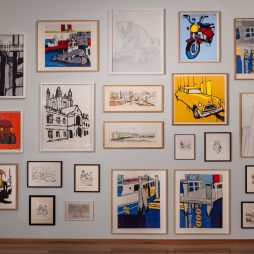
Multidisciplinary artist Shireen Taweel looks skyward, into the night and beyond, with her exhibition the trig point. Drawing on fieldwork in 2025 at the Siding...
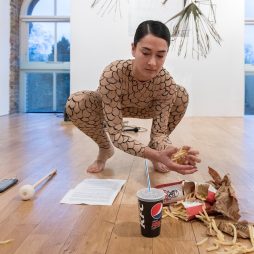
It was back in 2011 that Pip Wallis, senior curator at the Monash University Museum of Art (MUMA), remembers first seeing the work of Balinese...
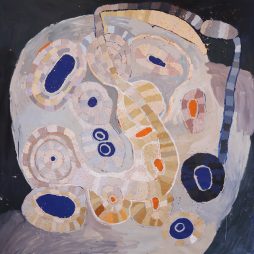
Senior Pitjantjatjara artist, Tuppy Ngintja Goodwin, was born in 1952 near Bumbali Creek in the Northern Territory, close to the border with South Australia; daughter...
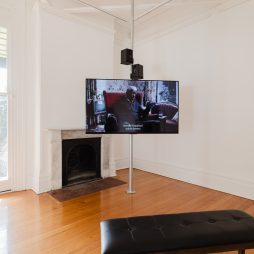
For those of us who seek out unfamiliar voices and see the potential for diverse cultures to create new meanings and memories in a postcolonial...

Show me the beauty of a body contorted by thrall. Then, show me the thrall. Shame is a vast word....
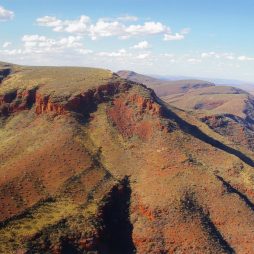
Kon Gouriotis: How did you come to be working with the Yinhawangka community? Pedram Khosronejad: My journey to working with the Yinhawangka community has...