
Nike Savvas | ’17 Seconds’
Presenting her first solo show at Dominik Mersch this October, Nike Savvas continues to push her work in new directions as she explores the process behind remembering in her latest geometric works.

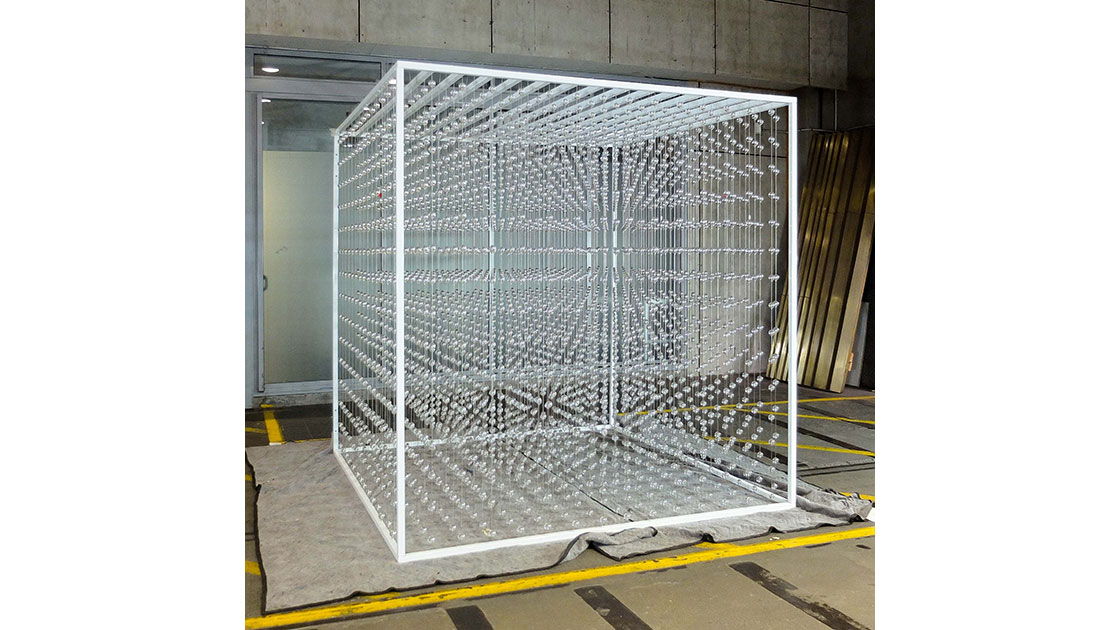
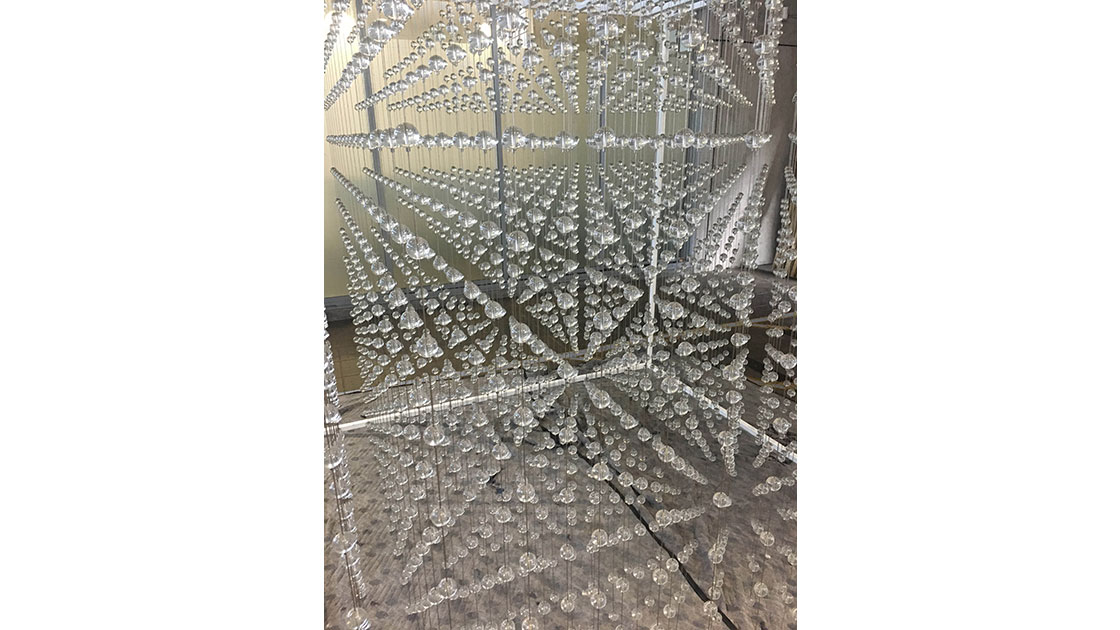
Inspiration for the work came from Savvas reading The Glass Bead Game by Hermann Hesse. A response to oppressive times, and about the longing for a new order amongst the chaos, the book explores the interconnectivity of everything in life. As well as an individual’s search for authenticity.
Exploring the interconnectivity of memory and how it is collated, 17 Seconds draws from an experience by Savvas, who had a thought for 17 seconds, which she then remembered and recorded the thought.
Examining the networks of thought and association in this process, Savvas explains, “The process of remembering leads to a scenario of association perhaps best described as a perceptual collaging of fragments from memory. In this, not all information is recalled and often some parts remain omitted. This is drawn from a notion of chance – where a work results from the conflation of ones imagination, chance thoughts and memory. The process is left open, is often automatic and pre-empts the creation of new work and new meanings. The work in this show continues my interest in mental imaging, perceptual phenomena and the creative process”.
An exhibition that developed since her residency in Paris earlier this year, it showcases new works using different colour palettes, media and formats. The centrepiece is a freestanding geometric large-scale installation. As intriguing as it’s patterns are entrancing, ’17 Seconds’ promises to be both visually arresting and mentally engaging – and longer than 17 seconds we hope.
EXHIBITION
Nike Savvas | ’17 Seconds’
6 October – 29 October
Dominik Mersch Gallery
Courtesy the artist and Dominik Mersch Gallery, Sydney.

Edwards was born on Kaurna Yarta in 1998 and raised on Nauo Country in the small seaside community of Tulka, on the Lower Eyre Peninsula....
Under the auspices of Geelong Gallery’s director, Humphrey Clegg, and co-curated by Marianne Mathieu, former scientific director of the Musée Marmottan Monet, and Claire Durand-Ruel...
Nike Savvas: Purple Haze presents intimate screen prints and immersive large-scale installation and video work by Savvas from 2005–2026, each evocative of different places and...
Although physically he is of modest stature, Zofrea has devoted much of his life to grand projects that have been conceived and executed on a...
Through a multidisciplinary collaboration between Rotterdam-based curators, architect Paul Cournet of CLOUD and artist-designer Sabine Marcelis of Studio Sabine Marcelis, the exhibition explores the interplay...
Artificial intelligence will be used by young artists who started using it as kids on their phones. They will see it as a natural extension...
This year’s Biennale arrives under more complex circumstances than most. It is shaped by the profound loss of its curator, Koyo Kouoh (1967–2025), whose exhibition...
No artist creates in isolation. Every painting carries traces of the conversations, places and histories that shaped it, preserving within its surface a particular moment...
The weekend markets at Fairfield Showground have been one of Western Sydney’s great institutions for more than fifty years. Fresh fruit and vegetables, children’s clothes,...