INTERVIEW | Framing Yinhawangka Country: Heal Country, Heal People
The Yinhawangka community is inviting photographers to submit an Expression of Interest for an artistic photography commission documenting the Living Cultures Family Camp Program across 2026 and 2027. Kon Gouriotis speaks with Professor Pedram Khosronejad about the EOI, Framing Yinhawangka Country: Heal Country, Heal People and what brought him to the Yinhawangka Country.
Kon Gouriotis: How did you come to be working with the Yinhawangka community?
Pedram Khosronejad: My journey to working with the Yinhawangka community has been shaped by more than two decades of anthropological research, curatorial practice, and sustained engagement with communities whose cultural knowledge is deeply embedded in landscape, memory, and lived experience.
Before relocating to Australia, I spent many years undertaking ethnographic fieldwork among the Bakhtiyari nomadic tribes of the Zagros Mountains in Iran, one of the largest pastoral nomadic societies in the Middle East. Living alongside Bakhtiyari families during their seasonal migrations, I developed a long-term research practice grounded in participant observation and collaborative knowledge-making. My work explored a range of cultural traditions and epistemologies, including gynology and women’s knowledge systems, songlines and migratory routes, women’s lamentations and mourning practices, oral histories, sacred landscapes, and the intricate relationships between memory, place, mobility, and identity. These experiences profoundly shaped my understanding of cultural continuity, teaching me the importance of listening deeply, building trust, and approaching knowledge as something held collectively and transmitted through generations.
Following my move to Australia, I served as Curator of Persian Arts at the Powerhouse Museum and later as Curator of Exhibitions and Collections at Grafton Regional Gallery. These roles expanded my engagement with collections, exhibitions, and cultural heritage, reinforcing my commitment to community-led approaches to collections management, the curation of both tangible and intangible heritage, and the ethical stewardship of cultural knowledge. I was drawn to the opportunity to join the Yinhawangka Aboriginal Corporation as Senior Anthropologist and Manager of the Living Cultures Program because it resonated strongly with my long-standing commitment to supporting communities in documenting, protecting, and sharing their cultural heritage according to their own cultural protocols and aspirations. In many respects, my earlier work with the Bakhtiyari—particularly around oral traditions, sacred geographies, memory, and intergenerational knowledge transmission—provided an intellectual and methodological foundation for engaging with Indigenous cultural heritage in Australia.
Working with the Yinhawangka community brings together the various strands of my career as an anthropologist, curator, and researcher. At its heart, the role is about learning as much as contributing, listening to Elders, working alongside knowledge holders, and supporting community-led initiatives that strengthen cultural continuity and connection to Country. It is both a professional privilege and a profound responsibility, grounded in a lifelong commitment to collaborative anthropology, cultural heritage, and the recognition of community knowledge as a living, dynamic force that shapes both present and future generations.
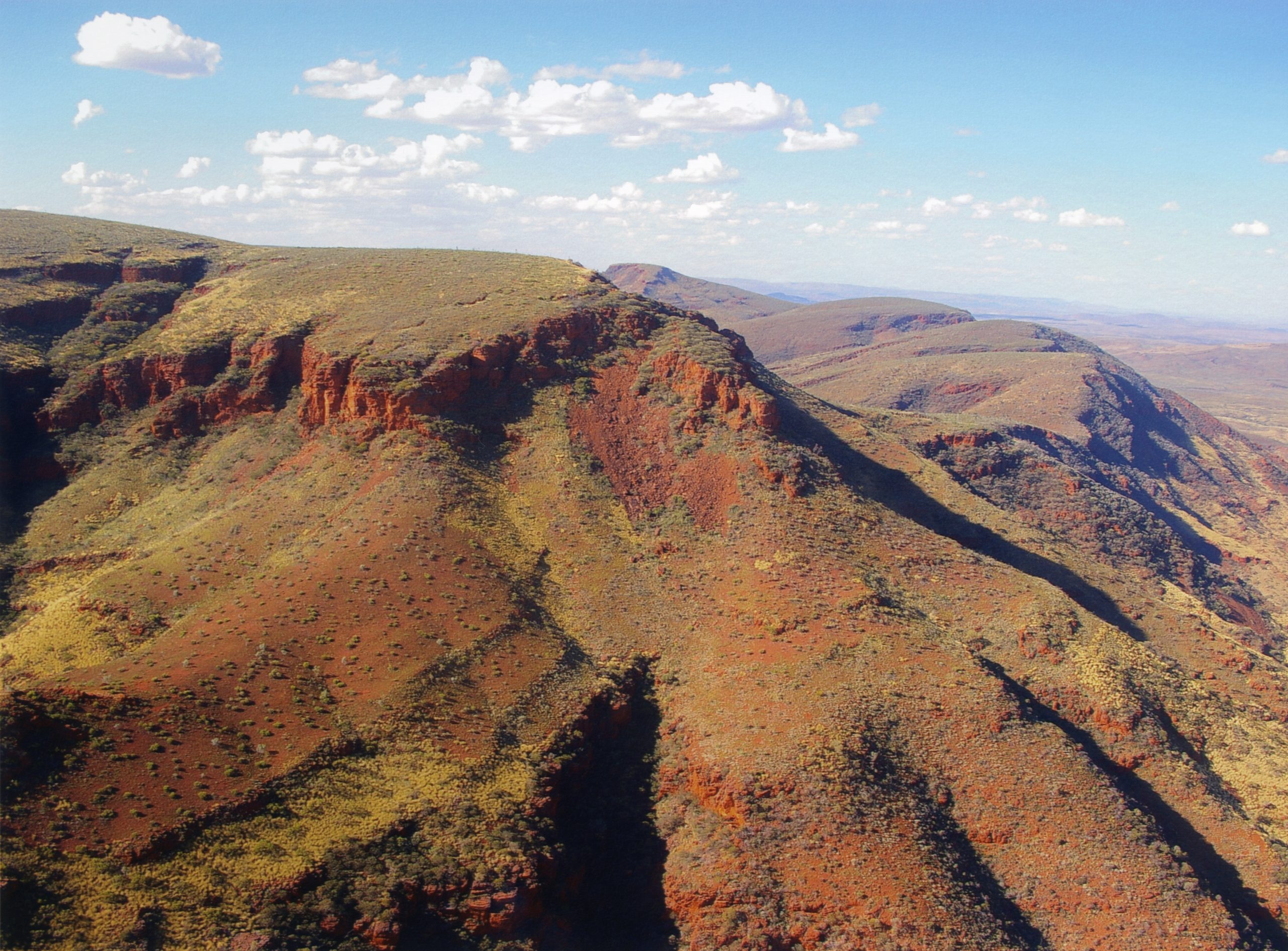
Yinhawangka Country, 2026, digital file. Photo of Yinhawangka Aboriginal Corporation.
KG: Thank you Pedram. So, what is Framing Yinhawangka Country: Heal Country, Heal People really about?
PK: At its core, this project is about relationships — the relationship between Yinhawangka people and their Country, between Elders and younger generations, and between cultural memory and the future. We are working with Yinhawangka families to create a living photographic archive that documents cultural continuity, lived experience, and the ongoing presence of Yinhawangka knowledge on Country. It is not simply a photography project; it is a cultural healing initiative grounded in Indigenous sovereignty and intergenerational transmission.
KG: “Heal Country, Heal People.” Why was this chosen as the framework for the project?
PK: Because within many First Nations knowledge systems, Country is alive. Country carries memory, identity, law, spirituality, and wellbeing. When connections to Country are disrupted through colonisation, mining, displacement, or social pressures, communities also experience forms of cultural and emotional fragmentation. Healing Country therefore also becomes a process of Healing People. This project recognises that cultural practice, storytelling, being on Country, and reconnecting families with ancestral places are deeply restorative acts.
KG: How does photography function within that process?
PK: Historically, photography has often been used to document Aboriginal communities from an outside gaze. We wanted to rethink that entirely. In this project, photography becomes relational and collaborative. Artists are invited to work slowly, respectfully, and ethically alongside families. The camera is not there to extract images, but to witness moments of cultural continuity, care, knowledge-sharing, and resilience. These photographs become part of a community-controlled archive for future generations.
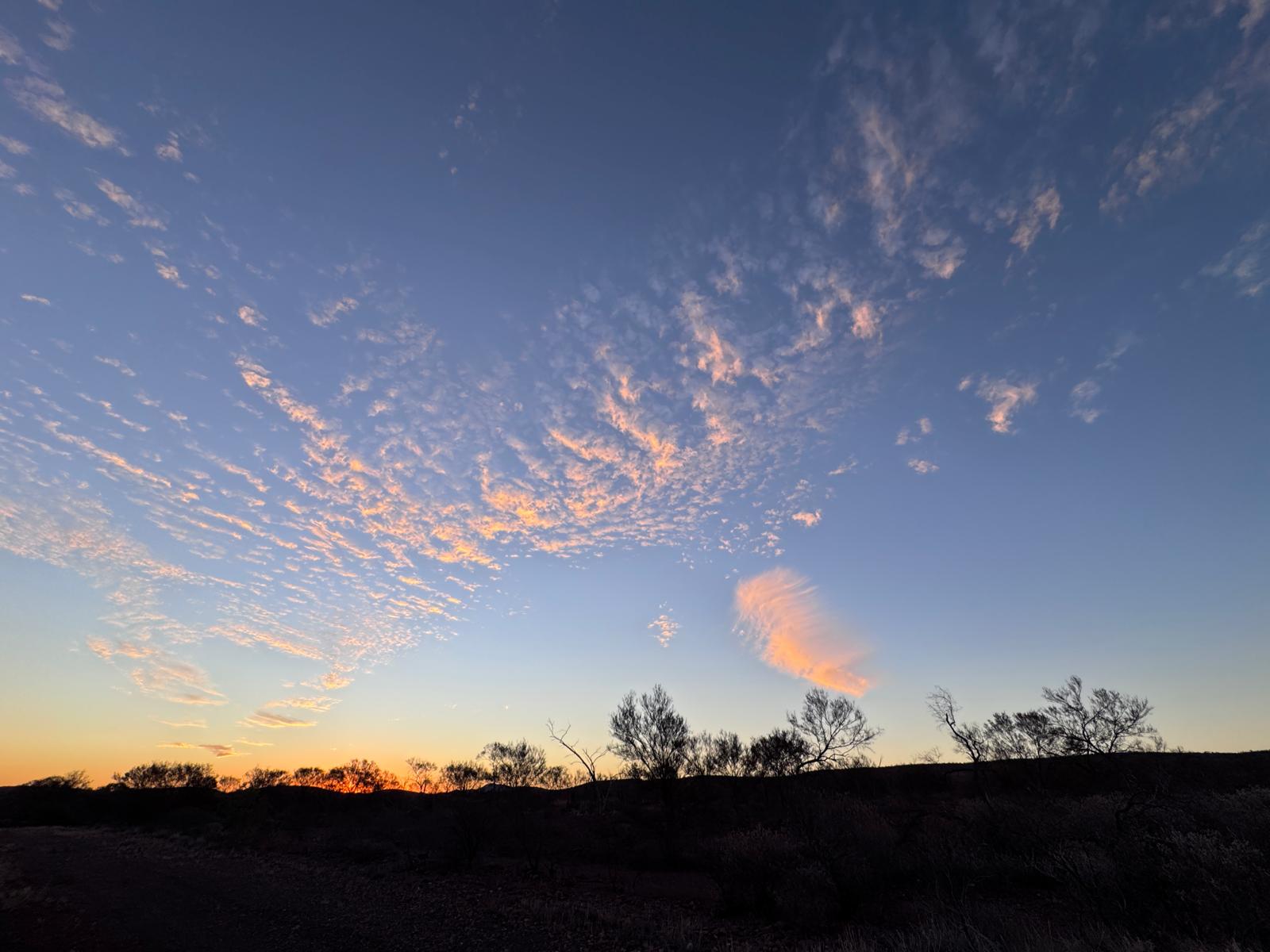
Yinhawangka Country, 2026, digital file, photographed by Pedram Khosronejad
KG: So, this is also about cultural preservation?
PK: Absolutely. But I would say it is more than preservation. Preservation can sometimes imply something static or disappearing. Yinhawangka culture is alive, dynamic, and evolving. The project is about sustaining and strengthening living culture. Through the family camps, Elders share stories, language, songlines, ecological knowledge, and cultural practices with younger people directly on Country. The photographic documentation becomes part of that living process.
KG: The project also includes young community assistants working with photographers. Why was that important?
PK: Capacity-building is essential. We wanted younger Yinhawangka community members to gain experience in photography, documentation, and cultural archiving. This creates opportunities for future community-led storytelling and ensures that cultural documentation does not remain dependent on outside institutions or individuals. It is about long-term cultural sovereignty.
KG: What do you hope audiences will experience when they eventually see the future book and exhibition?
PK: I hope audiences encounter something deeply human and deeply grounded in Country. These works are not simply visual documents; they are traces of relationships, histories, and responsibilities. I hope people understand that Yinhawangka culture is not something belonging only to the past, but a living presence shaping contemporary life and future generations. Ultimately, the exhibition asks audiences to think differently about land, memory, healing, and the ethical responsibilities we all carry toward culture and Country.
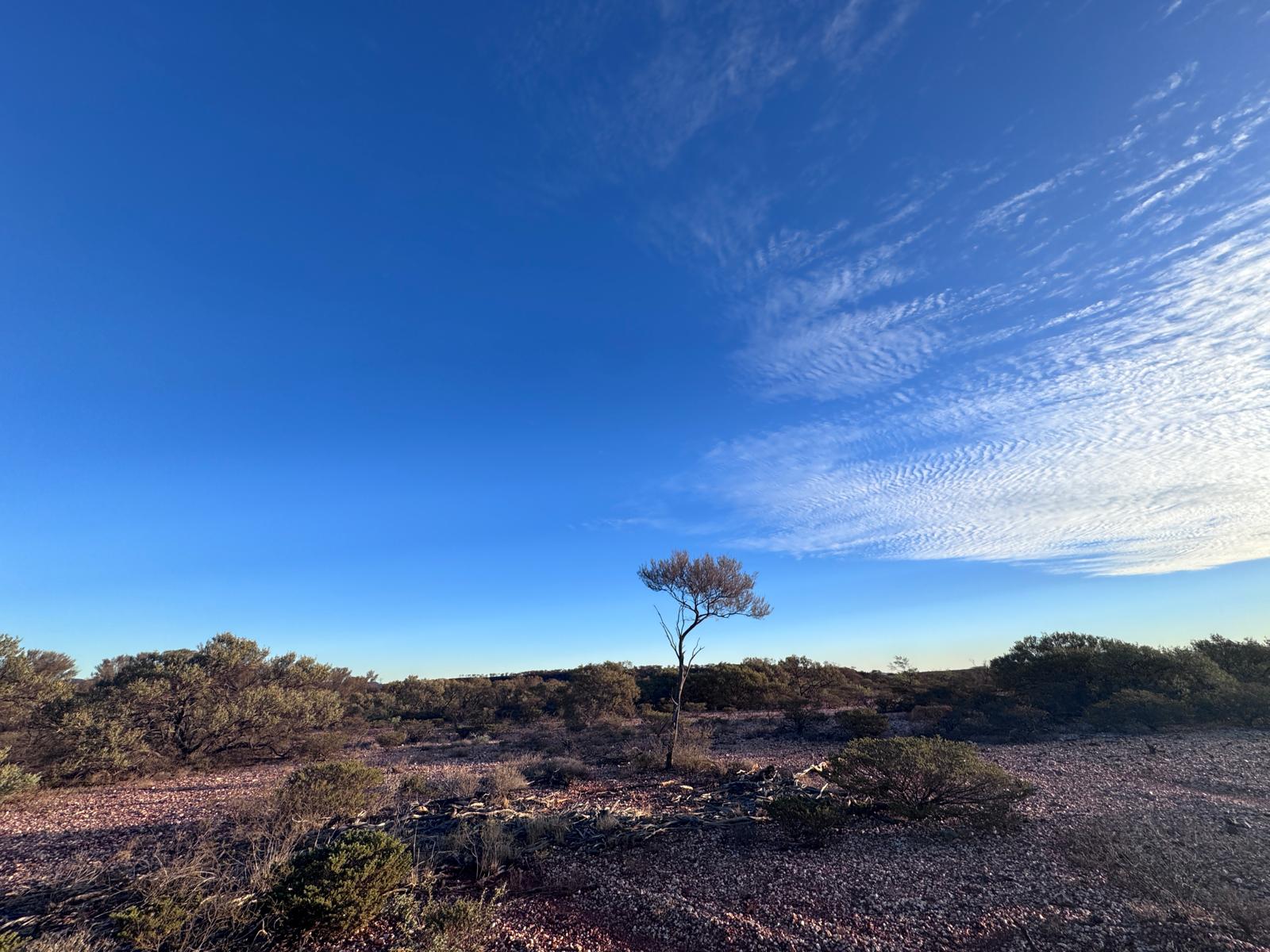
Yinhawangka Country, 2026, digital file, photographed by Pedram Khosronejad
Expressions of Interest: click on the link below
https://www.yinhawangka.com.au/framing-yinhawangka-country-artistic-photography-commission-now-open/

Under the auspices of Geelong Gallery’s director, Humphrey Clegg, and co-curated by Marianne Mathieu, former scientific director of the Musée Marmottan Monet, and Claire Durand-Ruel...
Nike Savvas: Purple Haze presents intimate screen prints and immersive large-scale installation and video work by Savvas from 2005–2026, each evocative of different places and...
Although physically he is of modest stature, Zofrea has devoted much of his life to grand projects that have been conceived and executed on a...
Through a multidisciplinary collaboration between Rotterdam-based curators, architect Paul Cournet of CLOUD and artist-designer Sabine Marcelis of Studio Sabine Marcelis, the exhibition explores the interplay...
Artificial intelligence will be used by young artists who started using it as kids on their phones. They will see it as a natural extension...

This year’s Biennale arrives under more complex circumstances than most. It is shaped by the profound loss of its curator, Koyo Kouoh (1967–2025), whose exhibition...
No artist creates in isolation. Every painting carries traces of the conversations, places and histories that shaped it, preserving within its surface a particular moment...
The weekend markets at Fairfield Showground have been one of Western Sydney’s great institutions for more than fifty years. Fresh fruit and vegetables, children’s clothes,...
In recent times, Yorgos Lanthimos has shifted toward photography, noting in a Guardian interview, 2026, that he needs respite, saying, “it might be a couple...