ESSAY | Keeper of Country
In Antara, a vast and culturally powerful landscape on the Anangu Pitjantjatjara Yankunytjatjara (APY) Lands of South Australia, senior artist, political advocate and cultural leader Tuppy Ngintja Goodwin paints interconnected fields of story, memory and ceremony tied to the Maku (witchetty grub) Tjukurpa.
Senior Pitjantjatjara artist, Tuppy Ngintja Goodwin, was born in 1952 near Bumbali Creek in the Northern Territory, close to the border with South Australia; daughter to Nguyarangu, her father whose Country is near Docker River in the Northern Territory, and her mother, Emily Nyanyanta whose Country is Wintutjuru, west of Fregon (now Kaltjiti on APY Lands). As a young child Ngintja Goodwin moved with her family to the community of Mimili in South Australia. At the time, Mimili was Everard Park, a cattle station where the artist grew up working for rations and which, following sustained advocacy, became the first property to be returned to Traditional Owners prior to the Anangu Pitjantjatjara Yankunytjatjara Land Rights Act 1981. During her formative years, it was here that Country, tradition, and ceremony were to have a lasting imprint on Ngintja Goodwin, sparking her lifelong commitment to passing on cultural knowledge to the next generation of Anangu. Nowadays, Mimili Maku Arts is an Aboriginal-owned contemporary art studio and cultural institution. Ngintja Goodwin is its chairperson.
With her first husband Reggie Goodwin, she raised three children, David, Maxine and Neville, and in the years that followed she built a life of meaningful leadership within her community. For three decades, Ngintja Goodwin taught at the Mimili Anangu School, passing on language, inma (song and dance) and the living knowledge of Tjukurpa (creation story). Her second marriage to the renowned Pitjantjatjara artist and significant activist Kunmanara (Mumu Mike) Williams (1952-2019) deepened her public role and community leadership. Together they successfully advocated for support for a community church, pre-school and eventually the art centre, which has become central to the community’s cultural life and livelihood.
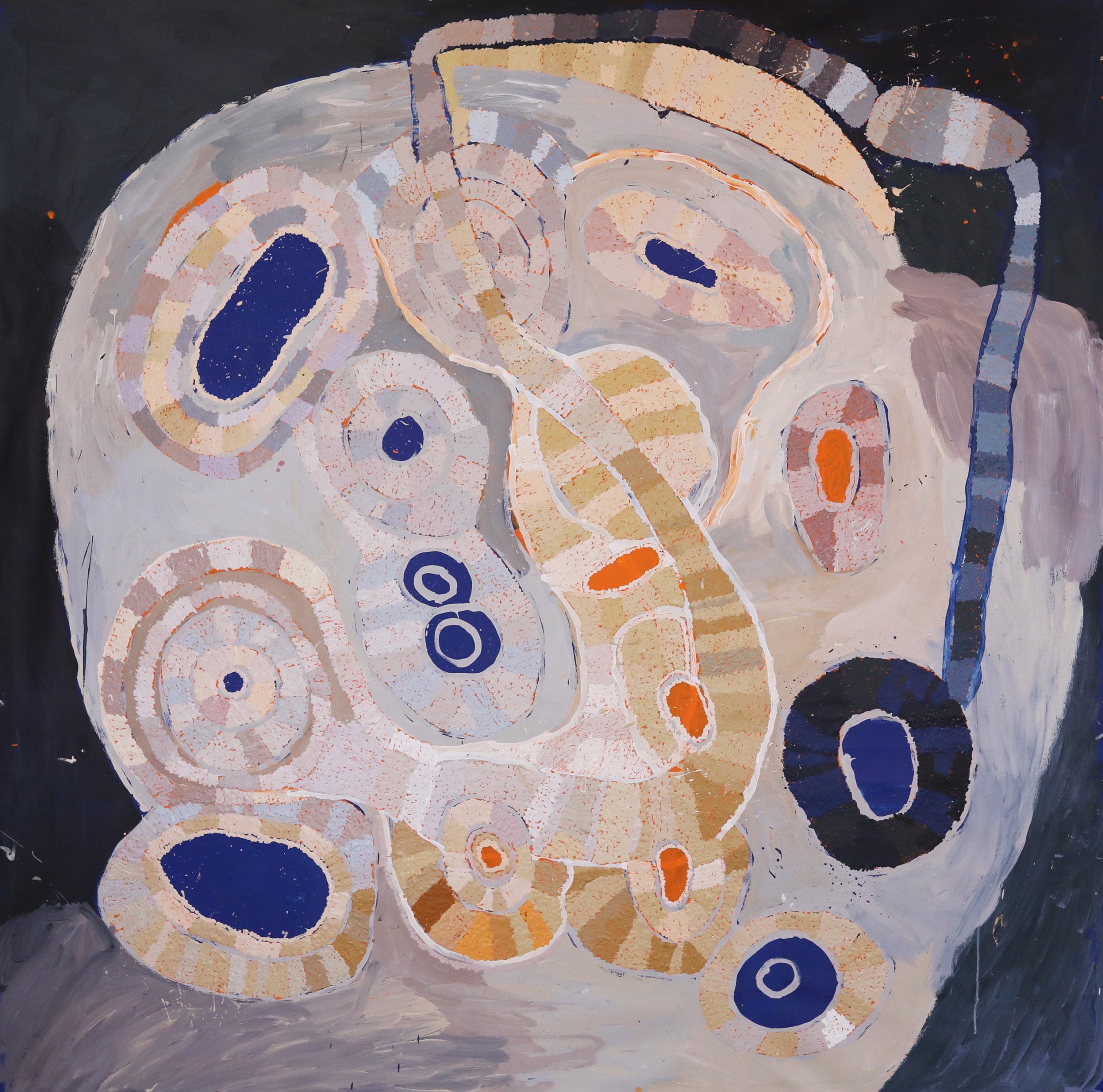
Kapi Warku, 2026, synthetic polymer paint, linen, 198 x 198 cm.
Ngintja Goodwin began painting at Mimili Maku Arts when the centre opened in 2009 and remains a custodian of the institution she helped to build. She explains, “Ngayulu tjukurpa nyangatja walkatjunanyi Mimili Maku Art centengka, artist tjutaku, nganana tjungu palyani, nyanga palula canvas tjuta munu ngayulu tjukurpa nyanga palu wangkanyi. Ngayulu Antara-nya tjara walkatjunanyi, Antara-nya ngura wiru mulapa, tjukurpa pulkatjara.” (I am a painter at Mimili Maku Art centre alongside many other artists. I paint the Antara storyline, a story belonging to a very special place that holds many important stories of this country. We speak of this story belonging to the land as we work alongside each other every day.)
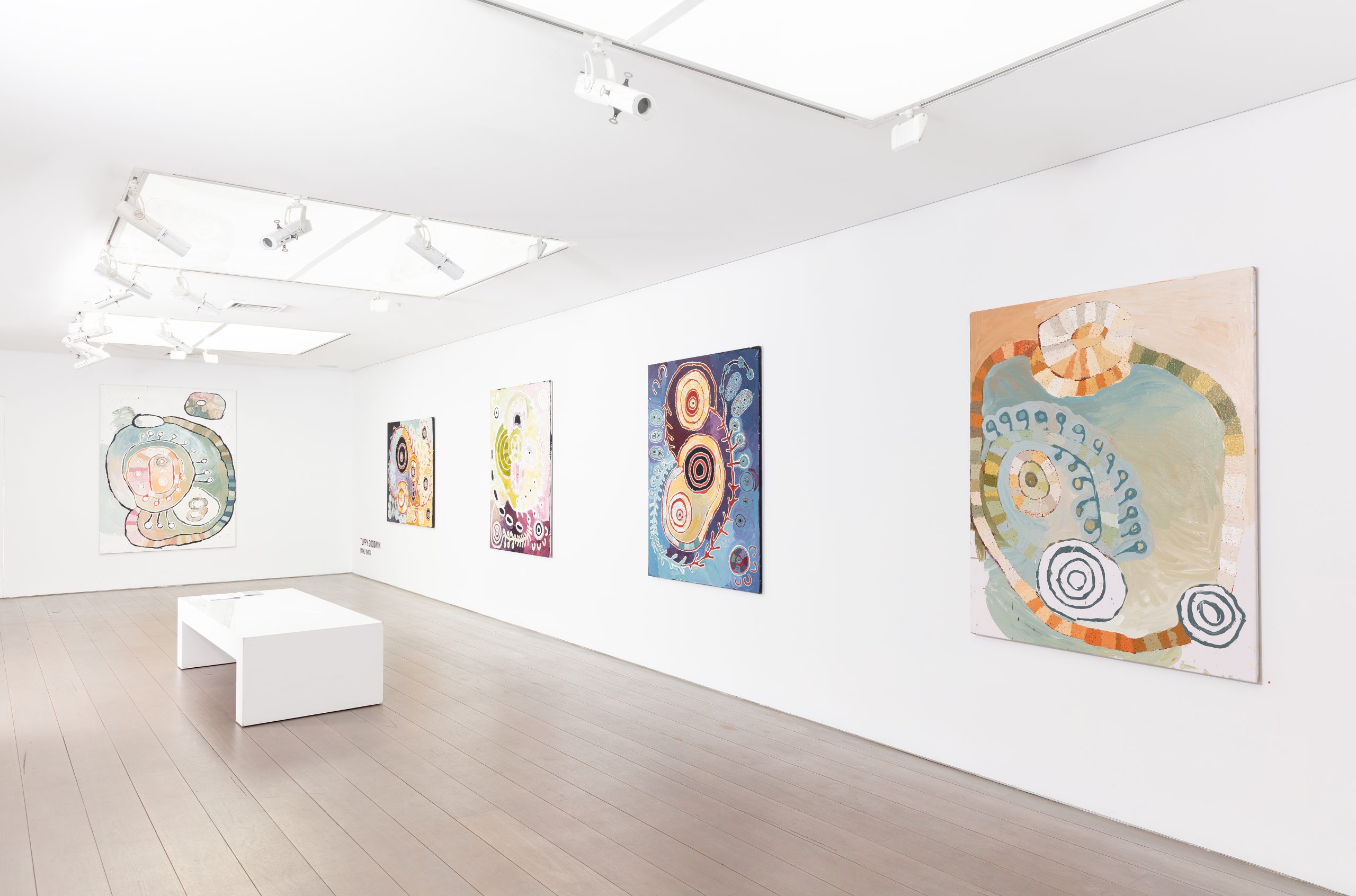
In her solo exhibition, Maku Inma, 2026 at OLSEN, Warrane Sydney, Ngintja Goodwin presents a series of new paintings that reflect a deepening of her practice. From the intimate recollection of Kapi Warku, the rockholes where water gathers on top of granite rocks and where she travelled as a child, to the expansive ceremonial cycles of Maku Inma (wichetty grub ceremony) that she leads, the paintings are deeply embodied. Being the custodian of this story and cultural obligation, the new paintings reflect a senior woman painting from within knowledge systems that are lived, performed and continuously evolving. It is at these ceremonial rockholes that women gather to perform inma; after ceremony, maku is collected for food. Knowledge, performance and nourishment form a single, unbroken cycle.
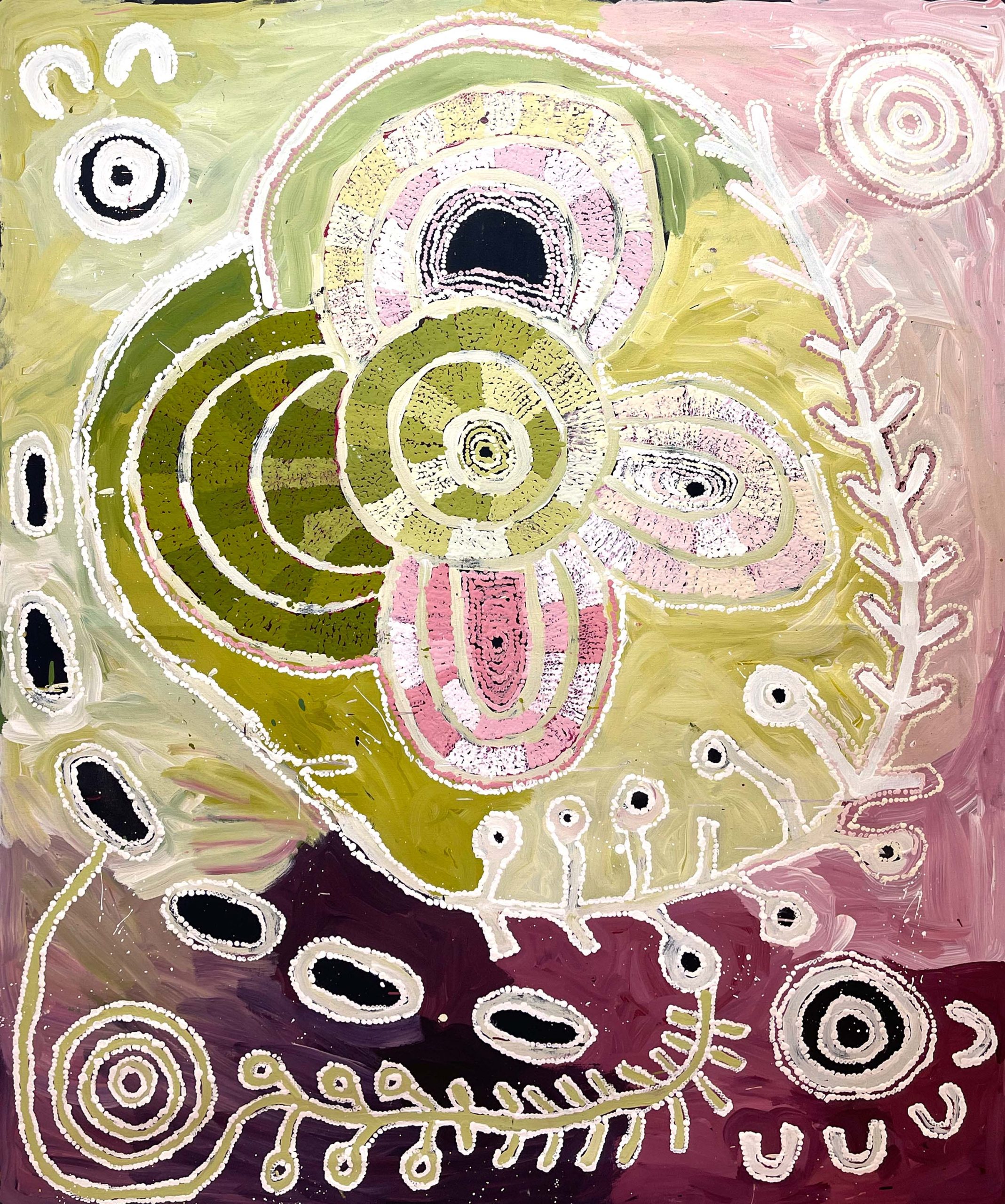
Antara, 2026, synthetic polymer paint, linen, 152 x 122 cm.
There are nineteen paintings among the Antara, 2022̶ 2023 and Karpi Warku, 2025-2026, series. In the , swathes of deep purple, teal, red and ochre convey the vast plains of the APY Lands, whereas in the Karpi Warku series, more muted palettes anchor the curvaceous rockholes and recurring witchetty grub form. Both rhythmic, gestural marks and detailed brushwork coalesce on the surface of these spatially rich and meaningful paintings, which also hold personal memory, cultural responsibility and the ongoing life of Antara in dynamic balance.
Ngintja Goodwin speaks with characteristic directness about what is at stake and about the weight of knowledge systems that is being carried. She states, “Ngayulu kulilpai, mulapa, pampangku, tjilpingku paining, manta nyangatja kunpu kanyinma, manta nyangatja titutjarangku atunymana, ungkuntja wiya, tjukurtjara, pulka ngaranyi.” (I reflect on how the senior women and senior men instructed us on how to care for and protect Country, so that it would remain vital, how we were not to hand it over to others, because it is sacred and powerful.)
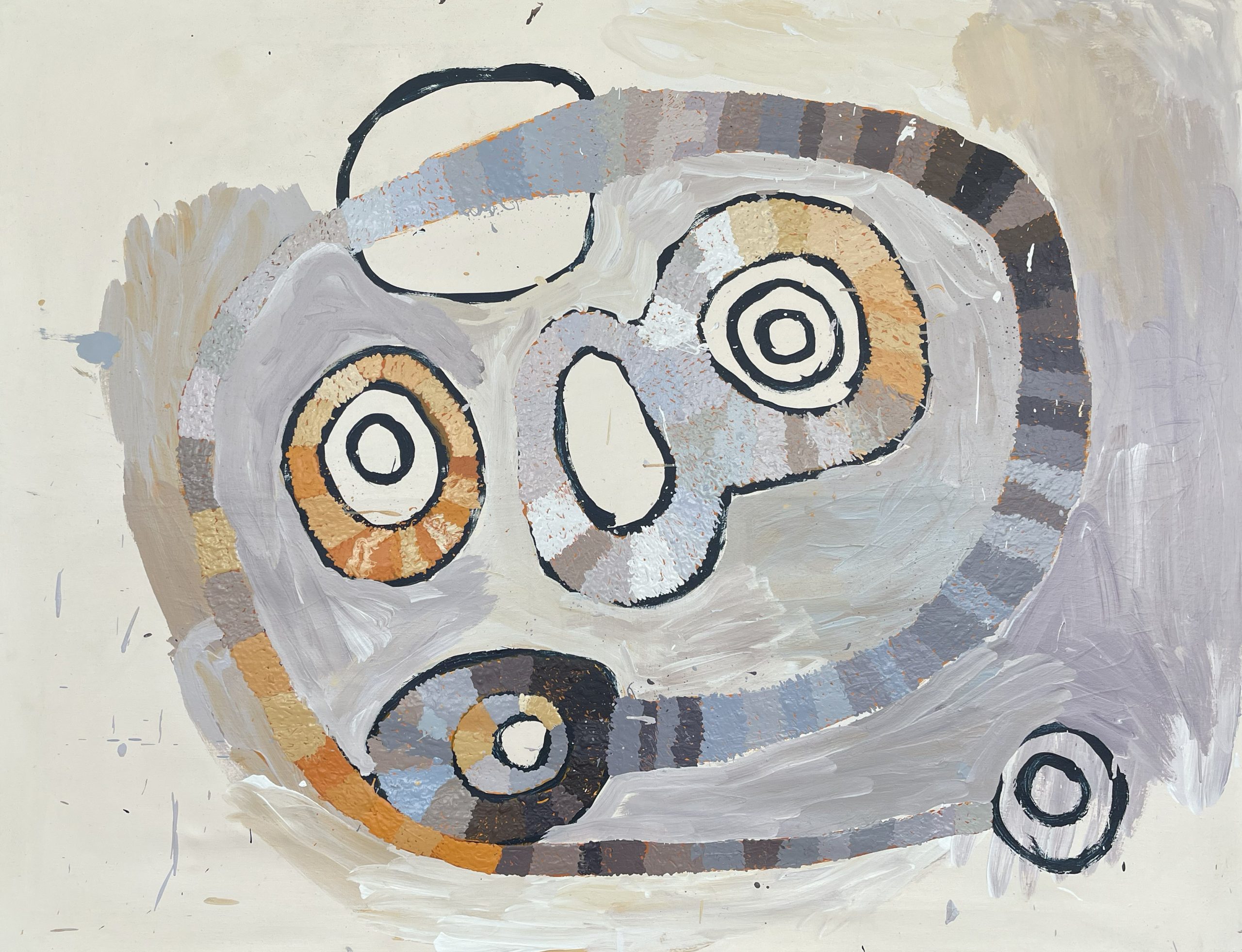
Kapi Warku, 2026, synthetic polymer paint, linen, 152 x 122 cm.
That sense of responsibility extends naturally to future generations, as Ngintja Goodwin reflects, “Nganana mukuringanyi, kanyira wangkanytjaku, ngura kunpu kanyintjaku. Anangu tjutangku katipai munu nintilpai pulka mulapa. Nyangatja nganampa culture, tjana panya wangkapai, nganana culture nganampa witira kanyini, kuyani wiya. Palya.” (We want to continue looking after our country, after our stories, keeping our home and families strong. We have to continue sharing these stories, always teaching the next generation. There’s so much to be known and we have to hold on to our culture, keep talking about it. It is ours to nurture and care for, so it won’t be spoilt.)
In Maku Inma, that intention becomes form. These paintings are transmissions of Country—acts of knowledge moving through time, from the Elders who shaped Goodwin to the next generation she is shaping now and still outward to every person who stands before them and receives, even partially, the knowledge systems imbued that they carry.
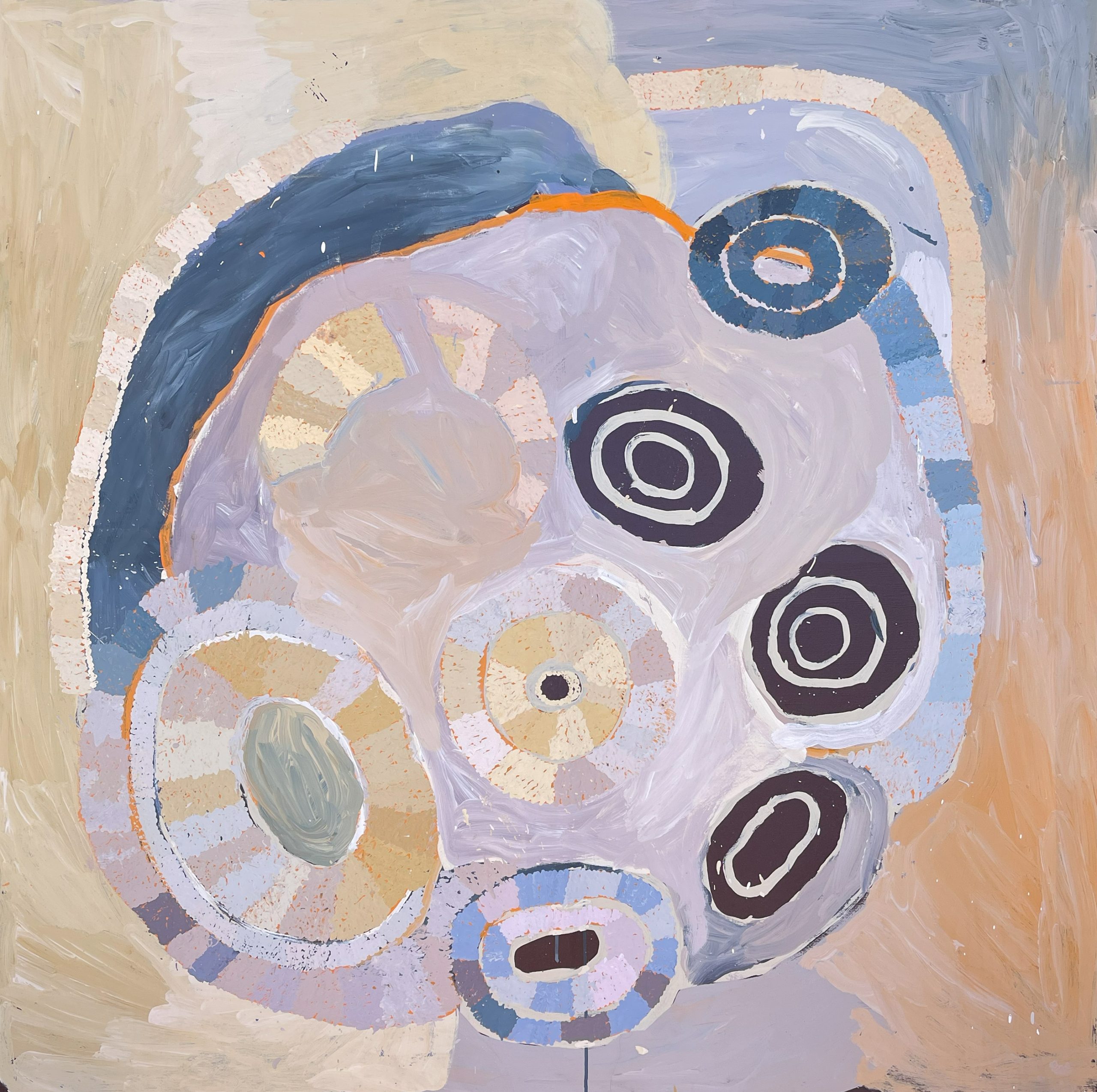
Kapi Warku, 2026, synthetic polymer paint, linen, 150 x 150 cm.
Exhibition
Maku Inma, 27 May – 20 June 2026, OLSEN, Sydney.
Images courtesy of the artist; Mimili Maku Arts, Anangu Pitjantjatjara Yankuntjatjara (APY) Lands, South Australia; OLSEN, Sydney.
Translations of Ngintja’s quotes by Tuppy Ngintja Goodwin and Anna Wattler.
Sarah Heatherington is a Sydney based art, architecture and design writer. She is a member of the Internation Art Critics Association.
The article was first published in Artist Profile Issue 75, 2026.
Edwards was born on Kaurna Yarta in 1998 and raised on Nauo Country in the small seaside community of Tulka, on the Lower Eyre Peninsula....

Under the auspices of Geelong Gallery’s director, Humphrey Clegg, and co-curated by Marianne Mathieu, former scientific director of the Musée Marmottan Monet, and Claire Durand-Ruel...
Nike Savvas: Purple Haze presents intimate screen prints and immersive large-scale installation and video work by Savvas from 2005–2026, each evocative of different places and...
Although physically he is of modest stature, Zofrea has devoted much of his life to grand projects that have been conceived and executed on a...
Through a multidisciplinary collaboration between Rotterdam-based curators, architect Paul Cournet of CLOUD and artist-designer Sabine Marcelis of Studio Sabine Marcelis, the exhibition explores the interplay...
Artificial intelligence will be used by young artists who started using it as kids on their phones. They will see it as a natural extension...

This year’s Biennale arrives under more complex circumstances than most. It is shaped by the profound loss of its curator, Koyo Kouoh (1967–2025), whose exhibition...
No artist creates in isolation. Every painting carries traces of the conversations, places and histories that shaped it, preserving within its surface a particular moment...
The weekend markets at Fairfield Showground have been one of Western Sydney’s great institutions for more than fifty years. Fresh fruit and vegetables, children’s clothes,...