
The Extractive Frontier : Mining for Art
Using mining as metaphor, artists have been invited from across the country – including Yirrkala, Northern Territory, Castlemaine, Victoria, and New Guinea – to explore the good and the bad in the act of mineral exploration and exploitation.
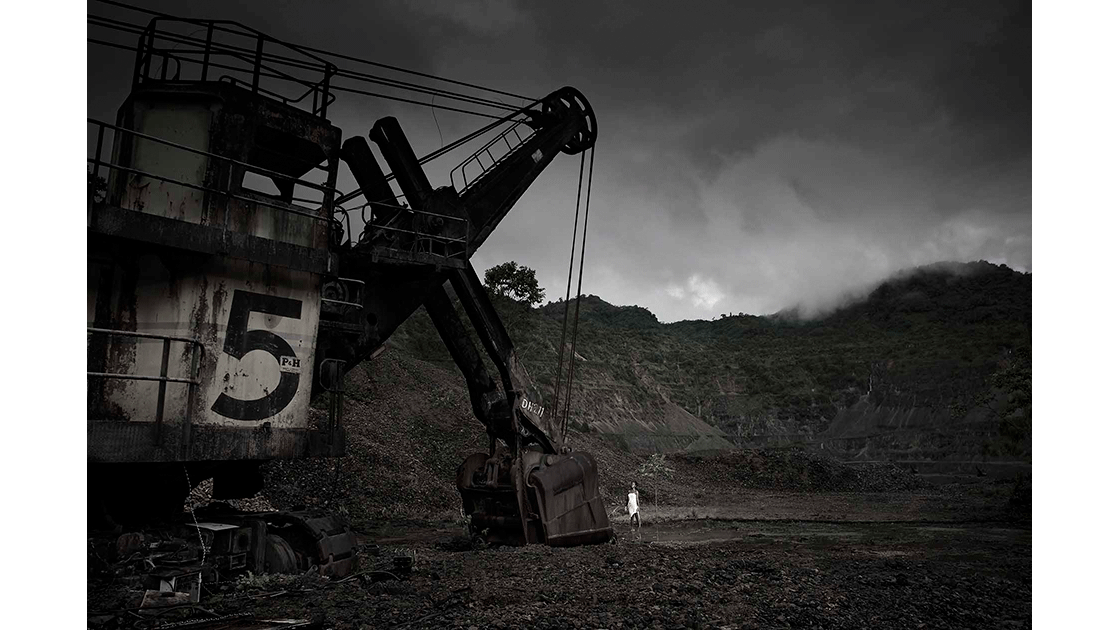
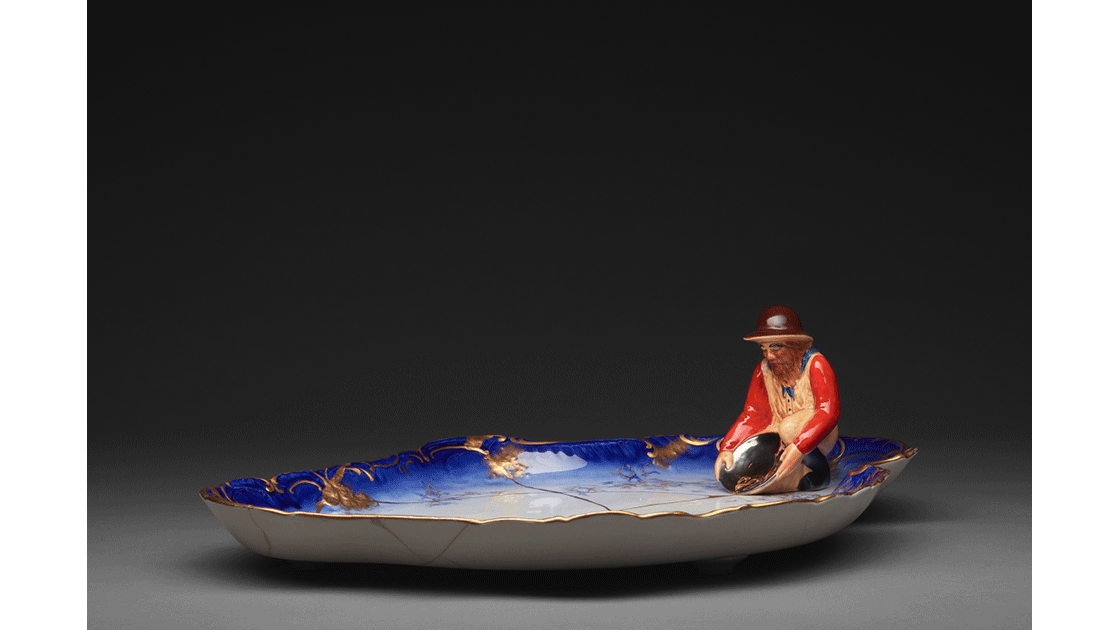
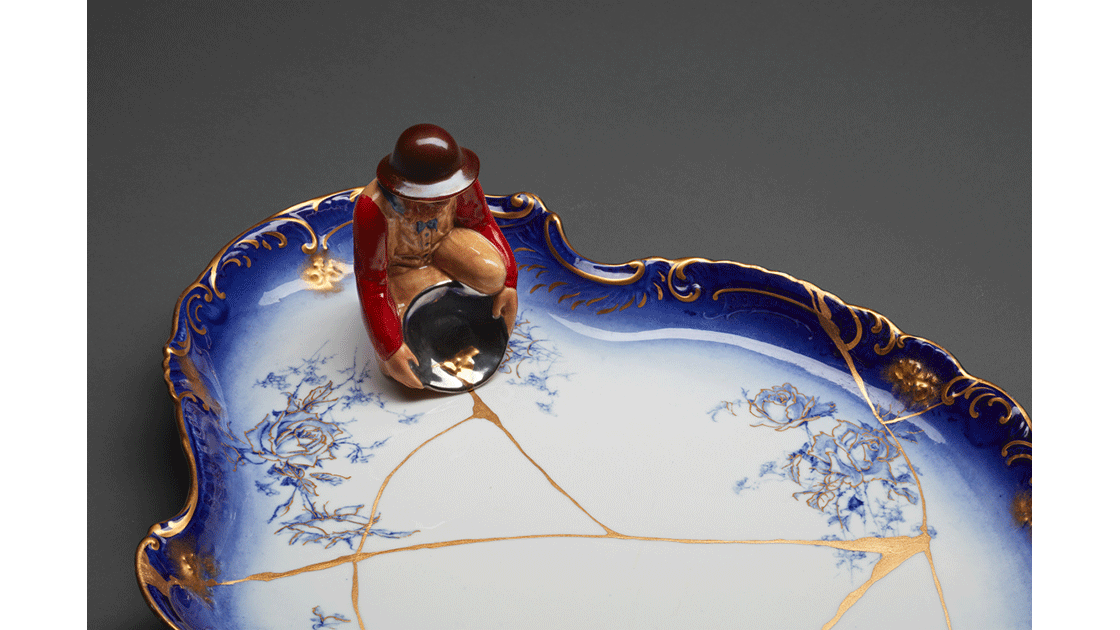
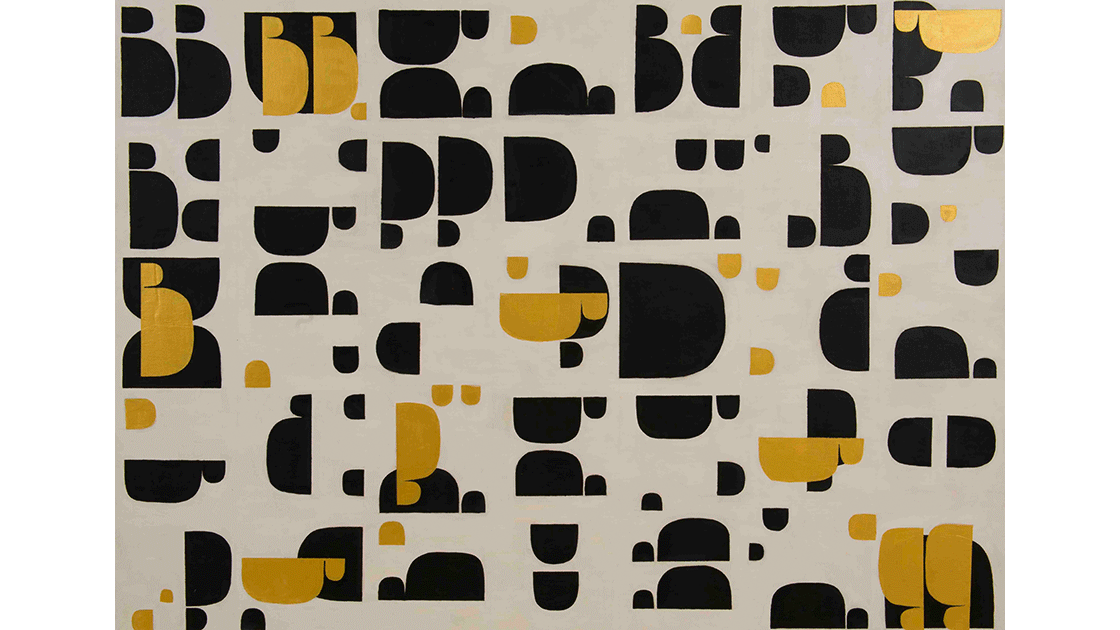
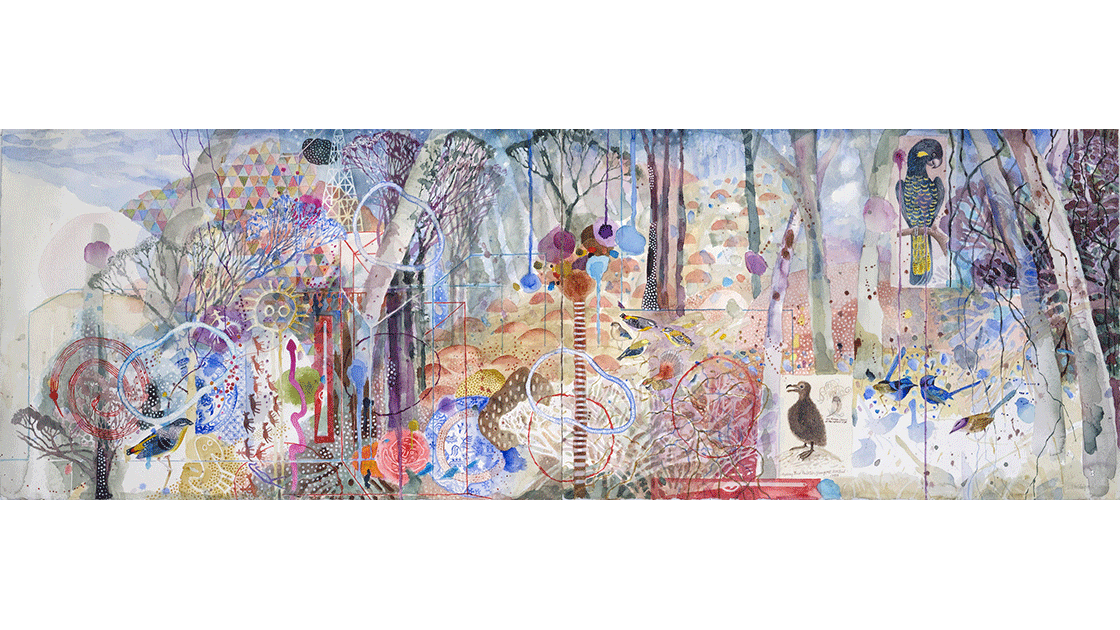
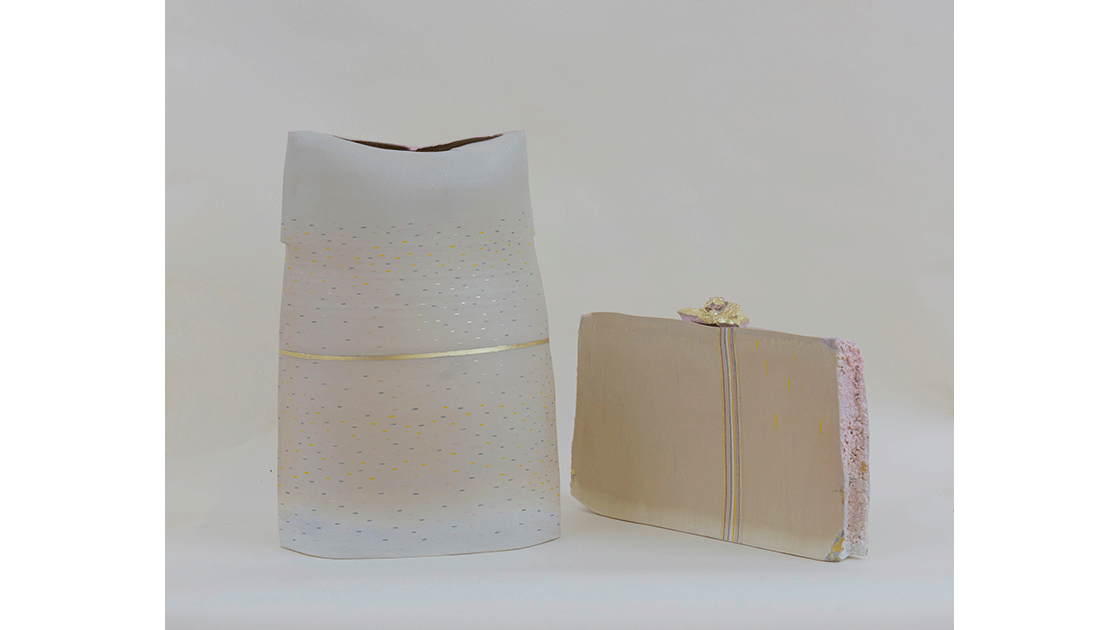
The Extractive Frontier: Mining for Art explores the act of ‘digging’ in former and current mining towns – and the cultural and social implications of this. As curators Dr Clare Wright, Associate Professor of History at La Trobe University, and Beverly Knight, founding Director of Alcaston Gallery, ask – what is found and what is lost in the process of excavation?
Calling upon a range of artists to respond through new and existing works the exhibition includes Chris Barker, Miriam Charlie, Gunybi Ganambarr, Selby Ginn, Jacky Green, Taloi Havini, Naomi Hobson, Judy Holding, Julie McHale, The Hermannsburg Watercolourists, Shirley MacNamara and Nathaniel MacNamara, Karen Mills, Yhonnie Scarce, Greg Semu, Mumu Mike Williams, Dean Smith, Damien Wright and Bonhula Yunupingu.
For some it is opening a can of worms, however underlying this exhibition is a healing process as power relationships and social hierarchies are engaged in a dialogue by the artist and audience.
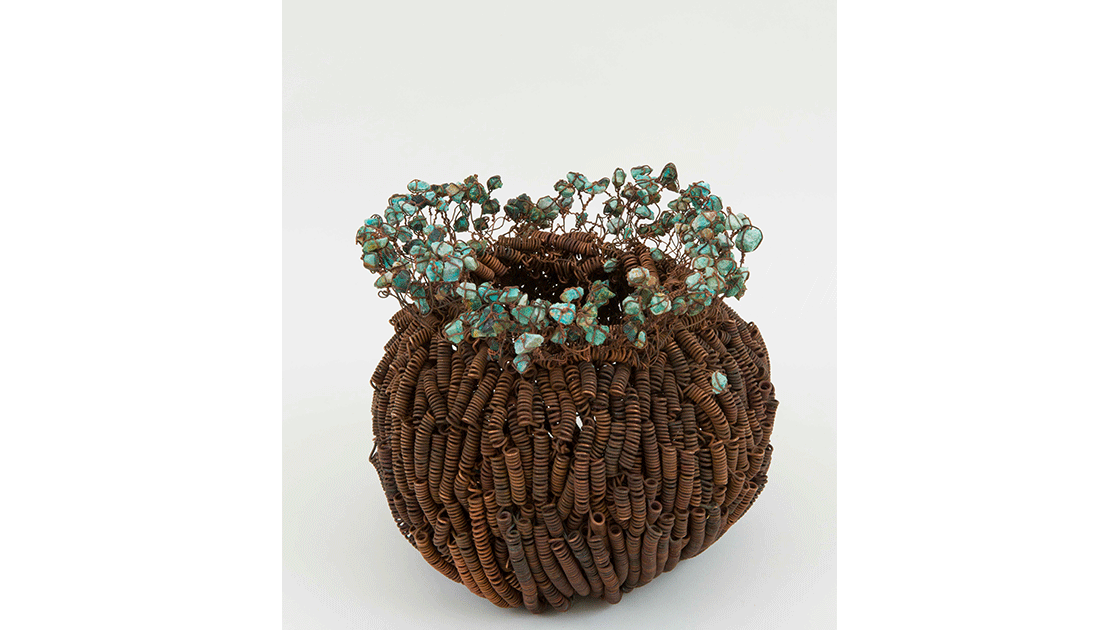
For artist Shirley and her grandson Nathaniel Macnamara, creating their collective work Cu was an important generational exchange in the passing on of her knowledge of weaving and story telling, as well as engaging in the social dialogue of mining and its impacts that it entailed.
Born in north-west Queensland Shirley lives on Mount Guide Station, about 50 kilometres from Mount Isa. Creating a work in response to the exhibition title, Shirley and Nathaniel’s work specifically looks at mining issues on Mt Guide Station.
Known for her use of natural materials including spinifex, bone, feathers, copper and ochre Shirley and Nathaniel continued this in Cu. An installation of one guutu (vessel) crafted in found copper, and 15 c-type photographs, the artists returned to Mt Guide for inspiration for the work. Shirley stated, “Nathaniel and I were exploring an abandoned copper mine left on Mount Guide Station – a site which has left an enormous hole in the landscape, with water leeching the land. This mine is a sore reminder of the serious consequences of a government’s neglect to regulate mine sites in the past, but also of the possibilities for rehabilitation in the future.”
Outlining their collaborative process, Shirley states “I wove copper wire found at the disused copper mine into coils and made an object showing a deep hole representing the disused mine. Nathaniel interpreted the “snappy gums” that grow on top of the hills in the landscape around the disused copper mine in Mt Guide Station country by using the found raw copper and copper wire into tree like shapes at the top of the object”.
Shown across three locations as part of the Castlemaine State Festival, this diverse and discursive exhibition asks audiences to consider and engage with the densely layered experience of mining in the land and its social and cultural ramifications.
EXHIBITION
CASTLEMAINE STATE FESTIVAL
THE EXTRACTIVE FRONTIER: MINING FOR ART
18 – 26 March
Across Castlemaine Art Museum, Castlemaine Market building and Lot 19
Courtesy the artists and Alcaston Gallery

Through a multidisciplinary collaboration between Rotterdam-based curators, architect Paul Cournet of CLOUD and artist-designer Sabine Marcelis of Studio Sabine Marcelis, the exhibition explores the interplay...
Artificial intelligence will be used by young artists who started using it as kids on their phones. They will see it as a natural extension...
This year’s Biennale arrives under more complex circumstances than most. It is shaped by the profound loss of its curator, Koyo Kouoh (1967–2025), whose exhibition...
No artist creates in isolation. Every painting carries traces of the conversations, places and histories that shaped it, preserving within its surface a particular moment...
The weekend markets at Fairfield Showground have been one of Western Sydney’s great institutions for more than fifty years. Fresh fruit and vegetables, children’s clothes,...
In recent times, Yorgos Lanthimos has shifted toward photography, noting in a Guardian interview, 2026, that he needs respite, saying, “it might be a couple...
In Australia, political cartoons were altered by several events during the 1960s: the arrival of Les Tanner’s (1927‒2001) instinctual wit at The Bulletin, Bruce Petty’s...
Recognition of the importance of early bark paintings and their link to the world’s oldest continuing culture, is what makes them both highly sought and...
I had come to see my daughter sing in Deborah Kelly’s Creation Choir and was fortunate enough to make it inside the gallery for the...