REVIEW | Michael Vale: Synchronicity and the theatre of the absurd
About a century ago, Carl Jung, the founder of analytical psychology, coined the concept of synchronicity, where two or more events occur simultaneously, yet lack a logical or causal connection. For the Melbourne-based painter Michael Vale, the idea of synchronicity plays an important role in his art practice.
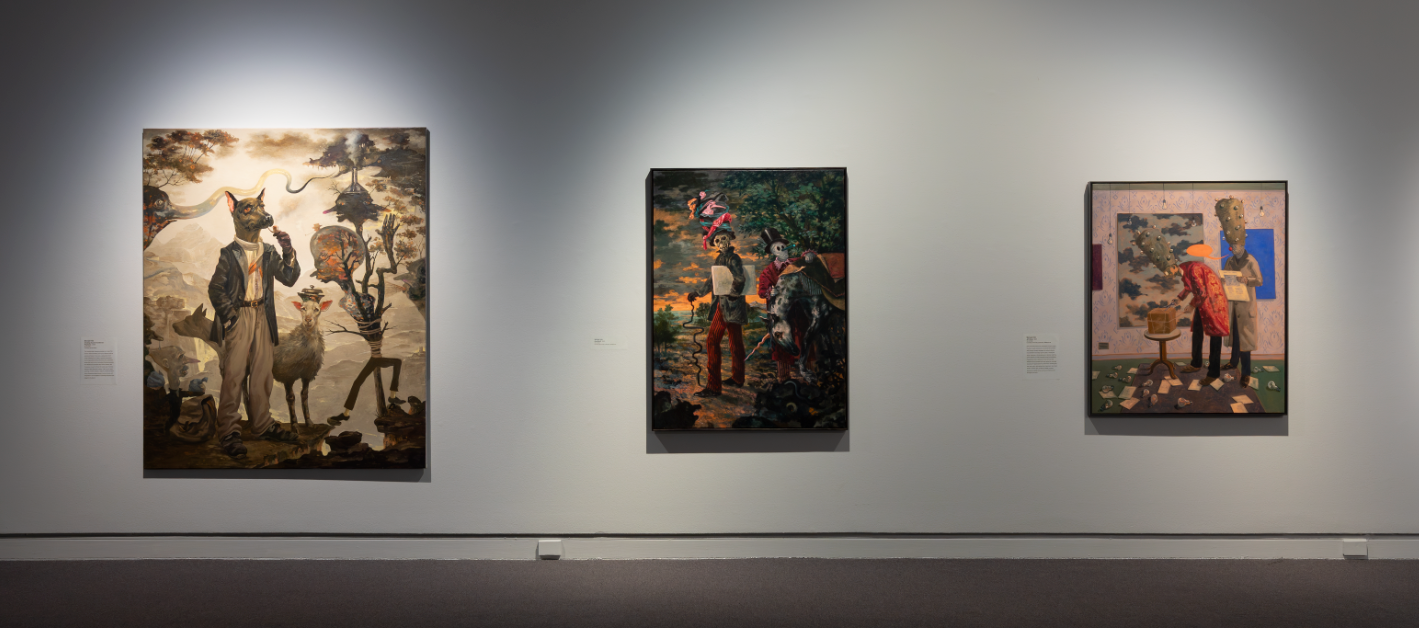
Michael Vale views colonialism as the elephant in the room when it comes to Australian history and Australian art. He observes that through a strange coincidence, or synchronicity, at the same time as the rise of the Gothic novel in Europe, the horrors imagined by the fiction writers were actually taking place in Australia through the impact of colonialism in the treatment of convicts and Indigenous peoples. His response was the creation of what he termed the art of “gothic absurdism,” a style that he has been refining over the past few decades. In a similar manner to Mary Shelley’s (1797–1851) gothic novel Frankenstein, 1818, Vale weaves elements of horror, romanticism and the supernatural into characters whom he places within atmospheric and exotic settings. Also, like Frankenstein’s monster, Vale pieces his characters together from different body parts and various exotic elements to create monsters of his own.
The exhibition, Michael Vale: the Cuckoo, the Herring, and the Trembling Tambourines, at the Mornington Peninsula Regional Gallery, is the first major survey exhibition of Vale’s paintings to be held in a public gallery and assembles thirty key paintings dating from 2008 to 2026. The unusual title of the exhibition is in fact the title of one of his recent paintings. It also highlights the artist’s thinking about his methods of art making. He notes, “The cuckoo is a bird that steals things from other birds, like me borrowing bits and pieces from old masters and comic books.” The herring pays homage to Vale’s lifelong obsession with the art of James Ensor (1860–1949), whose Skeletons Fighting over a Pickled Herring, 1891, and other paintings profoundly influenced his use of masks, skeletons and chronological disjunction as a creative principle. The trembling tambourines point to the artist’s love of music, the supernatural and the absurd.
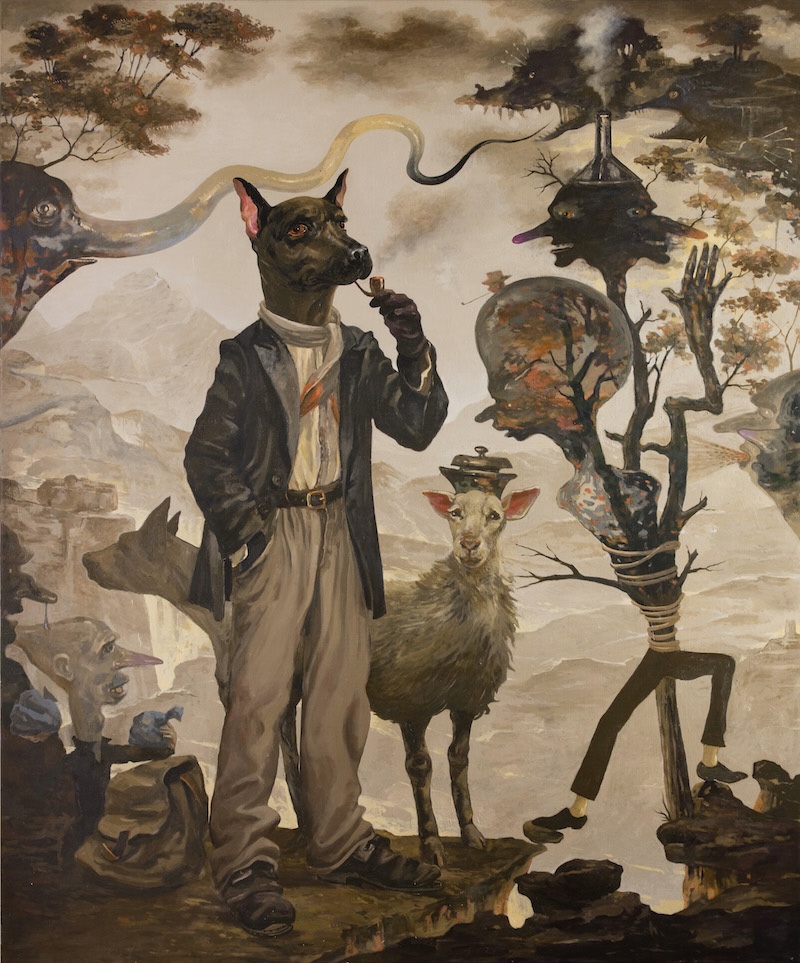
Michael Vale, Smoking Dog Surrounded by Phantom, 2008, oil paint, linen, 183 x 152 cm.
Vale explains how his paintings have evolved: “My paintings are inspired by a mixture of old master paintings, horror movies, comic books and the theatre of the absurd…. The characters that populate them appeared fairly spontaneously often evolving from a series of chalk marks with no recognisable shapes that eventually became ghoulish clowns, ghosts or mummies. Once these characters have announced their arrival, I tend to use them again and again in different paintings…. I see these characters more comical than spooky, a little bit like Frankenstein’s monster, a sympathetic and confused character assembled from multiple parts. Frightening to some and ridiculous to many. They smoke pipes, carry brown paper parcels, tend flowers and paint abstract pictures…. They navigate or get lost amongst sublime mountain-scapes, sunset skies and in different trees that look down on them imperiously.”
On first encounter, many of Vale’s paintings appear as enigmatic narratives; on further investigation, the narratives may be interpreted as “riddle works” that seem to raise many more questions without suggesting any solutions. The artist confronts the viewer with questions and puzzles laced with black humour that seem to float within a sea of absurdity. For the artist, success lies in the fact that he has forced us to question our concept of reality and to have a bit of a chuckle in the process. Sometimes, when reality appears so grim and out of joint, the best response is to expose the fraud that is being perpetrated and to laugh at it.
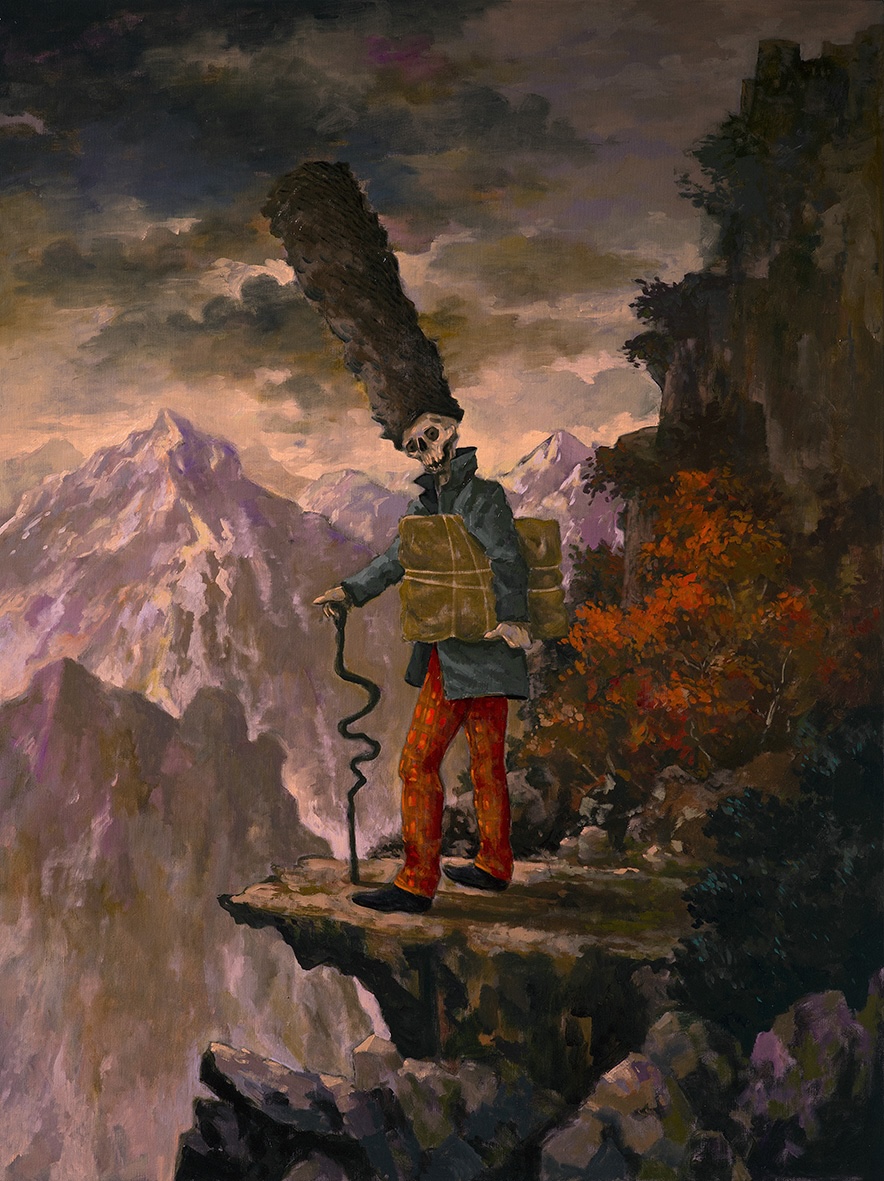
Michael Vale, The Package, 2018, oil paint, linen, 122 x 32 cm.
The Package, 2018, is a typical example of Vale’s strategy of creating a visual ambush in painting. In the middle of the composition, standing on a precarious mountain ledge and surrounded by wonderous alpine scenery, is a strange figure. He wears an impossibly large turban-like hat that is almost as tall as the figure itself. His head is a skull, and he wears an oversized green jacket and bright red checkered trousers. Tucked under his left arm is a bulky parcel wrapped in brown paper and string, while in his right hand is a long, dark sinuous object like a twisted walking staff. There is something dramatic and theatrical about the image, reminding us that Vale worked for many years painting stage sets for television, theatre and film. On one hand, the image is clearly absurd—some surreal polychrome fantasy. On the other hand, I find it a bit disturbing, foreboding and hinting at some catastrophe that is yet to fully reveal itself.
Vale was born in Albury in 1952, on the Murray River on the border with Victoria and later moved to Melbourne where he spent many years working as a scenery painter gravitating to painting. He says that he learnt more about painting from travel and working in the scenery business and in an oil paint factory, than from the teaching he received at various art schools. A lifelong love of surrealism and Dada, coupled with an impressive skillset saw him emerge as an idiosyncratic character in the Melbourne art scene, while success in the Doug Moran National Portrait Prize (in 2021) and regular appearances as an Archibald finalist have given his name a national standing. For more than a couple of decades, he taught in the School of Fine Art at Monash University, Melbourne, in painting and film.
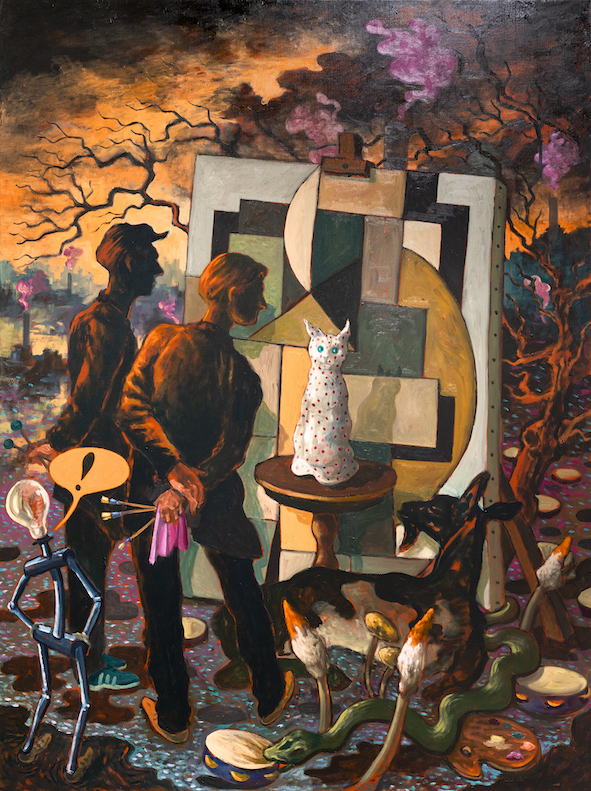
Michael Vale, A Spotted Cat, 2025, oil paint, linen, 137 x 112 cm.
The paintings in the Mornington show, including A Spotted Cat, 2025, The Blue Kangaroo, 2020, Slippery pipes, 2024, Green shiny hat (& a shooting star), 2024, and the early Smoking dog surrounded by Phantoms, 2008, highlight the complex and eclectic iconography of Vale’s oeuvre. He ruthlessly plunders the art of the old masters, grabbing a figure from one painting, a setting from another, the odd cardinal’s hat that he will combine with a flying saucer and a tongue-in-cheek borrowing from James Ensor (1860 ̶ 1949), Pieter Breughel (1525–1569) and Hieronymus Bosch (1450–1516). Despite the deliberate and acknowledged plunder of art history, the result is uniquely his own with a strong and inimitable imprint of his artistic personality.
The more Vale assures the viewer that this is all in jest and it is his version of the theatre of the absurd, the more we suspect that the paintings provide clues that, through some act of synchronicity, will lead to some unexpected meaningful occurrence. When we think of Franz Kafka (1883–1924), Samual Beckett (1906–1989), Albert Camus (1913–1960) and Eugène Ionesco (1909–1994), they are all masters of the absurd who revealed a chilling vision of reality that now we understand all too well. I suspect that Michael Vale is at home in this tradition.
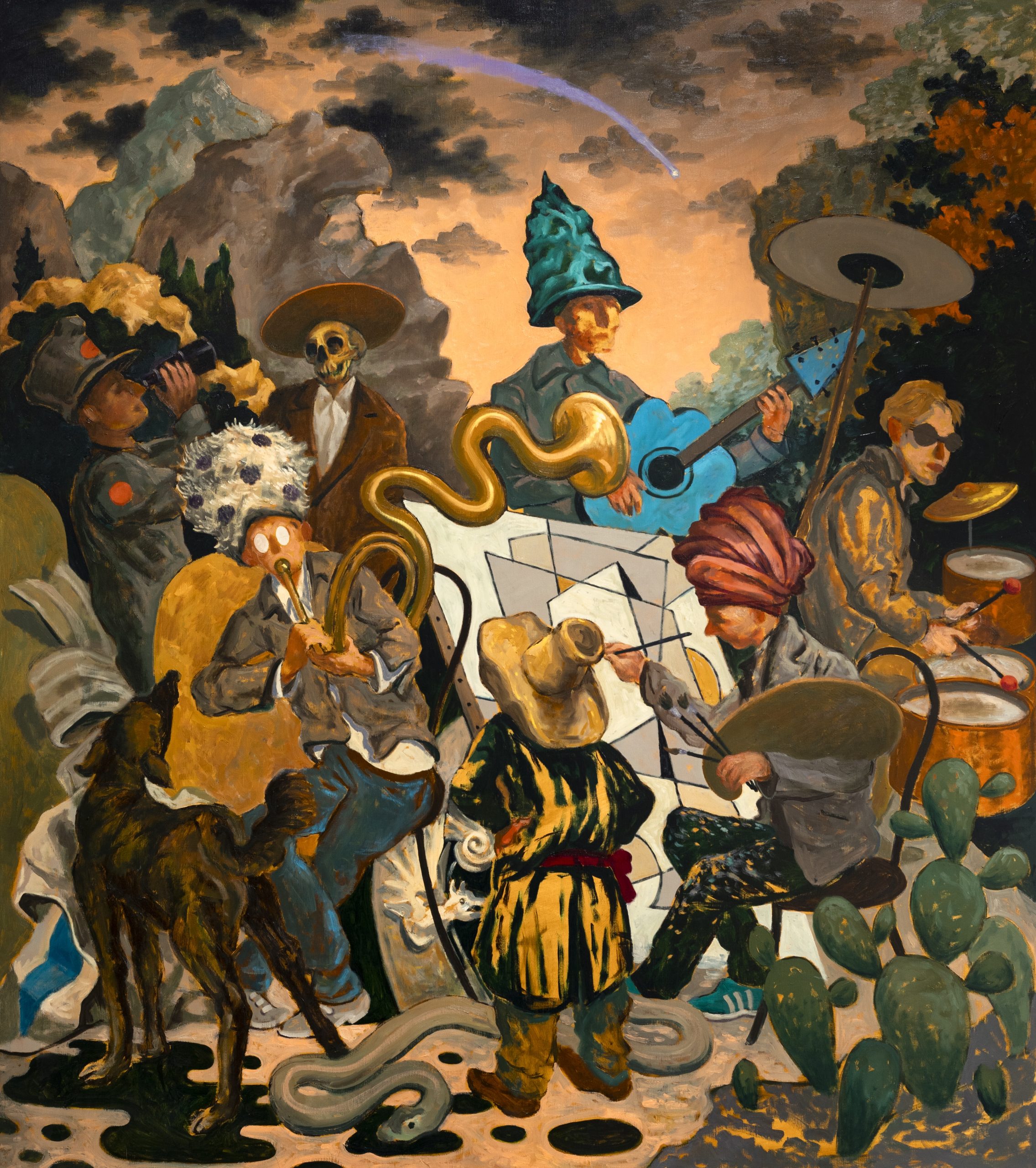
Michael Vale, Green Shiny Hat (& a Shooting Star), 2025, oil paint, linen, 137 x 122 cm. Photographed by Christian Capuuro.
Exhibition
Michael Vale: the Cuckoo, the Herring, and the Trembling Tambourines
28 February – 21 May 2026
Mornington Peninsula Regional Gallery, Victoria
Images courtesy of the artist, Martin Browne Contemporary, Sydney; Mornington Peninsula Regional Gallery, Victoria.
Prof. Sasha Grishin AM, FAHA is emeritus professor at Australian National University who works internationally as an art historian, critic, and curator; based in Canberra and Gippsland, Victoria.
The article was first published in Artist Profile Issue 75, 2026.
The first work you encounter in Edge City is a gate, Settlement #8, 2025. Not one to pass through (not anymore), but a threshold nonetheless....
Designed to impress, the number and size of paintings—twenty-nine at nine square metres each and one even bigger—are a spectacle, lifting the exhibition from an...
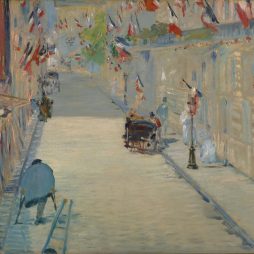
Skilfully assimilating secondary sources throughout Paris in Ruins, Smee at the conclusion of Part One, “Salon of 1869,” writes that Auguste Renoir’s and Claude Monet’s...
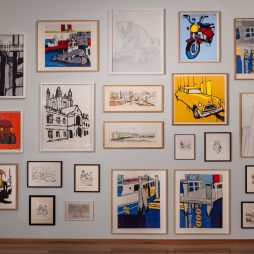
Multidisciplinary artist Shireen Taweel looks skyward, into the night and beyond, with her exhibition the trig point. Drawing on fieldwork in 2025 at the Siding...
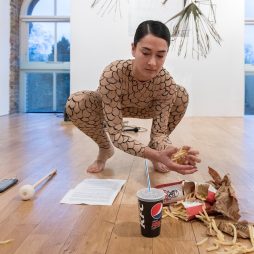
It was back in 2011 that Pip Wallis, senior curator at the Monash University Museum of Art (MUMA), remembers first seeing the work of Balinese...
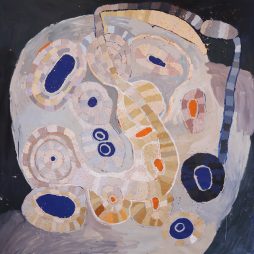
Senior Pitjantjatjara artist, Tuppy Ngintja Goodwin, was born in 1952 near Bumbali Creek in the Northern Territory, close to the border with South Australia; daughter...
For those of us who seek out unfamiliar voices and see the potential for diverse cultures to create new meanings and memories in a postcolonial...

Show me the beauty of a body contorted by thrall. Then, show me the thrall. Shame is a vast word....
Kon Gouriotis: How did you come to be working with the Yinhawangka community? Pedram Khosronejad: My journey to working with the Yinhawangka community has...