Darren Munce
By his own account, Darren Munce's interests lie in the "language" of painterly abstraction. In his first show with The Egg & Dart, Munce offers exploratory, dense surfaces across which his tautly-honed vocabulary of line, shape, and pattern collides with the marks of chance and accident.
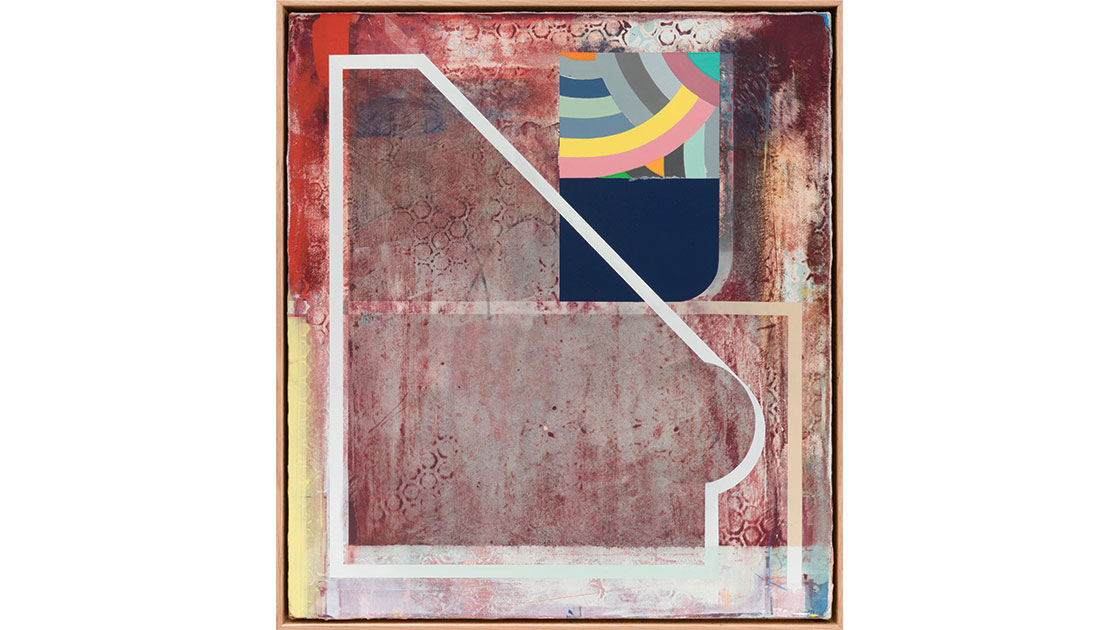
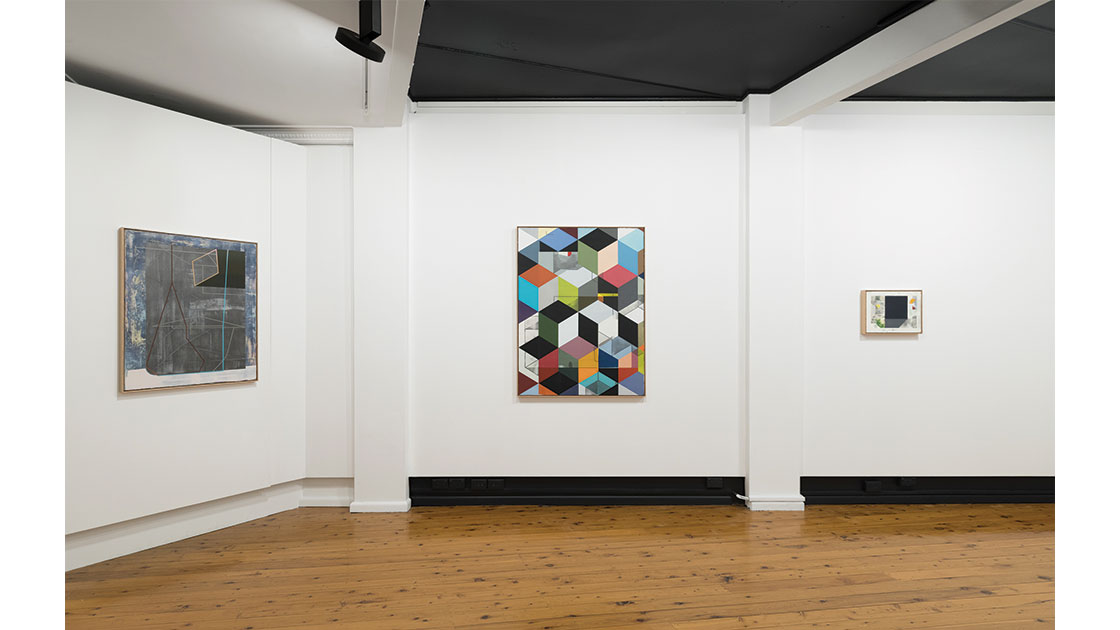
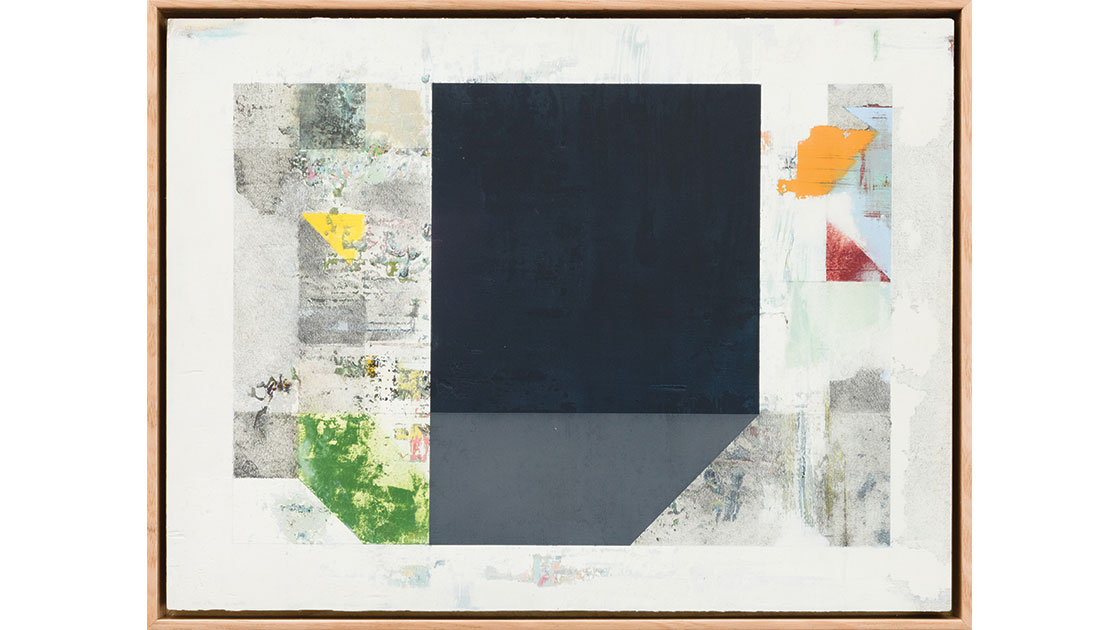
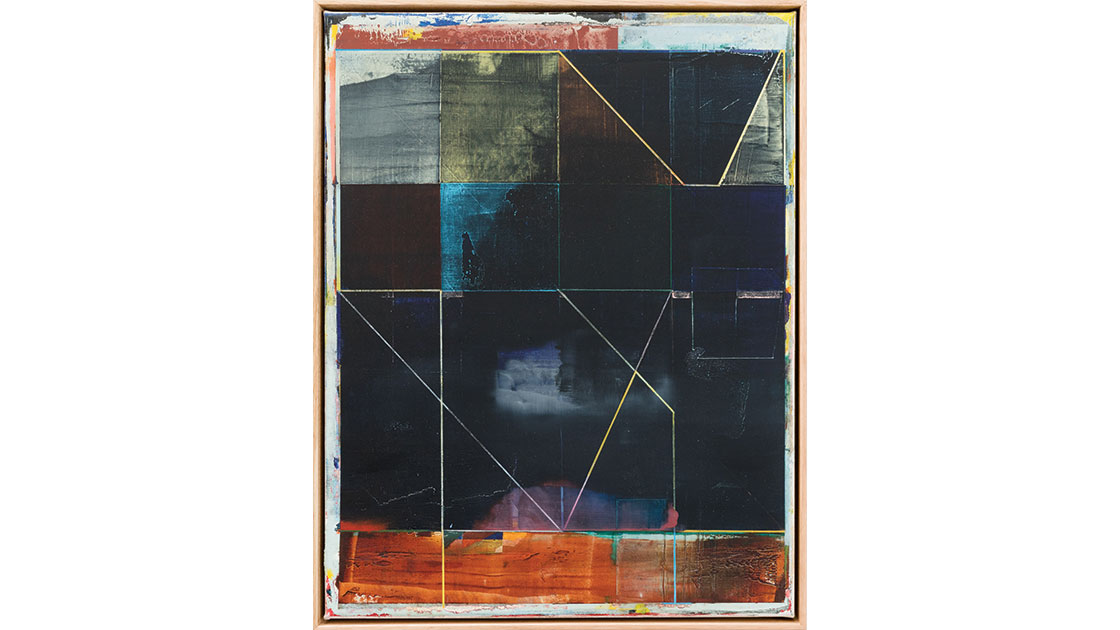
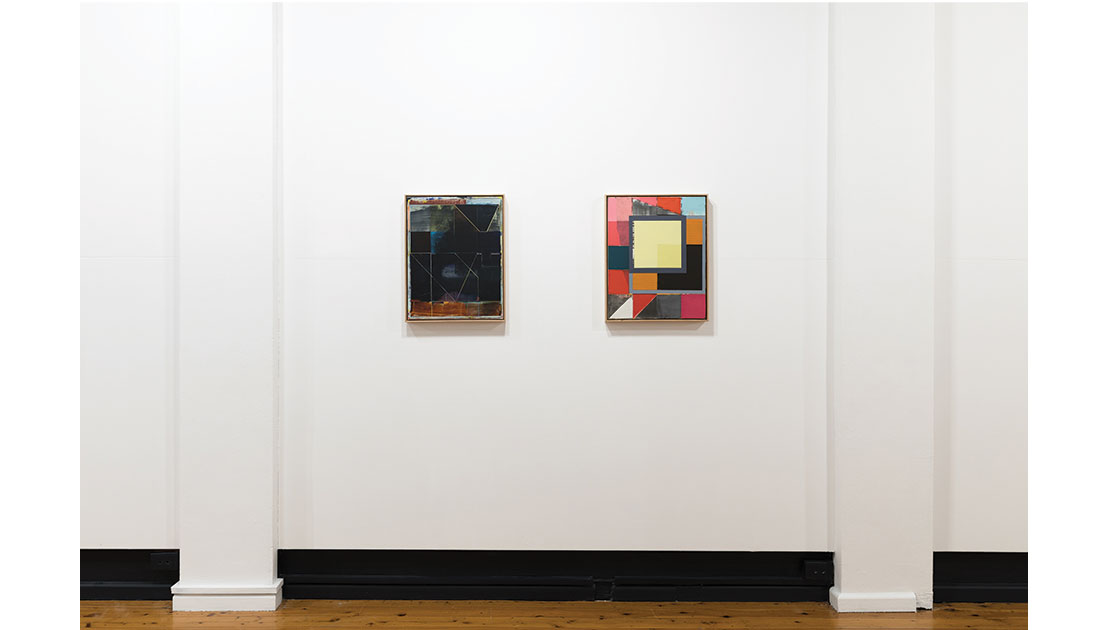
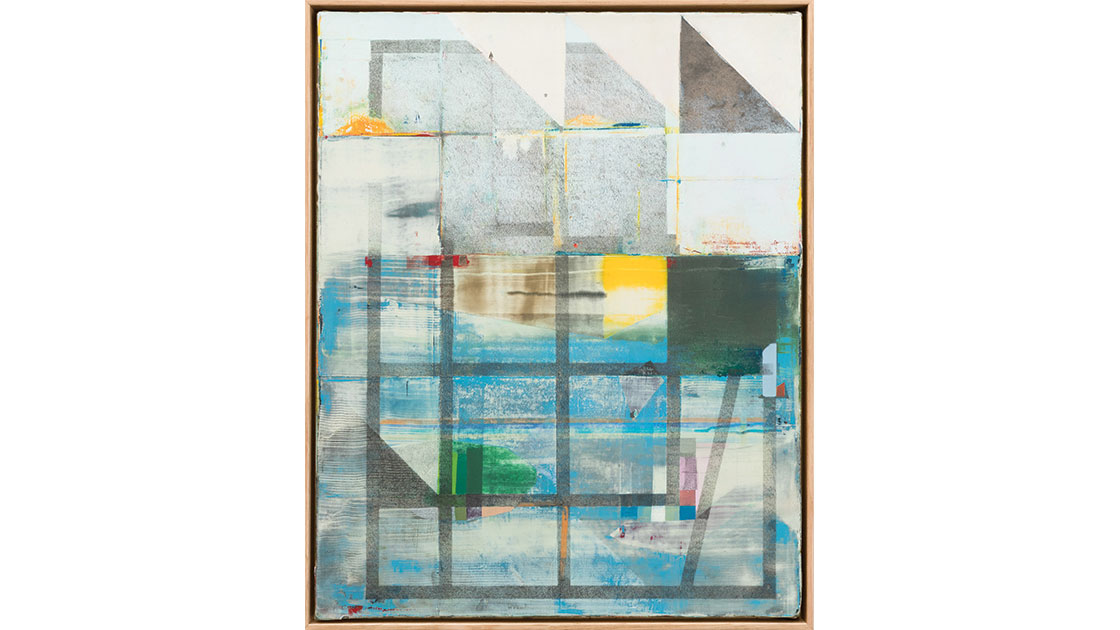
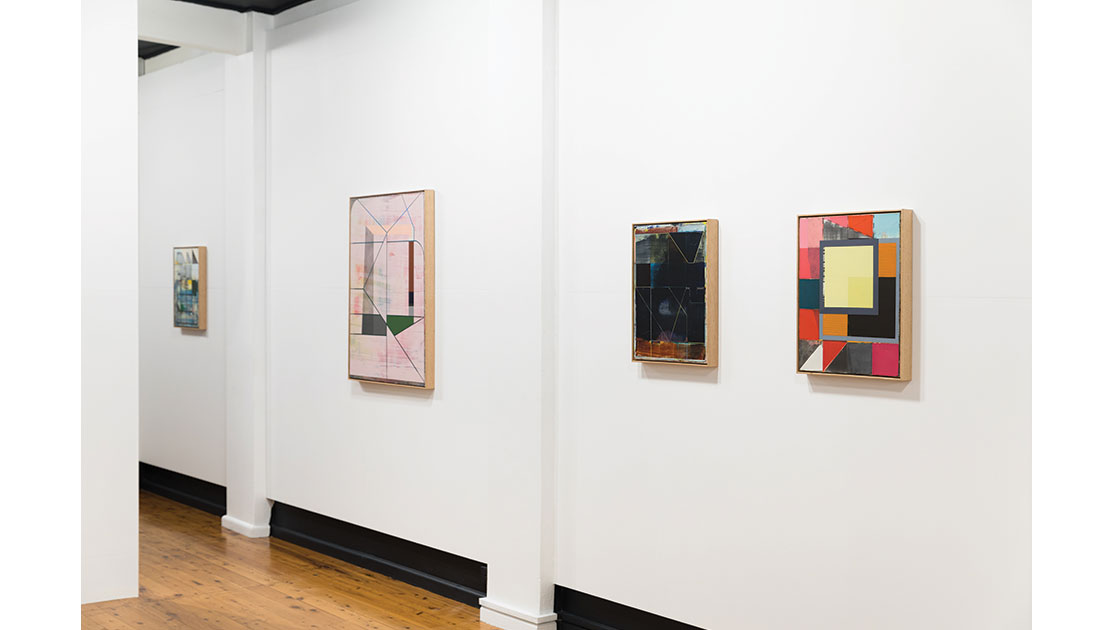
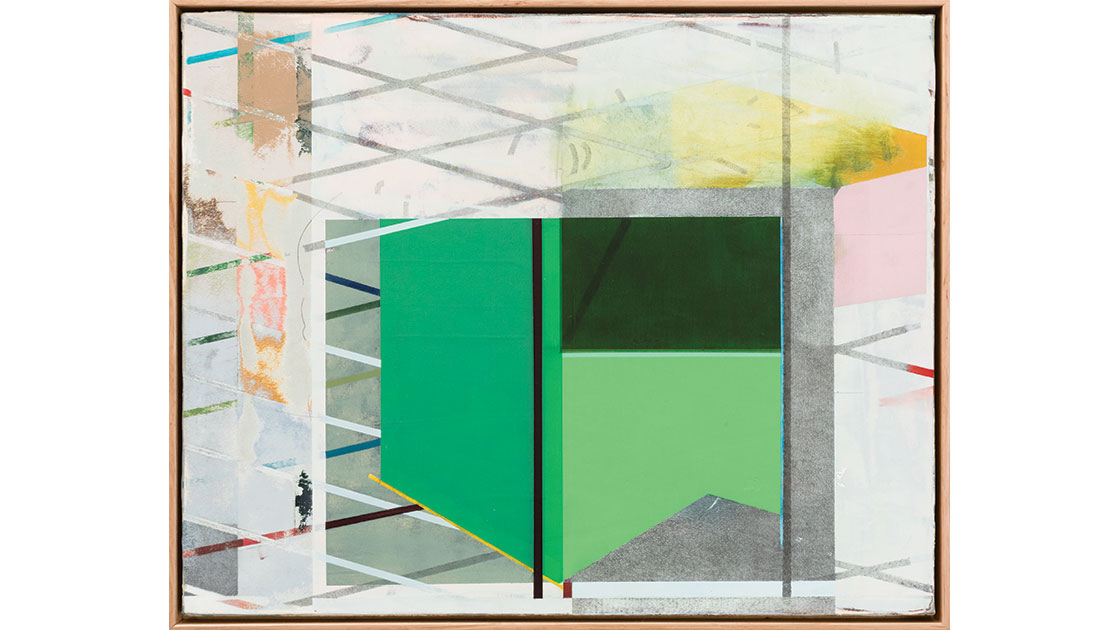
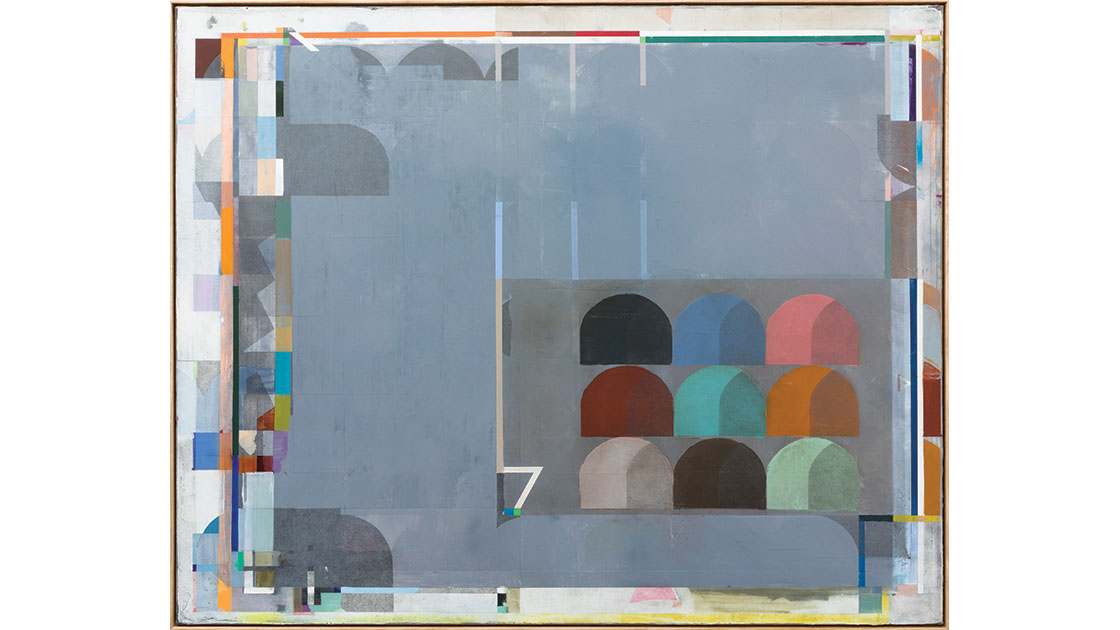
Melody Willis, who contributes catalogue text for this exhibition, attributes Munce’s interest in painterly abstraction in part to a residency in Leipzig in 2014, supported by the Australia Council and Creative Victoria. There are several striking elements to Munce’s practice of abstraction – his thinking about it in terms of “language” or a “vocabulary” key amongst them. Perhaps here, too, there is some biographical explanation to be reached for. Munce trained initially in showcard and ticketwriting, before taking a Diploma in Graphic Design at the Sydney Institute of Technology. His inheritance from this early disciplinary training might be guessed at in works like Hope to Find You Well, 2021, in which the central third of the space is occupied by a blocky, opaque shape which reaches towards three dimensions, and retreats back into two as you continue to look. Elsewhere in this oeuvre, pattern appears in blinks and flashes, running across the canvas both towards and away from our grasp. Lines in robust colour almost – almost – reach toward the condition of text, of lettering. There is a logic of perpendiculars and parallels underpinning works such as Equivalence #5, 2021 – but this geometry never quite arrives at a resolved equation.
Instead, chance, happenstance, and the natural material processes which paint and canvas undergo in contact with each other guide these abstractions away from too strict a sense of sense-making. In works like Don’t Worry if it’s Dark and I’m Late, 2019, marks seem to be made by instruments quite other than the paintbrush. Details of quite what these instruments might have been are not made available in the captioning text for the work. In any case, the omnipotent hand of the (male) painter is taken down a notch, from its position atop the meaning- and art-making hierarchy. Equipment and tools – as well as the more conventional materials listed as the works’ “medium” – become lively, unruly participants in the act of making. Far from an American idiom of abstraction as expressive – or Expressionist – in its relation to the hand and heart of the painter, these are fields of play, surprise, and surrender to the vocabularies of the materials around us.
EXHIBITION
Darren Munce: Discoordinated
15 September – 2 October 2021
The Egg & Dart, NSW
Although physically he is of modest stature, Zofrea has devoted much of his life to grand projects that have been conceived and executed on a...
Through a multidisciplinary collaboration between Rotterdam-based curators, architect Paul Cournet of CLOUD and artist-designer Sabine Marcelis of Studio Sabine Marcelis, the exhibition explores the interplay...
Artificial intelligence will be used by young artists who started using it as kids on their phones. They will see it as a natural extension...

This year’s Biennale arrives under more complex circumstances than most. It is shaped by the profound loss of its curator, Koyo Kouoh (1967–2025), whose exhibition...
No artist creates in isolation. Every painting carries traces of the conversations, places and histories that shaped it, preserving within its surface a particular moment...
The weekend markets at Fairfield Showground have been one of Western Sydney’s great institutions for more than fifty years. Fresh fruit and vegetables, children’s clothes,...
In recent times, Yorgos Lanthimos has shifted toward photography, noting in a Guardian interview, 2026, that he needs respite, saying, “it might be a couple...
In Australia, political cartoons were altered by several events during the 1960s: the arrival of Les Tanner’s (1927‒2001) instinctual wit at The Bulletin, Bruce Petty’s...
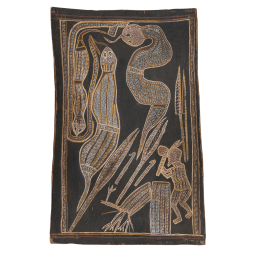
Recognition of the importance of early bark paintings and their link to the world’s oldest continuing culture, is what makes them both highly sought and...