
Justin Williams
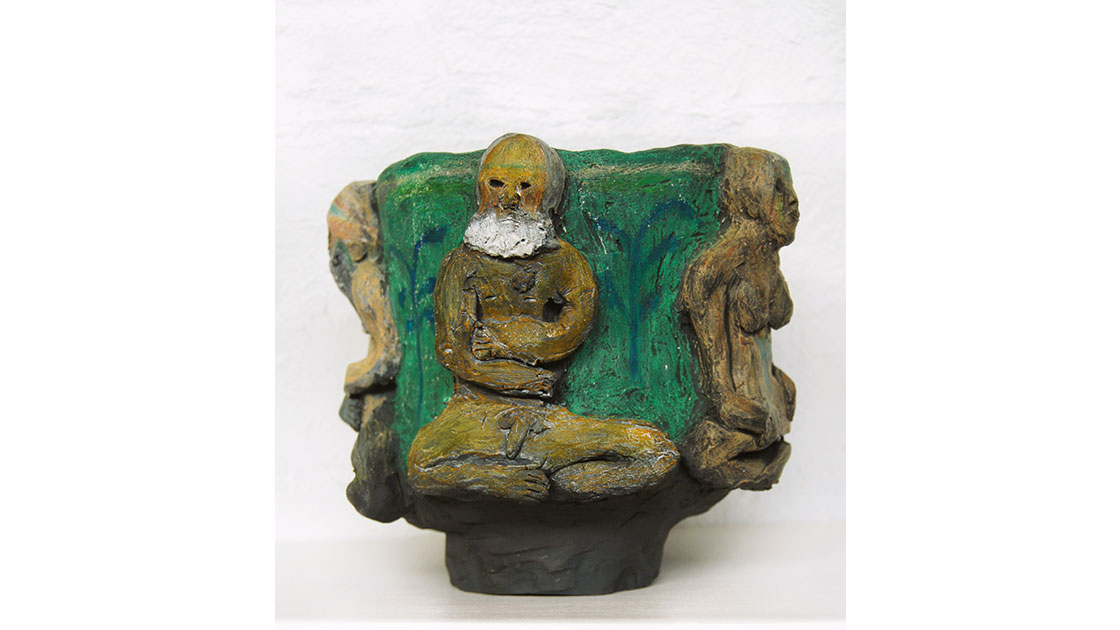
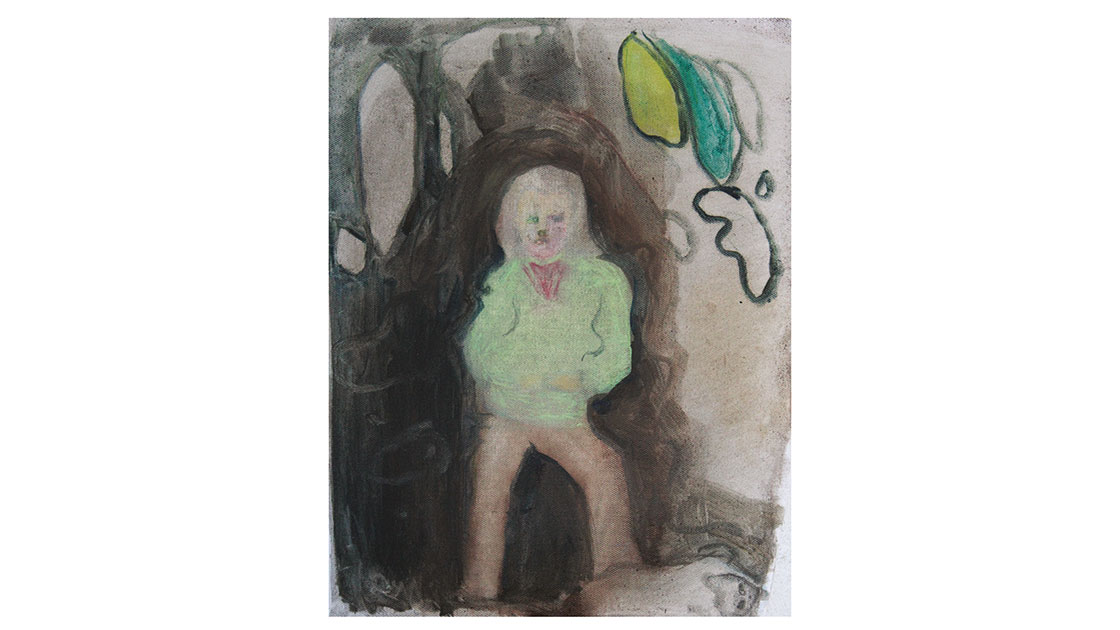
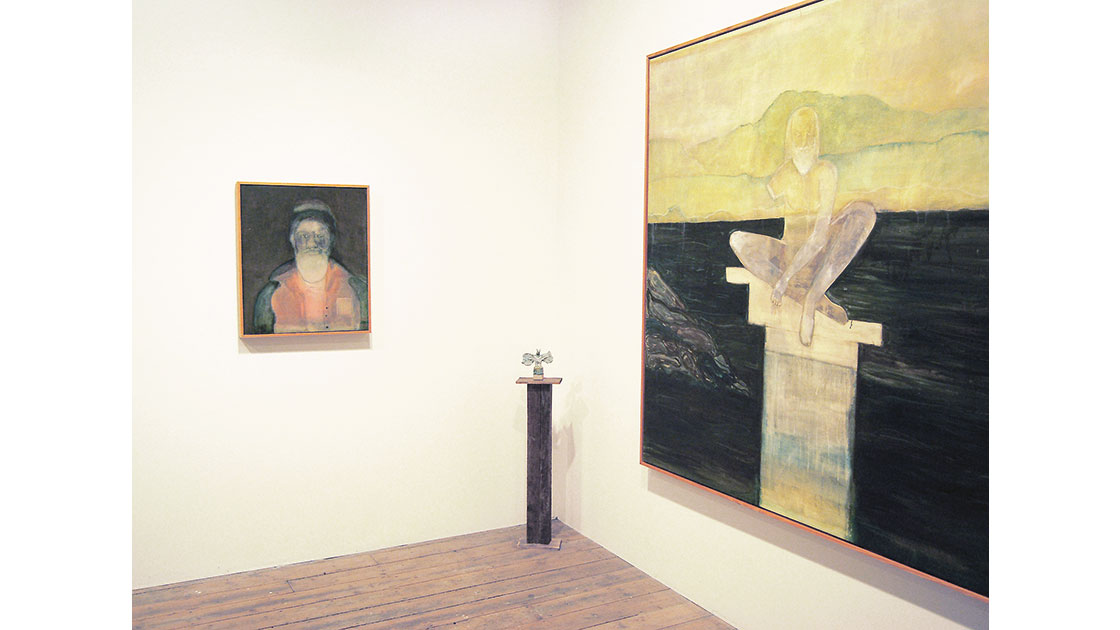
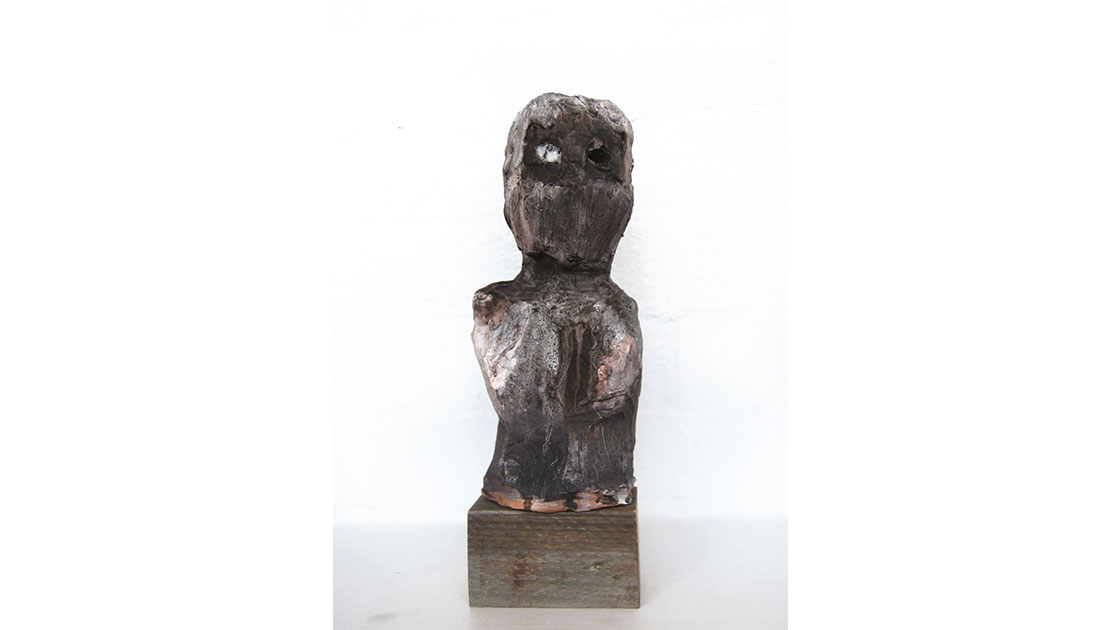
While emerging artist Justin Williams considers himself to be an outsider of sorts, he gives reason to celebrate life on the outside. Growing up in the Dandenong Ranges of Victoria, Williams was exposed to the fascinating lives and stories of those who subsist on the periphery of society. His subject matter in turn appreciates the curiosities of mystifying cults and phantom panthers. These stories imbue the surfaces of his smoky ink faces on paper, his pellucid figures on canvas or his dappled stoneware ceramic sculptures. Furthermore, Williams strives to venerate the wonder of imperfection and explore an array of varied styles. With this, and his partnership with Anna Pappas Gallery in Melbourne, Williams is establishing himself as a young and exciting Australian artist to look out for.



Can you tell me a little about your background and how it might have impacted your work today?
I had a pretty standard childhood, a sort of middle class family. I don’t know if that’s the perception of a ‘normal Australian upbringing’ but I didn’t really feel like I fitted into that kind of lifestyle – like the kids and a family in the suburbs. I guess that’s what pushed me into looking at alternative styles of work. So perhaps without saying it’s a major impact, I think it was more perhaps a fear of the ‘everyday’.
Your first alternative style of work was graphic design, wasn’t it?
Yeah, I studied design and illustration and then worked as an illustrator for a couple of years with a few design companies. But gradually it became very restricting and art sort of took over from there I guess. I’m definitely glad that I approached it in that way though because it’s allowed me to be very experimental and perhaps more honest in what I do. For me, I seek out other people, perhaps that some might not even classify as artists, and learn things from them, whether it’s ceramics or painting. I look at those people as teachers and have learned through that.
To expand on these ‘teachers’ who have influenced you, who are the major ones?
I’m really influenced by a lot of painters and sculptors from the past, such as Matisse and Picasso. I like looking at some of Picasso’s work over a long period of time and that kind of manoeuvering though different scenes and styles and really being fearless in image approach. He takes on such a drastic change in his form but there is always that kind of essence of him within each work. Some of my early work you’d more or less cringe at but I can see that there are links with what I am doing now. I think without doing those kinds of things I wouldn’t have been able to do what I do now.
A main source of inspiration for your work is your connection to the Dandenong Ranges and its stories; can you explain this?
I’m very wary of having direct things in my paintings. I don’t know if that’s a more immature way of working, but if I’m living in area for a long time I want to document what’s going on. I think it’s quite important. There are so many different veins I can follow. Like looking at the ‘Panther sightings’, which I’m really interested in. There was talk of soldiers in WW2 who brought this panther over, and at the end of the war they were told to kill the panther but they set it free. I have these things in the back of my mind but I never really force the images onto it, I sort of just trust it to go where it needs to go.
Can you tell me about your studio and your art-making process?
It’s a bit different now because we’ve moved down from the mountains and bought a factory space in a more industrial area. I have had studios for long enough to get into a good routine, trying to do nine-to-five. On a basic morning I’ll prep up all the [raw] linen, working on a lot of different smaller studies and they’ll inform the larger paintings. I use really raw pigment and I’ll lay out a heap of base colours, then build up layers and then scratch it all right back to get these nice abstract lines. It bounces between having a very direct idea of what I want the painting to be, to letting it take its own organic form. I’ll rework them over a process of about 12 months but I work on a lot of works at the same time. It’s the same with the sculptural works; I’ll grab a big slab of clay and just work the forms out of that.
To continue with your art-making process, I understand that you are also interested in the Japanese technique of ‘Wabi-Sabi’ that celebrates imperfection. How does it enter your own process?
I guess that was sort of accompanying my partner [Deanne Sarita Smart]. She does traditional table wear, pottery and ceramics so we have a lot of kilns. I was looking at how within the Wabi-Sabi Japanese style of making tea-bowls, they have a large amount of clay and throw hundreds of these tea-bowls and cut them off at the hump. They just select the few that they really like and so there’s this lack of ego within the work. That was something that really interested me because I was feeling like some of my paintings had become a little too rigid and perhaps too decorative in a way. I wanted to step back and be able to have some accidents and have a very natural way of working. So my portraits are more based on accidents and a lack of ego.
You have such a wonderfully varied collection of styles; what is it that prompts you to shift between styles for a given work – the subject matter, the theme?
I think it’s a combination of things sort of floating up. It might be as simple as a distraction from working on something that is taking a long time and trying something else. It’s maybe a kind of a schizophrenic way of working but it’s a process of sort of opening up to a few different styles of working.
What excites you with your work at the moment and what’s next?
Well, I’ve just finished a show in Sydney and I’ve got another show in July this year with Anna Pappas Gallery. I think the fact that I don’t know what will be next is kind of exciting.
Justin Williams is represented by Anna Pappas Gallery, Melbourne.
EXHIBITION
Anna Pappas Gallery
July, 2015
Courtesy of artist, Anna Pappas Gallery and Mild Manners Gallery
The first work you encounter in Edge City is a gate, Settlement #8, 2025. Not one to pass through (not anymore), but a threshold nonetheless....
Designed to impress, the number and size of paintings—twenty-nine at nine square metres each and one even bigger—are a spectacle, lifting the exhibition from an...
Skilfully assimilating secondary sources throughout Paris in Ruins, Smee at the conclusion of Part One, “Salon of 1869,” writes that Auguste Renoir’s and Claude Monet’s...
Multidisciplinary artist Shireen Taweel looks skyward, into the night and beyond, with her exhibition the trig point. Drawing on fieldwork in 2025 at the Siding...
It was back in 2011 that Pip Wallis, senior curator at the Monash University Museum of Art (MUMA), remembers first seeing the work of Balinese...
Senior Pitjantjatjara artist, Tuppy Ngintja Goodwin, was born in 1952 near Bumbali Creek in the Northern Territory, close to the border with South Australia; daughter...
For those of us who seek out unfamiliar voices and see the potential for diverse cultures to create new meanings and memories in a postcolonial...
Show me the beauty of a body contorted by thrall. Then, show me the thrall. Shame is a vast word....
Kon Gouriotis: How did you come to be working with the Yinhawangka community? Pedram Khosronejad: My journey to working with the Yinhawangka community has...