ESSAY I The Art of Gathering: Fowlers Gap and the Australian Artist Camp
Fourteen hours’ drive from Sydney and then just over 100 kilometres from Broken Hill, Fowlers Gap, the University of New South Wales’ Arid Zone Research Station, offers a landscape of extremes: vast skies, fragile ecosystems and ancient histories. Here, time slows and observation becomes a way of knowing. Through immersion in this remote country, the artist camp creates a space for connection, reflection and discovery, revealing a landscape in constant transformation.
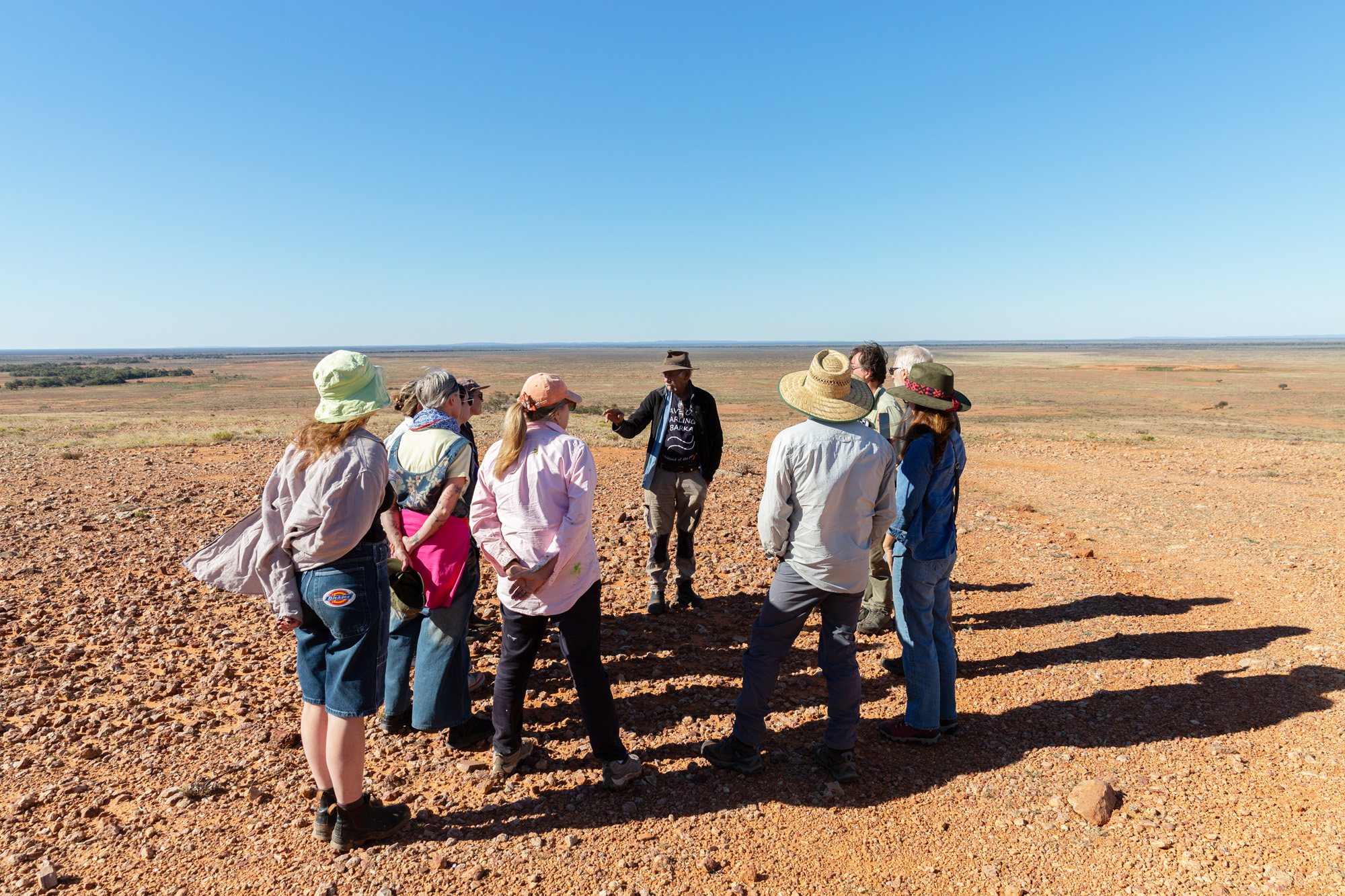
No artist creates in isolation. Every painting carries traces of the conversations, places and histories that shaped it, preserving within its surface a particular moment of exchange. While the studio remains a site of making, artistic practice has long been nourished by movement beyond its walls—by journeys into the landscape, encounters with others and the communities that emerge through shared acts of looking.
The artist camps facilitated by Arthouse Gallery in May 2024 and again in May 2026 belong to a long Australian tradition of artists gathering in remote landscapes to live and work collectively. Their origins can be traced to the late nineteenth century, when Australian painters embraced the principles of en plein air painting that had emerged in France, encouraged by the invention of the portable paint tube in 1841 and expanding railway networks that made painting directly from nature increasingly accessible. As a prominent Australian example, artists’ camps emerged in the late nineteenth century with the formation of the Heidelberg School, led by artists such as Tom Roberts (1856–1931) and Arthur Streeton (1867–1943). Artists worked alongside one another, sharing observations and ideas in an environment that encouraged experimentation and mutual influence.
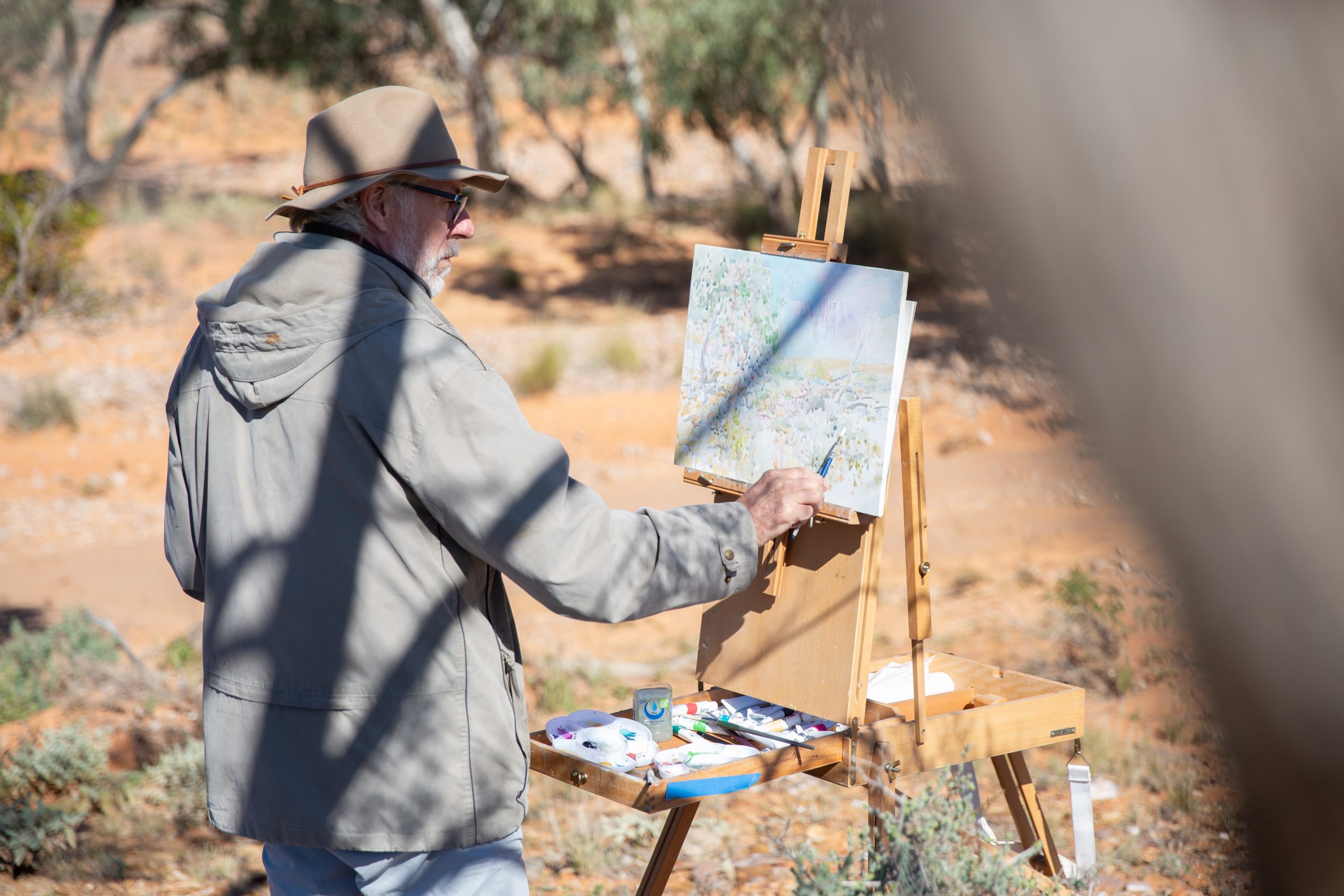
Colin Pennock at Fowlers Gap, 2024, digital image.
Yet the Fowlers Gap residency is not simply a contemporary iteration of the nineteenth-century artist camp. Its remoteness, silence and vast scale create a particular set of conditions for looking, while the station’s scientific history introduces another mode of observing and understanding the landscape. Here, artistic enquiry exists alongside ecological research, encouraging artists to consider the desert not as an empty expanse but as a complex and living environment. In the isolation of Fowlers Gap, the social experience of working alongside other artists becomes inseparable from the experience of looking closely at the landscape itself.
It’s fascinating to see the payoff of these camps: how each artist encounters the same landscape yet translates it in entirely different ways and how, through those varied interpretations, my own understanding of the land deepens. The sketches and canvases shared in dust-covered iPhone images carry the place with them. You can almost feel the wind sweeping across the arid plains and the dust rising to blur the red earth.
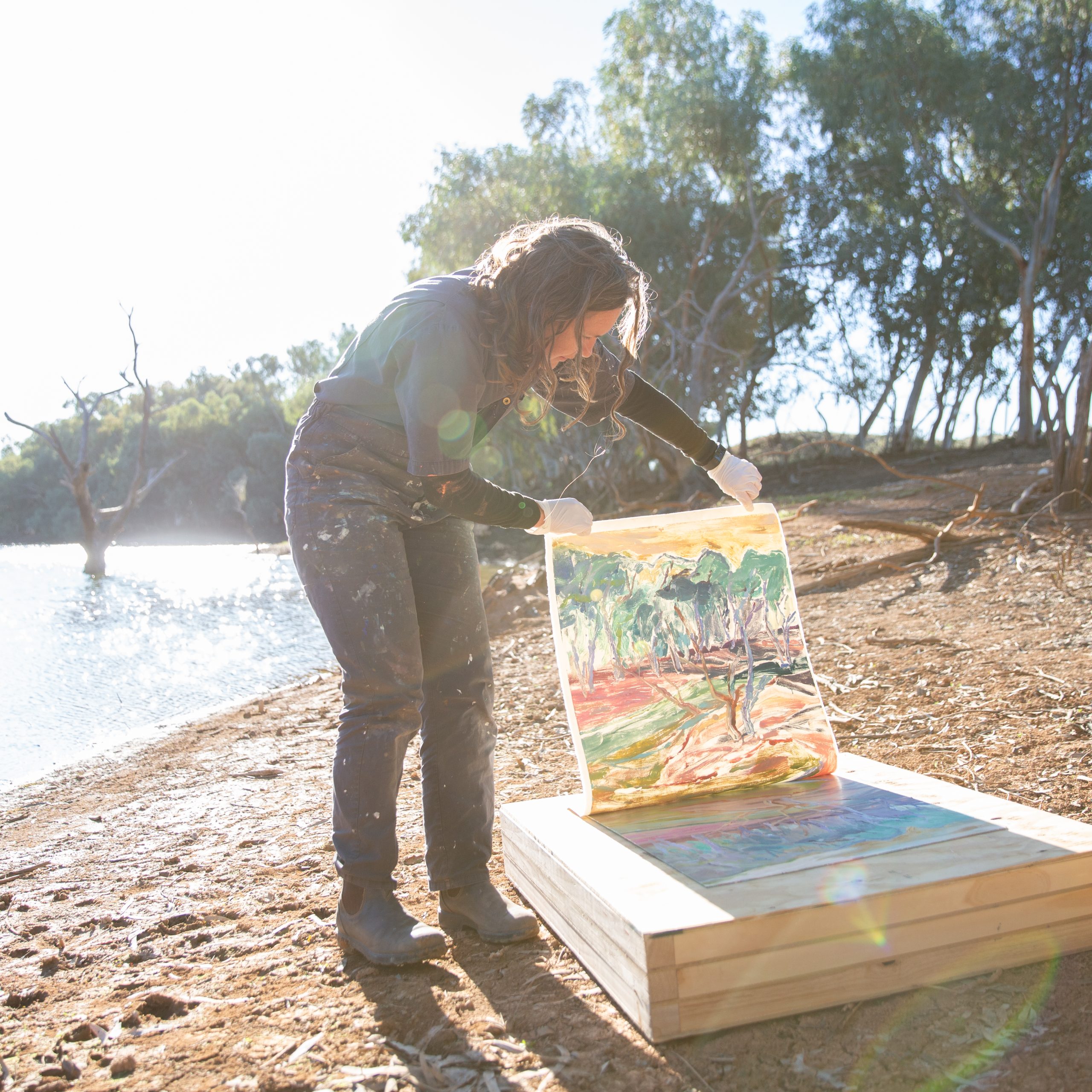
Nicole Kelly at Fowlers Gap, 2024, digital image.
For artist Jo Davenport, the camp builds on a relationship with the landscape that began in childhood: “As a child, I travelled there [Fowlers Gap] several times with my family, experiencing it through youthful curiosity and adventure. Returning as an adult revealed an entirely different landscape.” It is, she reflects, maturity and experience that transform not only the way we see a place but the place itself.
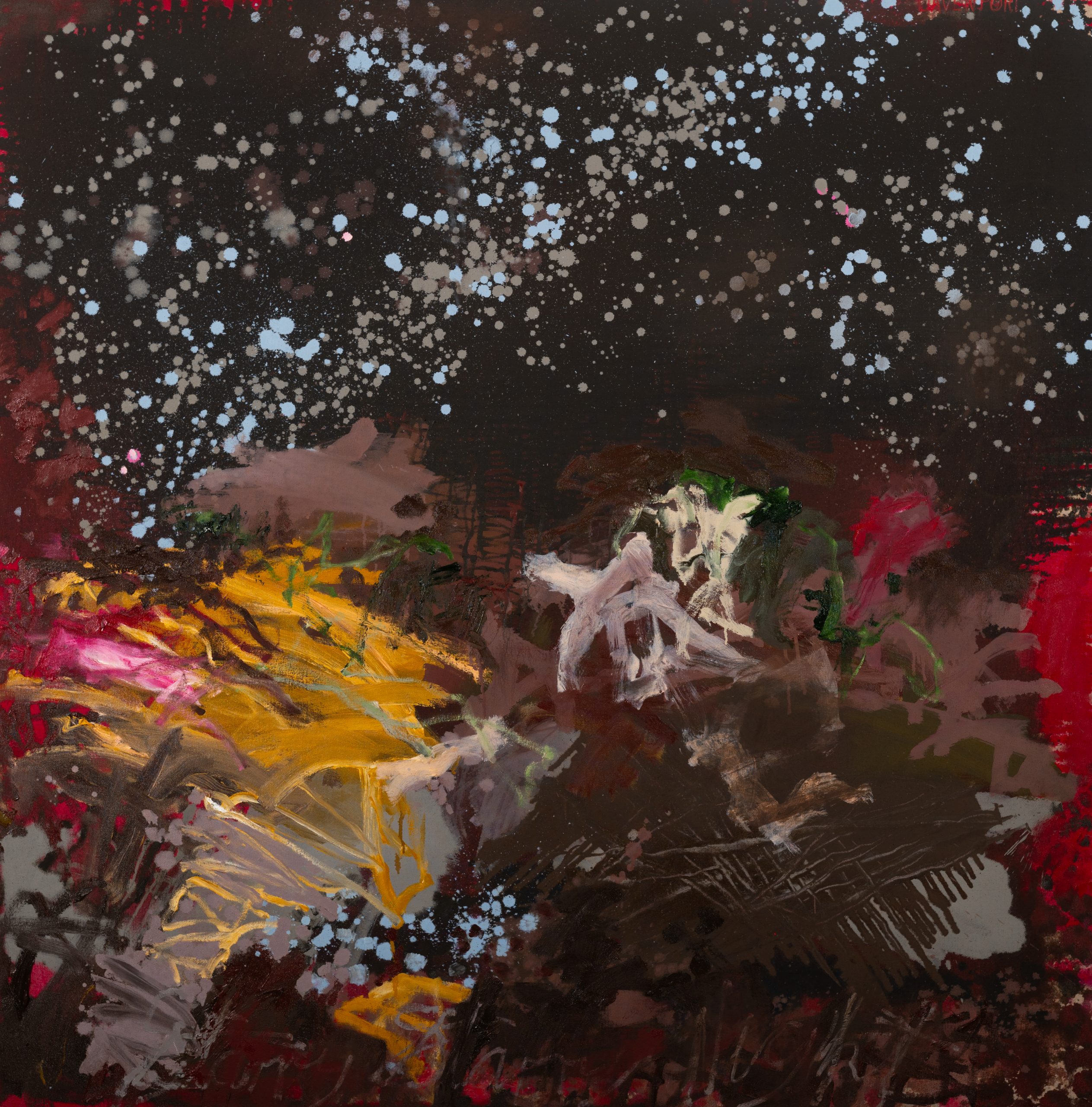
Jo Davenport, Starry, Starry Night, Fowlers Gap, 2026, oil paint, Belgium linen, 150 x 150 cm.
Another participating artist, Emma Walker, highlights the value of artistic connection and collective dialogue, noting that “the notion of connecting with other artists is invaluable. It is something that one experiences at art school and then it starts to dissipate as everyone gets caught up in their careers and lives. But those shared dialogues are so important.” The residencies were brief—no more than a week—requiring artists to work quickly and responsively. As Walker recalls, there was little time for major works; instead, the group relied on fast sketches, photography and long walks through the landscape, gathering impressions and material to develop beyond the camp.
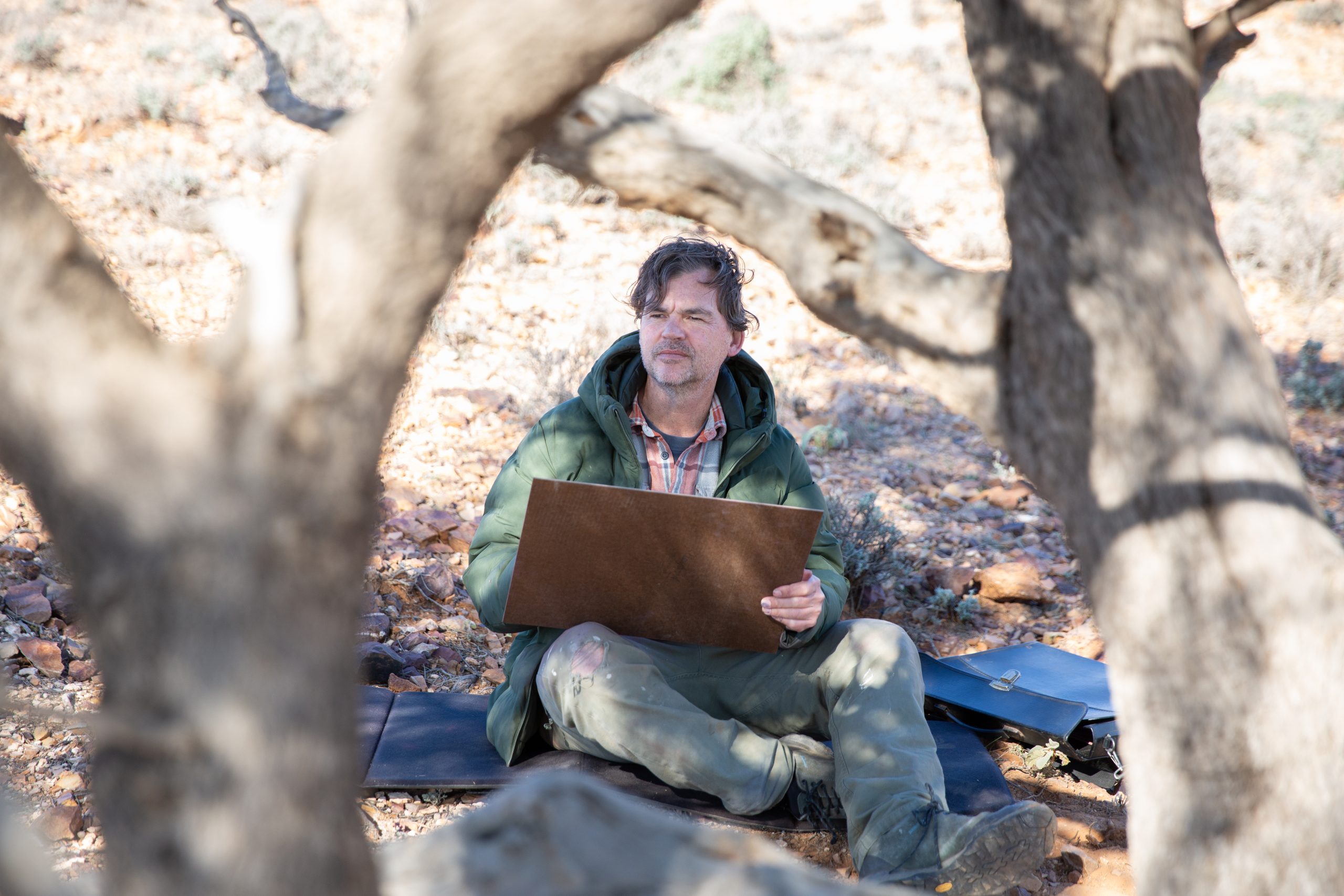
Joshua Yeldham at Fowlers Gap, 2024, digital image.
Unlike Davenport, artist Clifford How arrived at Fowlers Gap without an existing relationship to the landscape. “I was keen to remove the comfort of working from memory, which had developed through constant exposure to the familiar landscapes of my home state of Tasmania, and instead rely entirely on direct visual observation,” he says. The shift demanded a complete rethinking of his painterly language. The cool blues and violets that typically define his depictions of Tasmania’s lush bushland gave way to a palette of reds, yellows and oranges, as the arid landscape compelled him to see—and paint—differently.
Arthouse Gallery Director Ali Yeldham also describes the experience as an opportunity for both artistic and gallery development, allowing artists to exchange ideas and deepen their creative and ecological understanding while giving the gallery greater insight into the artists’ practices. Yeldham says showing the Fowlers Gap works at Sydney Contemporary gives audiences an opportunity to encounter the landscape through the artists’ “rich conversations, expressions and intimate impressions of nature and the natural world.” She hopes their diverse approaches, ecological concerns and growing understanding of Country inspire deeper connection with this landscape.
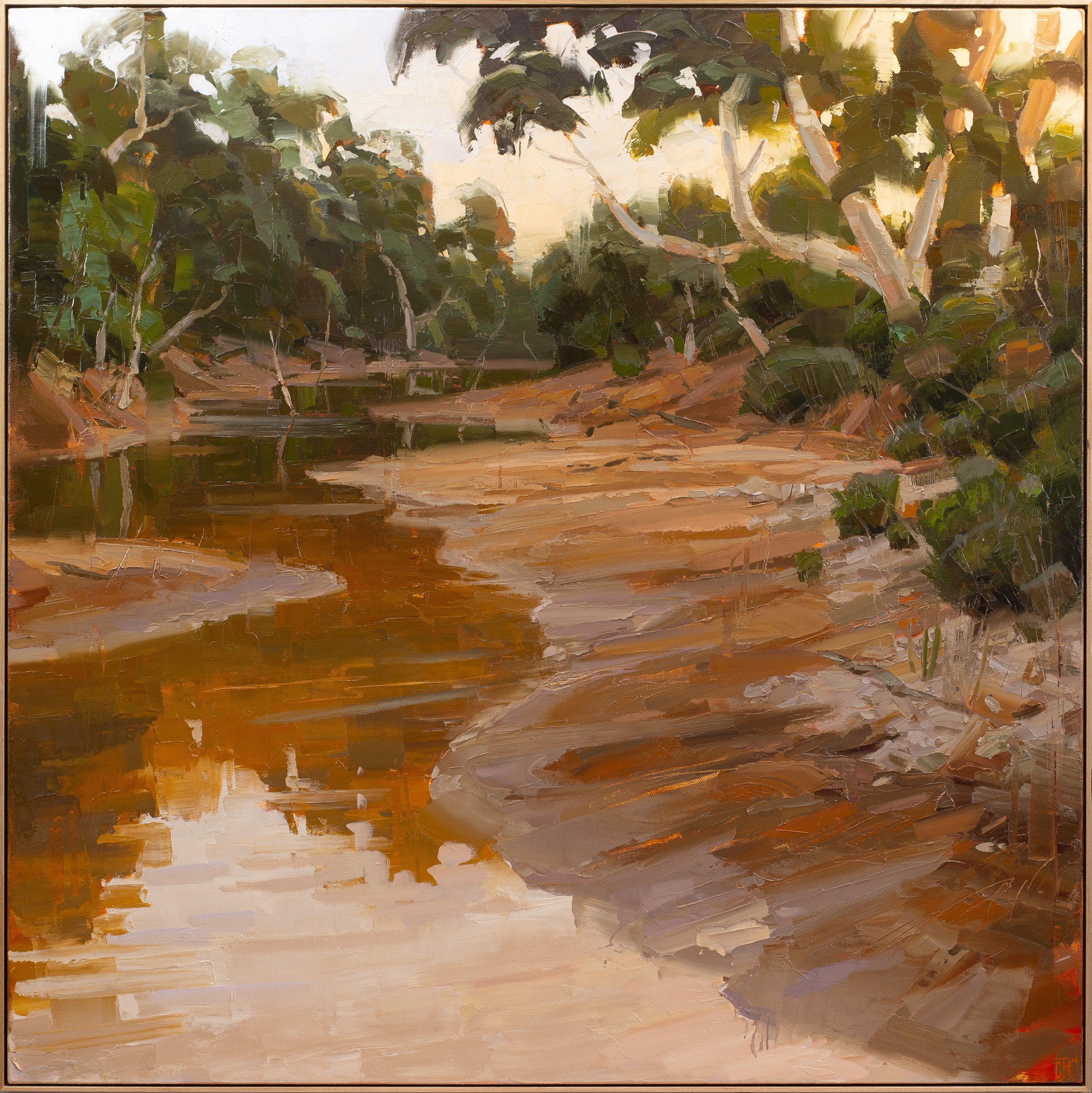
Clifford Howe, Memory of Rain, 2026, oil paint, linen, 186 x 186 cm.
At Fowlers Gap, the landscape becomes both teacher and collaborator. Through patient observation and shared experience, artists encounter not only a place but new ways of seeing. As How reflects, “I will always remain a student.” It is this openness to learning that allows the desert to continually reveal itself anew.
Exhibition
Desert Varnish – Conversations with Fowlers Gap
3 – 6 September 2026
Arthouse Gallery, Sydney
Sydney Contemporary Art Fair, Redfern
Solomiya Sywak is a Ukrainian-Australian writer based on Gadigal land in Sydney.
Images courtesy of the artists and Arthouse Gallery, Sydney.
The article was first published in Artist Profile Issue 76, 2026.
Two years ago, Macleod returned to his hometown of Christchurch, New Zealand, to be with his mother during the final phase of her life. At...
Edwards was born on Kaurna Yarta in 1998 and raised on Nauo Country in the small seaside community of Tulka, on the Lower Eyre Peninsula....

Under the auspices of Geelong Gallery’s director, Humphrey Clegg, and co-curated by Marianne Mathieu, former scientific director of the Musée Marmottan Monet, and Claire Durand-Ruel...
Nike Savvas: Purple Haze presents intimate screen prints and immersive large-scale installation and video work by Savvas from 2005–2026, each evocative of different places and...
Although physically he is of modest stature, Zofrea has devoted much of his life to grand projects that have been conceived and executed on a...
Through a multidisciplinary collaboration between Rotterdam-based curators, architect Paul Cournet of CLOUD and artist-designer Sabine Marcelis of Studio Sabine Marcelis, the exhibition explores the interplay...
Artificial intelligence will be used by young artists who started using it as kids on their phones. They will see it as a natural extension...

This year’s Biennale arrives under more complex circumstances than most. It is shaped by the profound loss of its curator, Koyo Kouoh (1967–2025), whose exhibition...
The weekend markets at Fairfield Showground have been one of Western Sydney’s great institutions for more than fifty years. Fresh fruit and vegetables, children’s clothes,...