Shane Forrest: to the point
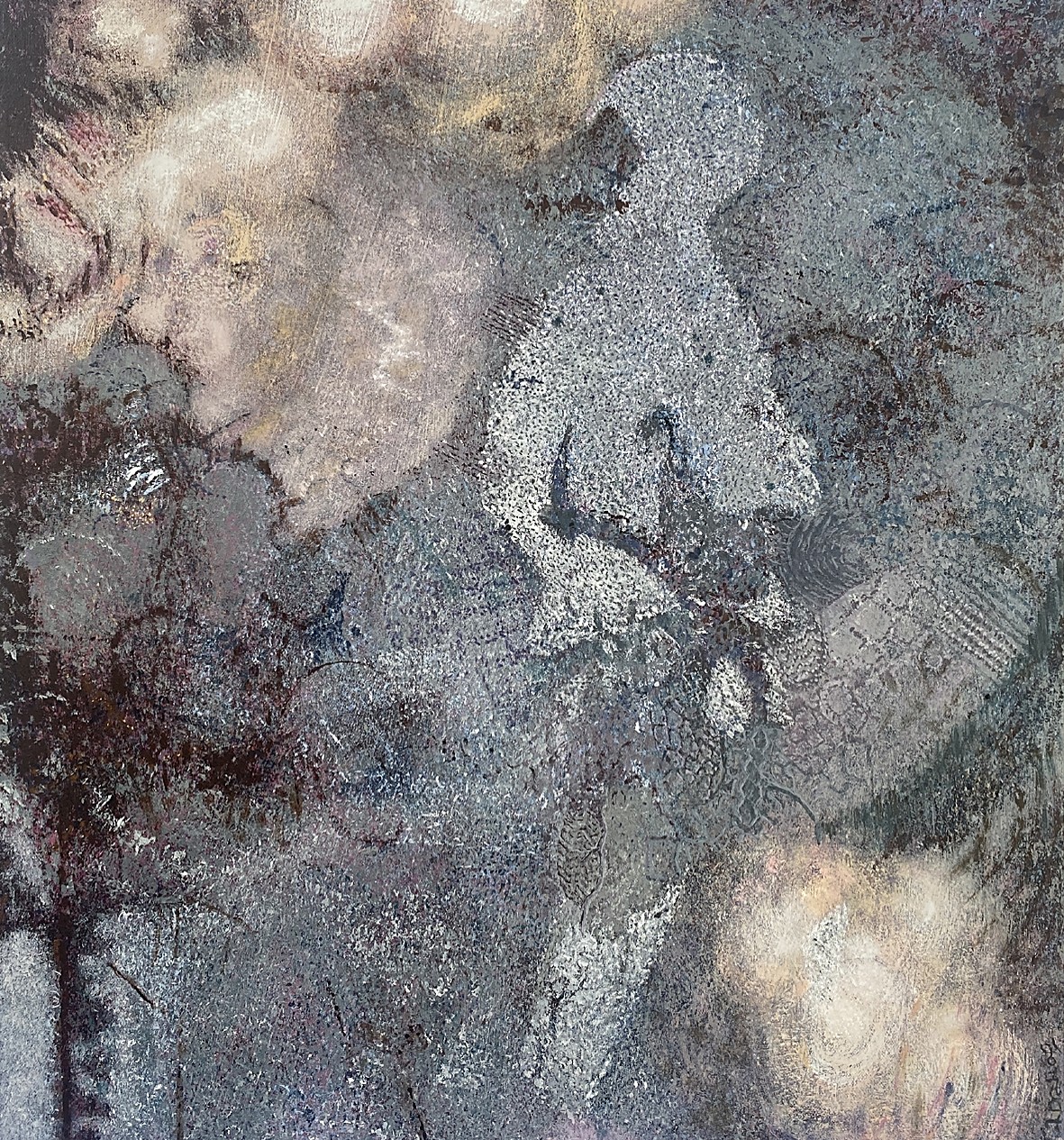
The weekend markets at Fairfield Showground have been one of Western Sydney’s great institutions for more than fifty years. Fresh fruit and vegetables, children’s clothes, secondhand gear and hot food, all the stalls are placed in rows, each designated by a painted number. In time, as the numbers fade, they are repainted. But in many cases the stencils used to make the numbers are a slightly different design, or the painter has decided to put the number in a slightly different place. So, over the years the layers of numbers act as ghosts of the histories of this place. I imagine that for stallholders and market regulars, the sight of these marks on asphalt brings back many memories, rather like Proust’s experience of eating a madeleine.
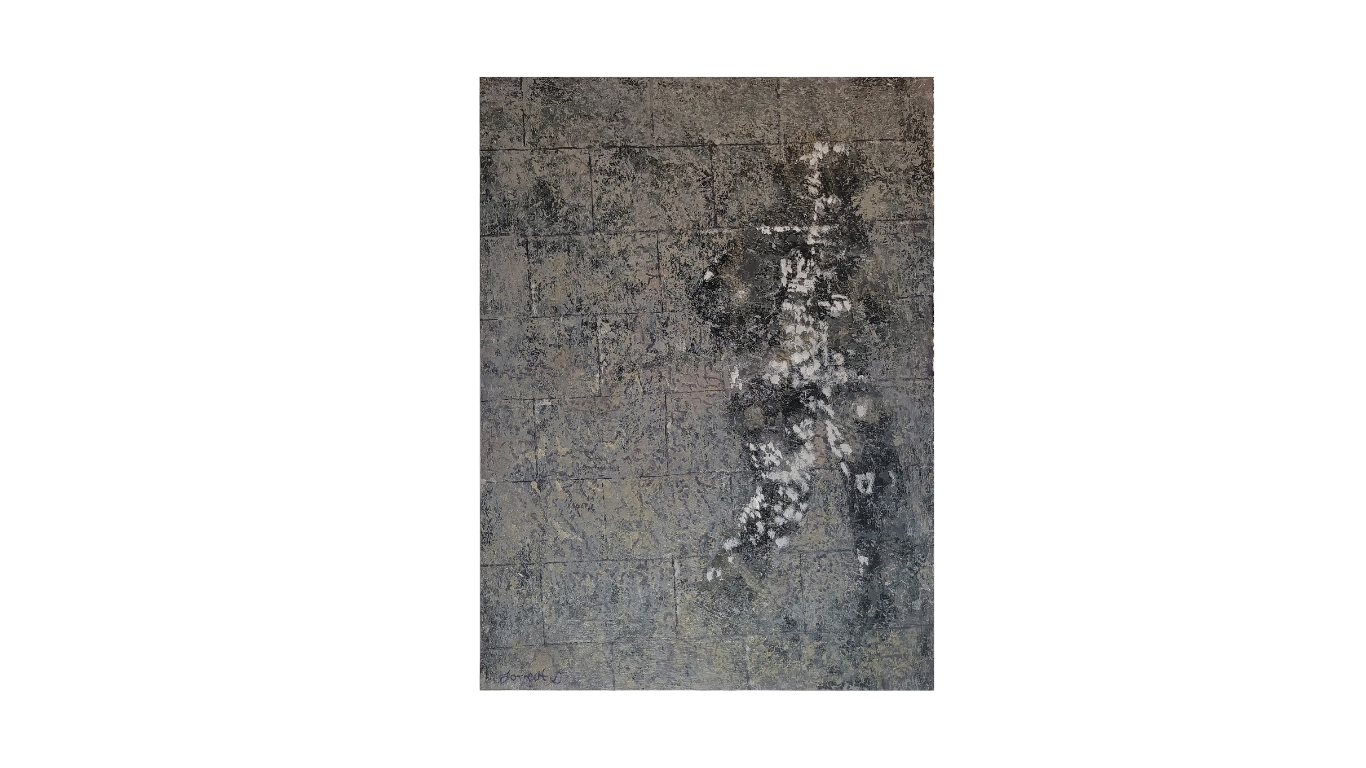
Shane Forrest, Point of departure, 2026, acrylic paint, paper, 54 x 38 cm
Shane Forrest is an artist with his eyes firmly on the ground. He has long been fascinated by both the passing of time and the fading of its marks, which is why the multiple markings from the old market stalls are the subject of so many of his recent paintings.
Forrest sees that nothing lasts, that entropy—the return to chaos from order—is the natural way of things, which is why he seeks to paint uneven pavements and fading lines. This is the artist as archaeologist, meticulously recording fine details of time as it passes. His precise technique is reminiscent of the pointillists of Fin de Siècle France. Each tiny stroke is a very slight gradation of tone. Where possible, he paints on recycled canvases and paper. Nothing is permanent.
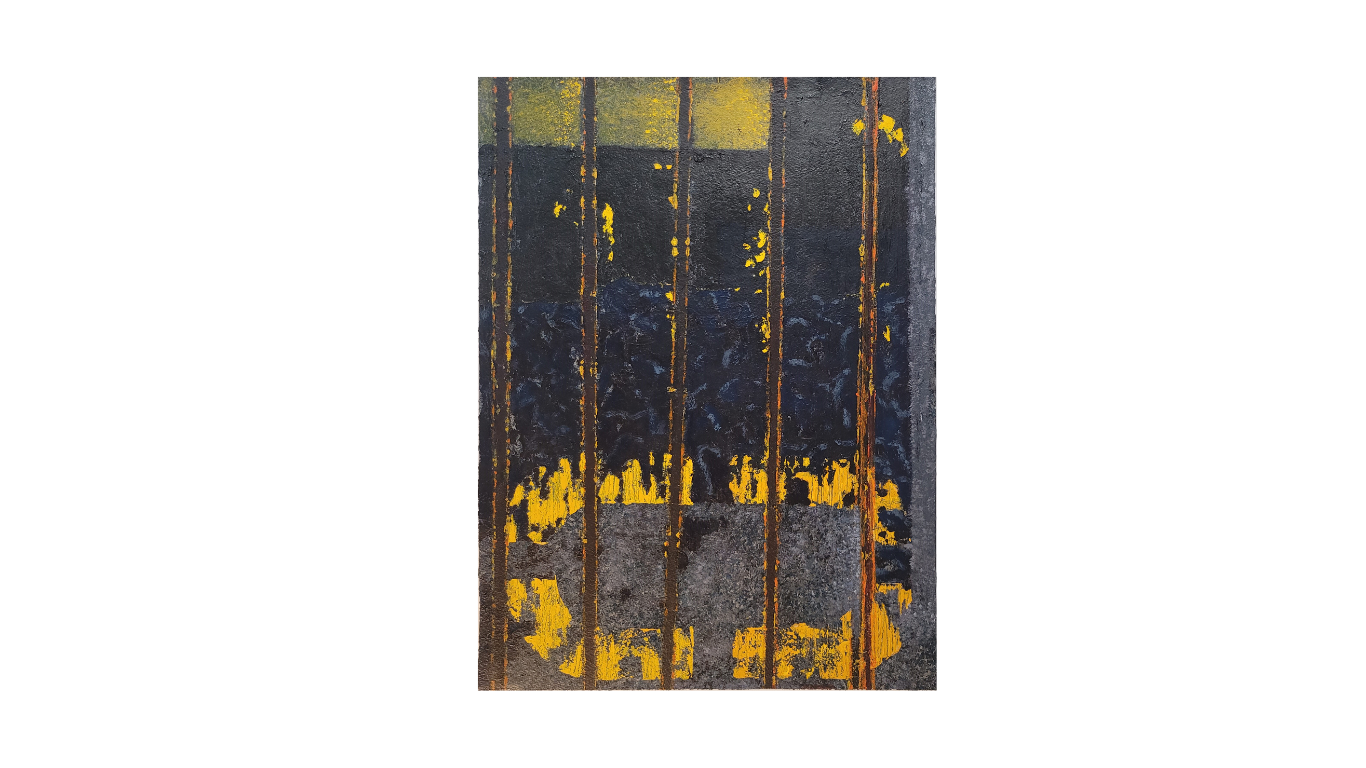
Shane Forrest, Past the Point of no return, 2026, acrylic paint, paper, 55 x 40 cm
Forrest’s wife, Jane Naylor, has cheekily named each painting in relation to the points that make them. A painting of a fading white arrow is captioned To the Point, 2026. While it gives the impression of times past, this work is hardly static, as the pattern of leaves and swirls imply wind, weather and erosion. In Point of No Return, 2026, Forrest has painted numbers so faded that they are nothing but faint echoes. In Sore Point, 2026, the corroded white line contrasts with the neat stones of the pavement, while the horizontal line of Zabrinski Point, 2026, is a willful distortion of Michelangelo Antonioni’s Zabriskie Point, that iconic nihilistic movie of 1970.
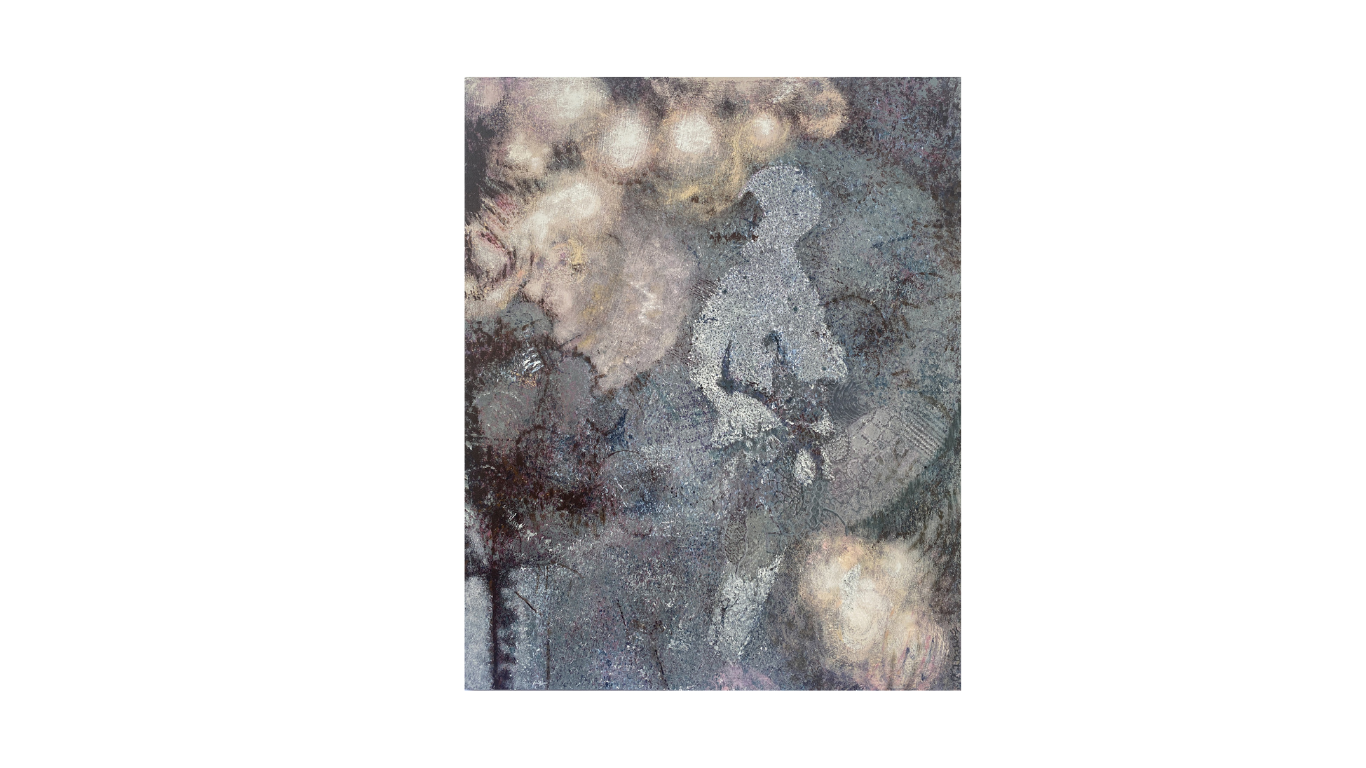
Shane Forrest, Flash Point, 2026, acrylic paint, canvas, 76 x 61 cm
At a time when the planet is burning and those in power seem determined to destroy the future of humanity, Shane Forrest’s paintings make me wonder about what will survive if people are no more. If we go the way of the dinosaurs, what will some future species make of the marks of our everyday lives?
Exhibition
At This Point
5 – 28 September 2026
Rogue Pop-up Gallery, Redfern, Sydney
Dr. Joanna Mendelssohn AM is an Honorary Senior Fellow, School of Culture and Communication, The University of Melbourne.

Under the auspices of Geelong Gallery’s director, Humphrey Clegg, and co-curated by Marianne Mathieu, former scientific director of the Musée Marmottan Monet, and Claire Durand-Ruel...
Nike Savvas: Purple Haze presents intimate screen prints and immersive large-scale installation and video work by Savvas from 2005–2026, each evocative of different places and...
Although physically he is of modest stature, Zofrea has devoted much of his life to grand projects that have been conceived and executed on a...
Through a multidisciplinary collaboration between Rotterdam-based curators, architect Paul Cournet of CLOUD and artist-designer Sabine Marcelis of Studio Sabine Marcelis, the exhibition explores the interplay...
Artificial intelligence will be used by young artists who started using it as kids on their phones. They will see it as a natural extension...

This year’s Biennale arrives under more complex circumstances than most. It is shaped by the profound loss of its curator, Koyo Kouoh (1967–2025), whose exhibition...
No artist creates in isolation. Every painting carries traces of the conversations, places and histories that shaped it, preserving within its surface a particular moment...
In recent times, Yorgos Lanthimos has shifted toward photography, noting in a Guardian interview, 2026, that he needs respite, saying, “it might be a couple...
In Australia, political cartoons were altered by several events during the 1960s: the arrival of Les Tanner’s (1927‒2001) instinctual wit at The Bulletin, Bruce Petty’s...