ESSAY | Sriwhana Spong: A State of Unknowing
Rooted in ritual yet driven by technology, Sriwhana Spong’s first Australian survey turns faith and inheritance into her works. Bronwyn Watson speaks to Spong and curator Pip Wallis ahead of the MUMA opening.
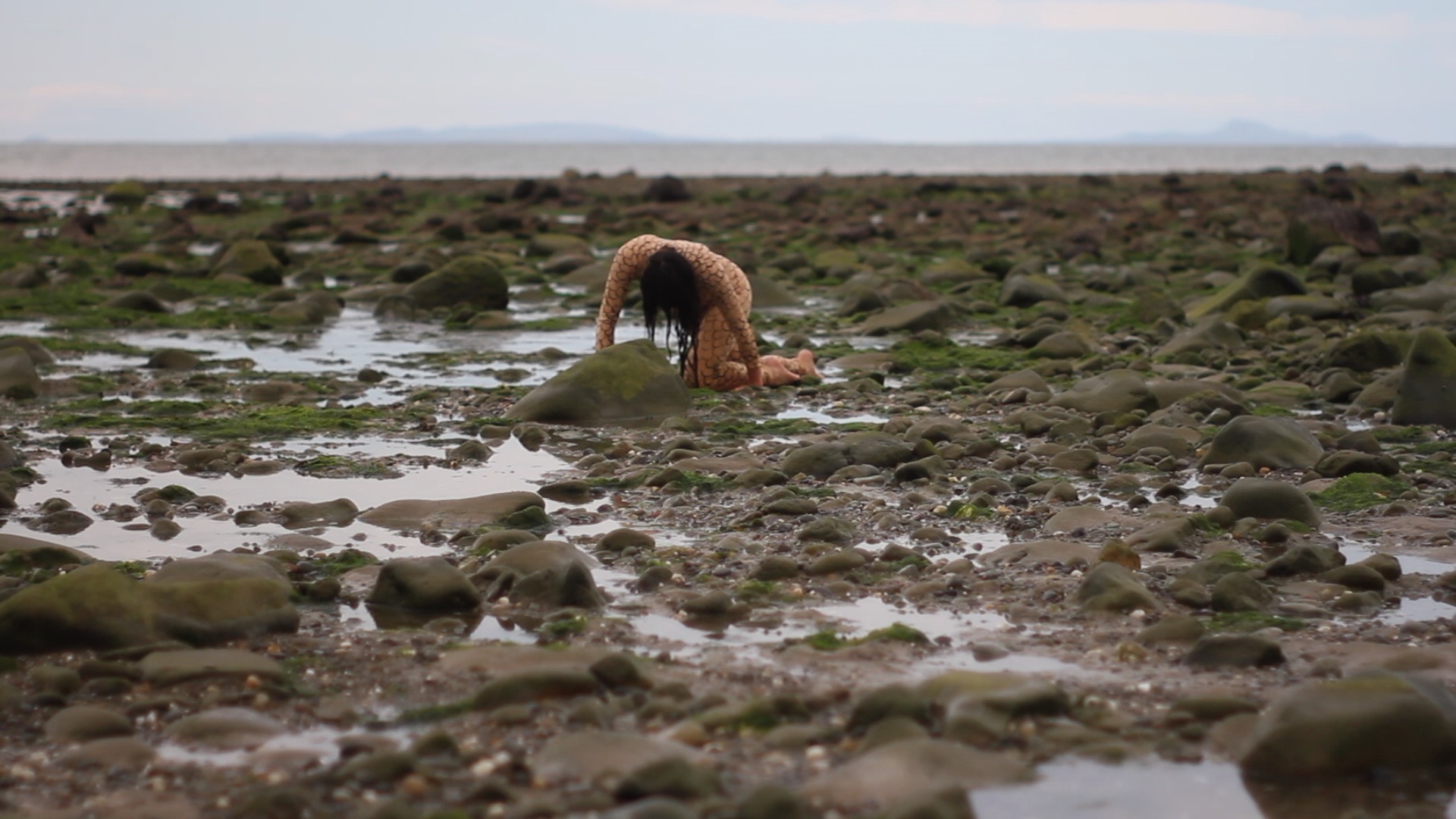
It was back in 2011 that Pip Wallis, senior curator at the Monash University Museum of Art (MUMA), remembers first seeing the work of Balinese New Zealand filmmaker, sculptor, and performance artist Sriwhana Spong in a gallery in Melbourne. At that time Spong was an emerging artist and Wallis was so struck by Spong’s art that she closely followed her career and hoped to eventually curate an exhibition of Spong’s work. Wallis’s aim has now come to fruition with the first Australian survey exhibition of Spong’s work, Sriwhana Spong: HA HA HA, on display at MUMA before touring to Te Pātaka Toi Adam Art Gallery, Wellington, New Zealand.
The exhibition, co-curated by Wallis and Melanie Oliver, spans over a decade of Spong’s practice and features twenty works including new commissions alongside key pieces in film, sculpture, and textiles. There will be performances featuring a group of gamelan instruments Spong created, with each instrument devoted to a different person in her life. Also joining Spong’s orchestra is a new instrument that she commissioned from musicians Lachlan Anderson and Ryan Nicol in which strings are made to resonate through spinning magnets. Furthermore, on display will be a selection of instruments from the 1927 Gamelan Digul, a gamelan constructed by the Javanese court musician and activist Bapak Pontjopangrawit from objects found around the Dutch East Indies prison camp of Boven Digul where he was interned for revolutionary activities.
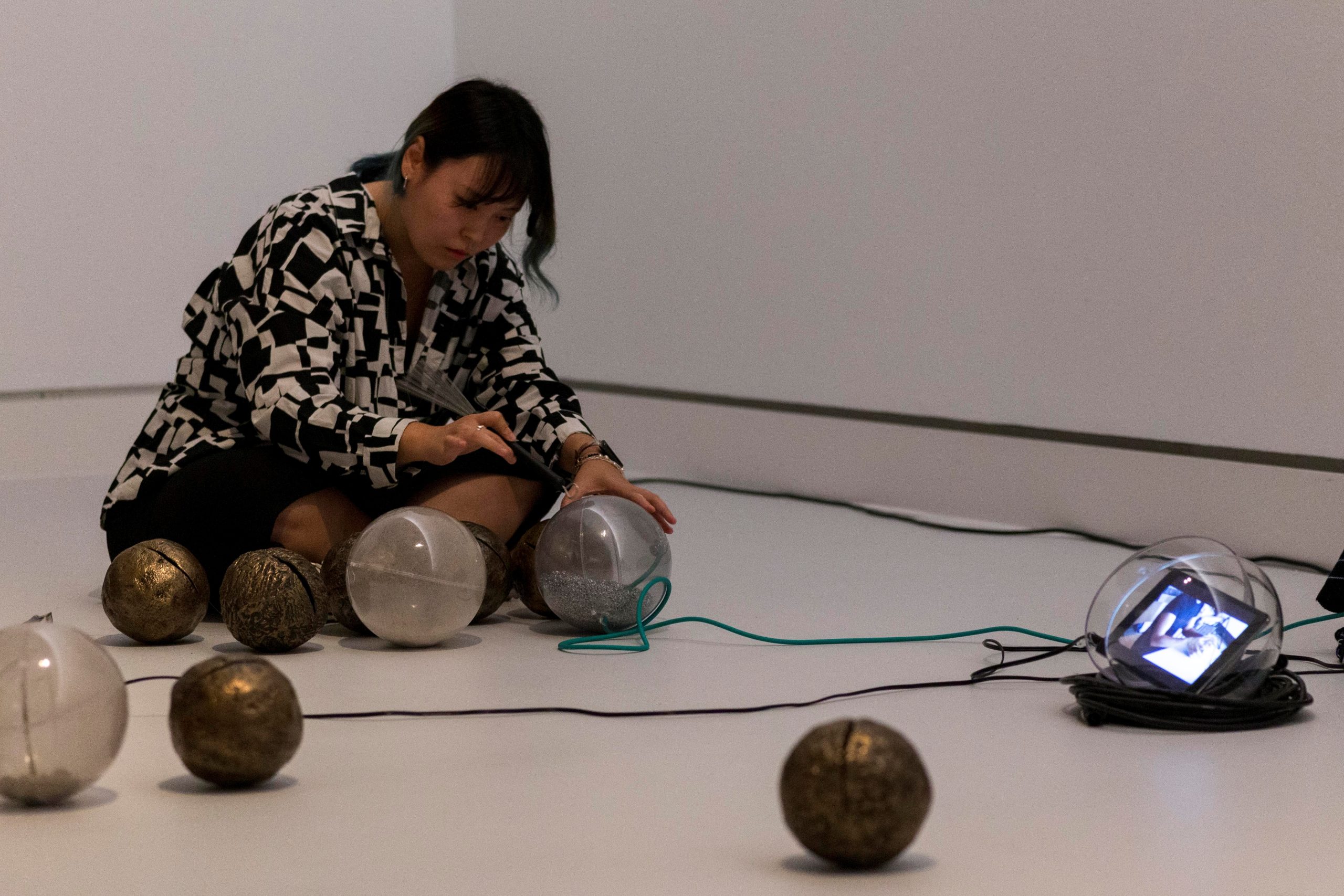
Installation view: Sriwhana Spong, Tasseography of a Rat’s Nest (extended), 2018. A hook but no fish, Pump House Gallery, London, 2018. Photographed by Damian Griffiths.
When I speak to Wallis in Melbourne, she says she was initially interested in the role of performance art and dance in Spong’s early work. “More recently Sriwhana has followed her interest in filmmaking, and it felt like an opportune moment to work with her,” Wallis says. It has been exciting working with Sriwhana to create new work.”
Spong is a significant artist because she refers to present-day themes such as questions of belief and faith, questions of migration and heritage; subjects which are complex and multilayered, with many perspectives, Wallis explains.
“I’m very interested in the way Sriwhana combines historic research, in particular her interest in female mystics, and diving into records, and texts, but she passes it through a very personal, poetic lens, and what emerges is very evocative, very heady even.
“Her visual language is so attuned and delicate. For the exhibition, for instance, she is making a sculpture made of peeled pomelo skins. She is electroplating the skins, so they become sculptural objects and they form curves and hang in the space almost like a rib cage. In some ways they are simple, but they become baroque arabesques, and they look almost like script or text the way they curl through the air. Sriwhana’s work folds people in, rather than alienating people, and that’s what I love about her work.”
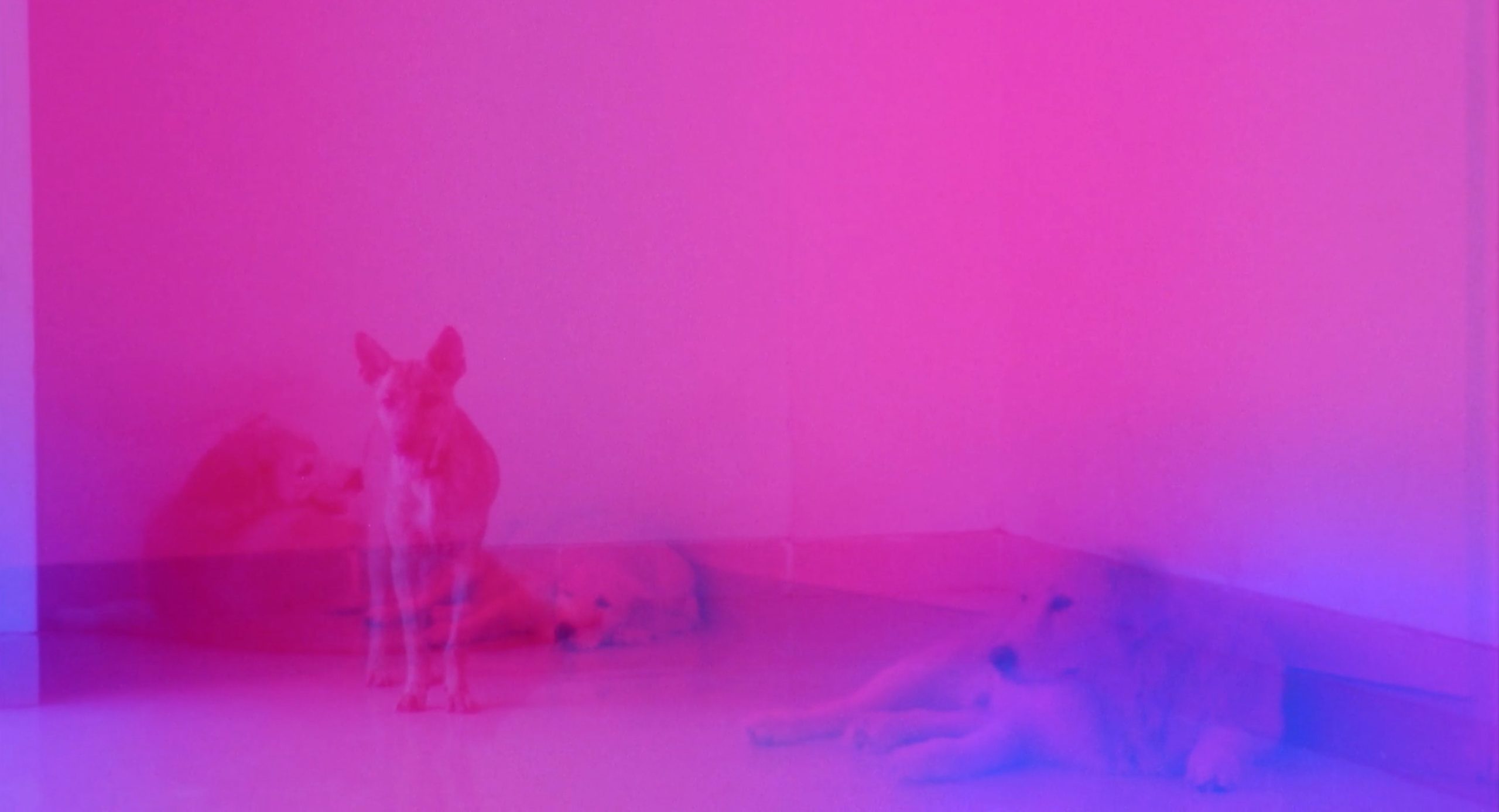
Sriwhana Spong, The painter-tailor, 2019, digital image.
Born in 1979 in New Zealand, Spong is now based in London. For HA HA HA, the major new commission is a film, titled AD, which was filmed in Dartmoor National Park in south-west England. Speaking to Spong from London about the context for AD, she says that in 2018 she made a film in Bali, The painter-tailor, in which she focused on the last painting by her grandfather, the Balinese painter I Gusti Made Rundu (1918–1993), and his transformation of the traditional aun-aun motif.
In early 2025, Spong went to Bali to learn how to draw the aun-aun. “I worked with the artist Ketut Murki, who has been painting since the 1960s,” Spong says. “Learning how to paint the motif is something I’d been wanting to do for a while as a means of thinking about it in a more embodied way, and so this act became the starting point for the exhibition at MUMA, which will also include The painter-tailor as a lodestar.”
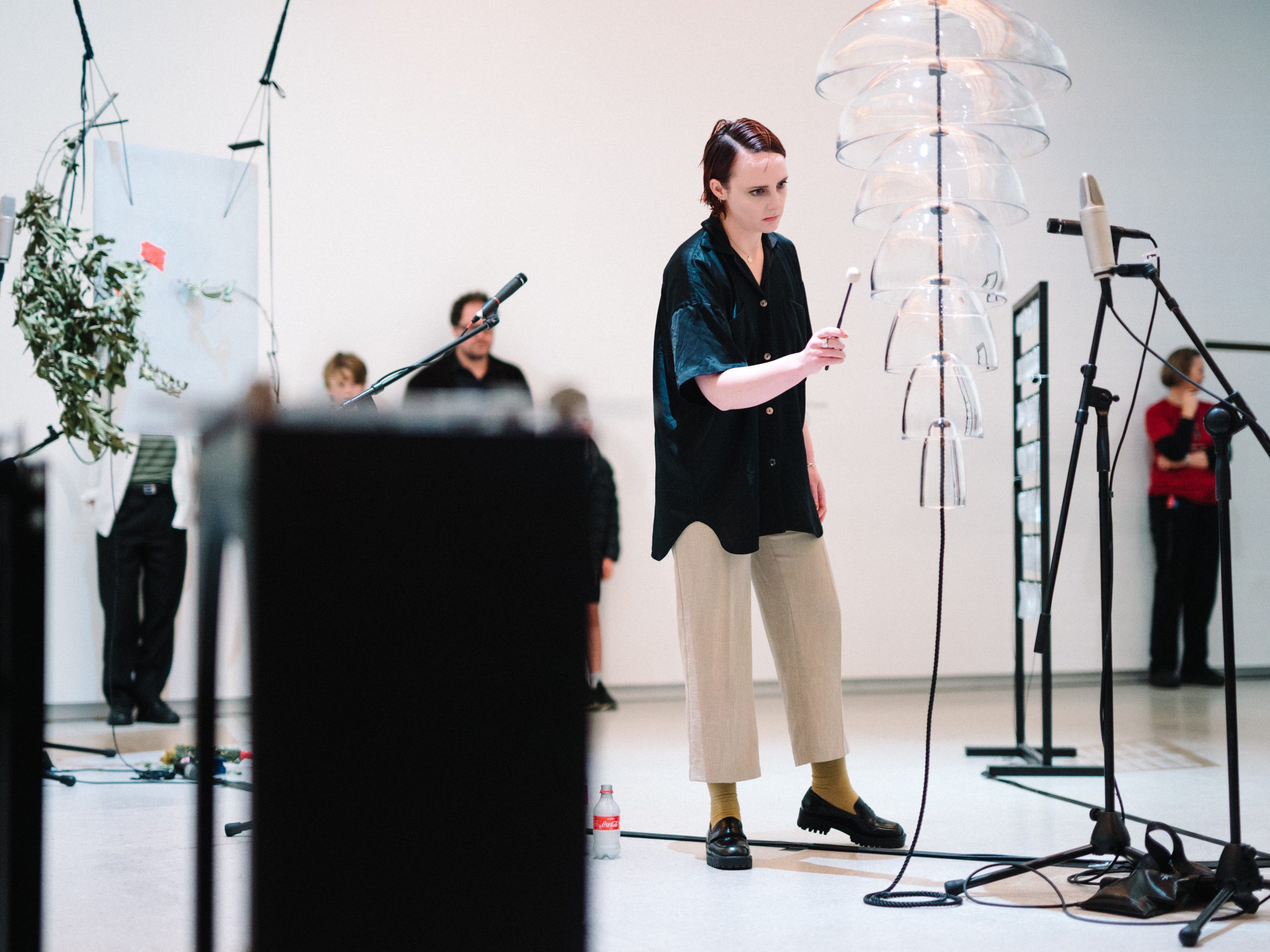
Installation view: The painter-tailor. Performance by Frances Libeau, The 10th Walters Prize, Auckland Art Gallery Toi o Tāmaki, 2021. Photographed by David St George.
Spong’s new film references Lord Byron’s poem, Don Juan (1818-1824), and specifically the character of Adeline. Byron died before finishing the poem and Spong has used artificial intelligence to both complete the poem and as the voiceover from the perspective of Adeline, who in the film is known as AD. “I chose Don Juan, written during the Industrial Revolution, in part because learning how to paint the aun-aun motif led me to think about mist both in terms of its atmospheric effects and what it represents in terms of lack of visibility and uncertainty, a state of unknowing. The present moment is one, perhaps similar to the period in which the anti-epic was written, when technological change produces visions of an uncertain future.”
Spong explains that with film, she never starts with a script. “I like to find the work as I film, as I edit, as sound is introduced. My process is usually driven by how all the different elements come together, rather than channelling them into a pre-determined plan. So, Alice Walter, a fellow artist and a medium and psychopomp, who plays AD, and I got into a car with a costume and a camera, and after that it was about spending time on the moors together, seeing how we responded to the environment.”
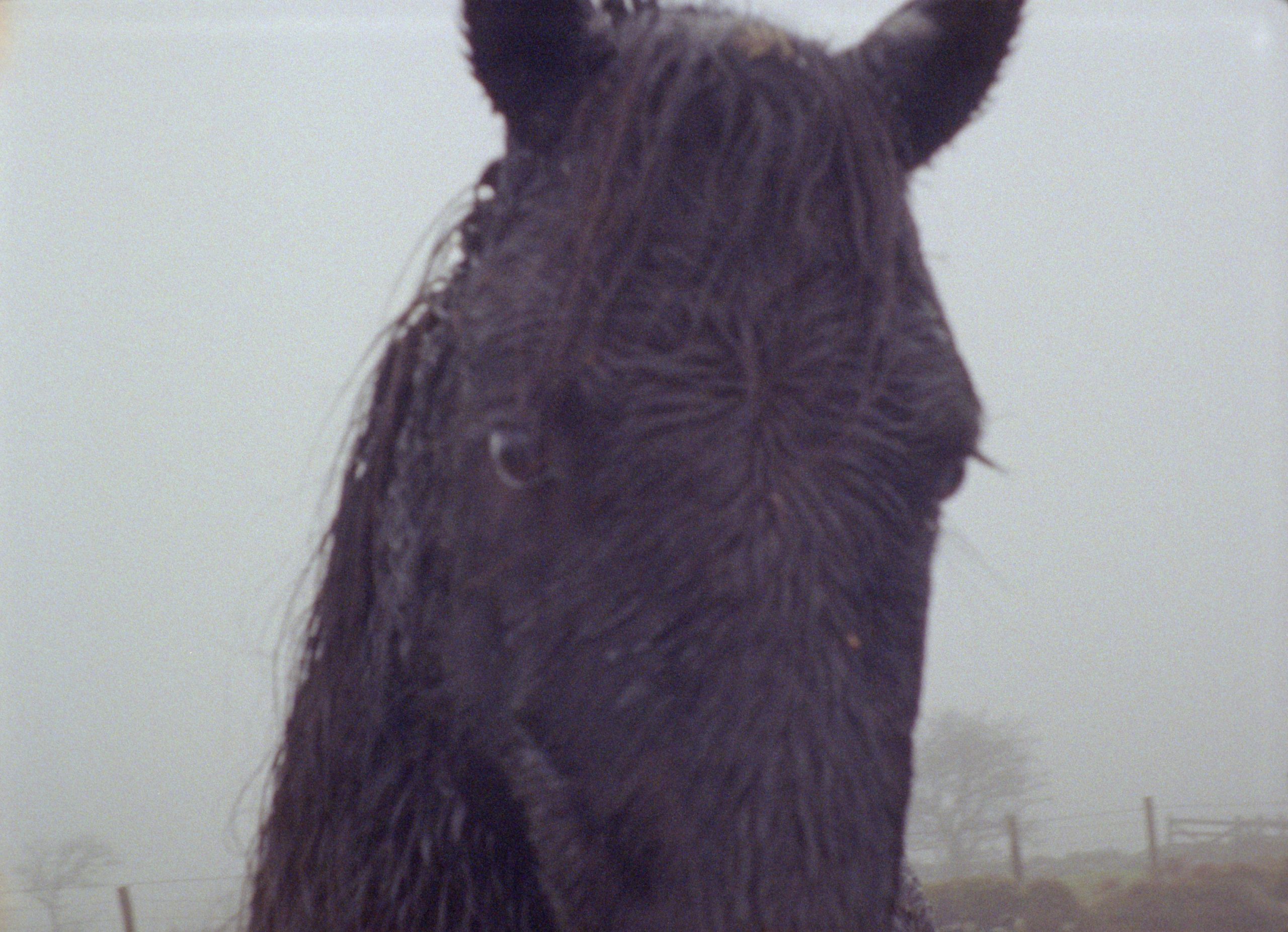
Film still: Sriwhana Spong, AD. 2026, HAHAHA exhibition, 2026.
In Don Juan, Adeline is described as “polite without parade,” Spong explains, and Byron hints that a potential future event may change the way Adeline is perceived. “Byron died leaving Canto XVII unfinished and Adeline in a state of limbo. Freed from her author and from the future event that was to define her, who, now, will be the master of her day? This question was the starting point for filming. Now that Byron cannot pen the decisive event that was to have historically determined her ‘true nature,’ Adeline, now AD, heads to the moors, that home of mists, where contours fade and water hangs suspended in the atmosphere, neither liquid, nor air.”
As the exhibition and accompanying publication come closer to fruition, and after fifteen years of a shared conversation, Wallis and Spong’s collaboration has taken them in an unforeseen direction, reflecting their mutual love of discovery through the process of making, Wallis says. “MUMA is a unique place, situated as it is within the learning contact of the university, that allows artists and curators to pursue the unknown to reveal new understandings of the cultural moment we inhabit. Sriwhana exemplifies that spirit of genuine and unafraid enquiry.”
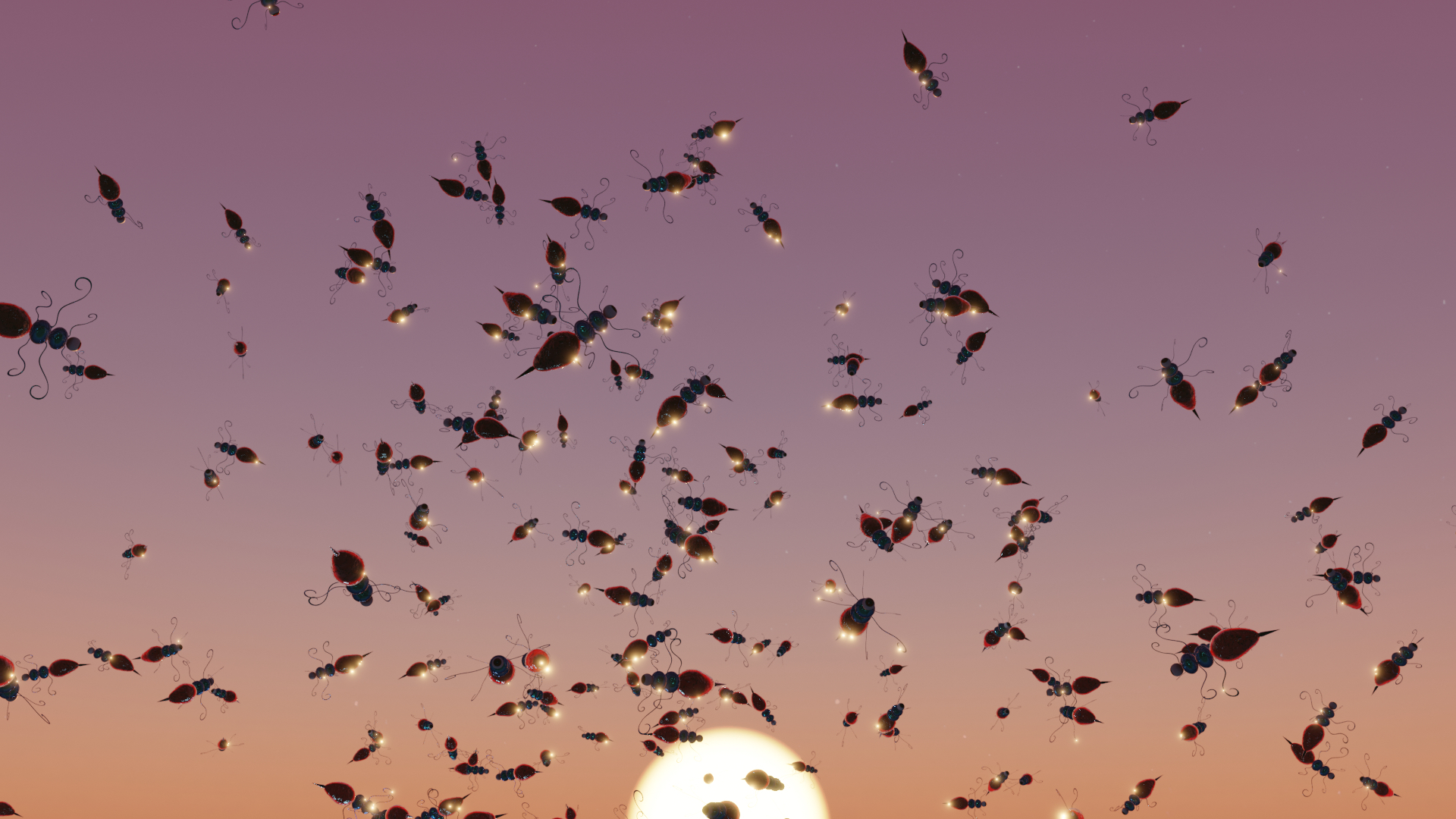
Sriwhana Spong, And the creeper keeps on reaching for the flame tree, 2022, digital image.
Exhibition
Sriwhana Spong: HAHAHA, 24 April – 28 June 2026, Monash University Museum of Art, Melbourne.
3 October – 20 December 2026, Te Pātaka Toi Adam Art Gallery, Wellington, New Zealand.
Images courtesy of the artist; Monash University Museum of Art, Melbourne; Michael Lett, Auckland, New Zealand.
Bronwyn Watson has been writing about the visual arts for over 35 years as a feature writer, critic and columnist for major newspapers and magazines.
The article was first published in Artist Profile Issue 74, 2026.
Two years ago, Macleod returned to his hometown of Christchurch, New Zealand, to be with his mother during the final phase of her life. At...
Edwards was born on Kaurna Yarta in 1998 and raised on Nauo Country in the small seaside community of Tulka, on the Lower Eyre Peninsula....

Under the auspices of Geelong Gallery’s director, Humphrey Clegg, and co-curated by Marianne Mathieu, former scientific director of the Musée Marmottan Monet, and Claire Durand-Ruel...
Nike Savvas: Purple Haze presents intimate screen prints and immersive large-scale installation and video work by Savvas from 2005–2026, each evocative of different places and...
Although physically he is of modest stature, Zofrea has devoted much of his life to grand projects that have been conceived and executed on a...
Through a multidisciplinary collaboration between Rotterdam-based curators, architect Paul Cournet of CLOUD and artist-designer Sabine Marcelis of Studio Sabine Marcelis, the exhibition explores the interplay...
Artificial intelligence will be used by young artists who started using it as kids on their phones. They will see it as a natural extension...

This year’s Biennale arrives under more complex circumstances than most. It is shaped by the profound loss of its curator, Koyo Kouoh (1967–2025), whose exhibition...
No artist creates in isolation. Every painting carries traces of the conversations, places and histories that shaped it, preserving within its surface a particular moment...