Essay I Recalibrating China’s Private Art Museums and Galleries
The closure of Xihai TAG Art Museum in July 2025 and the recent restructuring of Pace Gallery have prompted renewed discussion about the future of private museums, non-profit organisations and commercial galleries in China. These developments have revealed broader changes within one of the world's most dynamic contemporary art ecosystems. Rather than signalling an isolated economic downturn, they point to a shift in the conditions that sustained two decades of rapid cultural expansion.
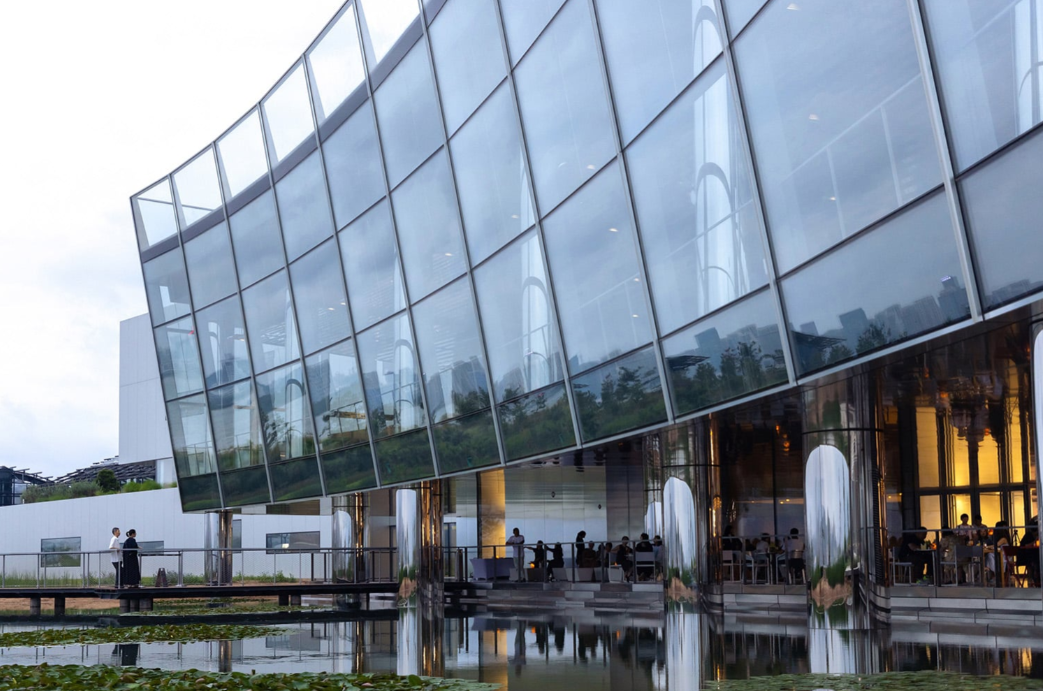
The rise of China’s private museum sector emerged from a particular historical moment. Following the global financial crisis of 2008, sustained economic growth, rapid urbanisation and policies promoting cultural industries created favourable conditions for private investment in art. Property developers, industrial entrepreneurs and a growing class of collectors established museums as part of broader ambitions for urban regeneration, philanthropy and cultural prestige. Most of the property-associated galleries were developed between 2011 and 2019. Internationally recognised architects designed landmark museums, ambitious exhibition programmes introduced global contemporary art to Chinese audiences and commercial galleries expanded alongside an increasingly confident collector market. Contemporary art became intertwined with ideas of modernisation and international engagement, supported by a funding environment in which private capital, real estate and cultural production advanced together.
The fast pace of expansion reshaped China’s cultural landscape. International galleries established permanent spaces in Beijing, Shanghai, Hong Kong and other cities, while domestic galleries cultivated artists and collectors across expanding regional markets. New museums created opportunities for artists, curators, educators and audiences to participate in forms of cultural exchange that had been difficult to imagine only a decade earlier.
Today, those conditions have shifted. The post-pandemic economic slowdown, the prolonged adjustment of China’s property sector, declining corporate sponsorship and more cautious collecting have placed increasing pressure on privately funded institutions. According to the China Social Organisations Government Service Platform, as of October 2025, China had 1,227 registered art museums, of which 979 were in operation and only 343 had operated for more than ten years. While the number of museums continues to grow, institutional longevity has become a more meaningful measure of sustainability.
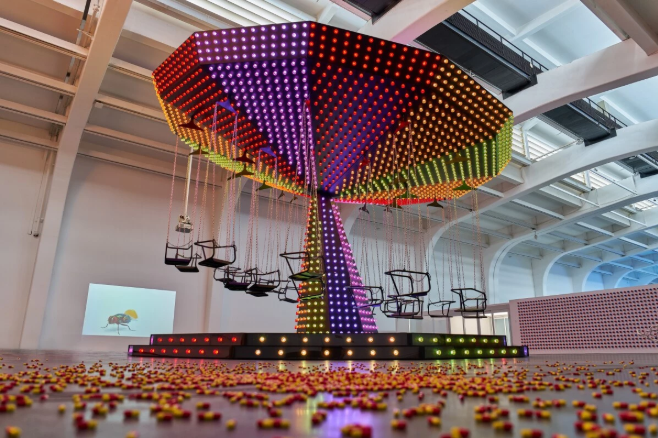
Installation view (detail): Carsten Höller, Tilted Carousel (Five Colours), 2026, steel, motor, elevrtonic components, light bulbs, dimensions variable. Carsten Höller: Two, 2026, UCCA Center for Contemporary Art, Beijing. Photographed by Sun Shi.
Xihai TAG Art Museum’s closure illustrates this transition. Opened in Qingdao in 2021, designed by Jean Nouvel, and funded through private corporate investment as part of a cultural real estate initiative, the twelve-gallery museum gained international recognition for exhibitions that integrated contemporary art with its dramatic coastal setting. Architecture, landscape and exhibition design together allowed visitors to encounter artworks through changing light and sea views. Its closure after only four years raises questions beyond the fate of a single institution, drawing attention to the relationship between architectural ambition, cultural programming and the long-term financial commitments required to sustain both.
Other institutions revealed different forms of adjustment. During 2025, closures or suspensions affected venues including OCAT Shanghai, Shanghai Himalayas Museum and Jupiter Museum of Art in Shenzhen (locally known as the Mùxīng Art Museum), many of which were developed during the years when property investment and cultural infrastructure expanded together. UCCA (Center for Contemporary Art) in Beijing has responded through organisational restructuring rather than closure, reflecting financial pressures experienced even by China’s most established private contemporary art institutions. Bund One Art Museum in Shanghai, known for its large-scale international exhibitions supported through admission revenue, suspended operations after declining visitor numbers, rising operating costs and increasing competition from publicly funded museums challenged its business model.
Institutional change has also been shaped by shifting urban priorities. Shanghai MOCA is temporarily closed for relocation after two decades in People’s Park, as the local government’s redevelopment plans altered the city’s cultural geography. AAEF Art Centre and Shun Art Gallery in Zhujiajiao, on the outskirts of Shanghai, present another perspective. Established through substantial private investment, the centre organised exhibitions by Chinese and international artists, including a significant presentation of Japanese Mono-ha, alongside education programmes and public events. Its sudden eviction as part of a local redevelopment project, followed by demolition that allegedly damaged artworks, has become the subject of legal proceedings. The case raises broader questions about the security of private cultural investment and the legal protections available to independent institutions during periods of urban transformation.
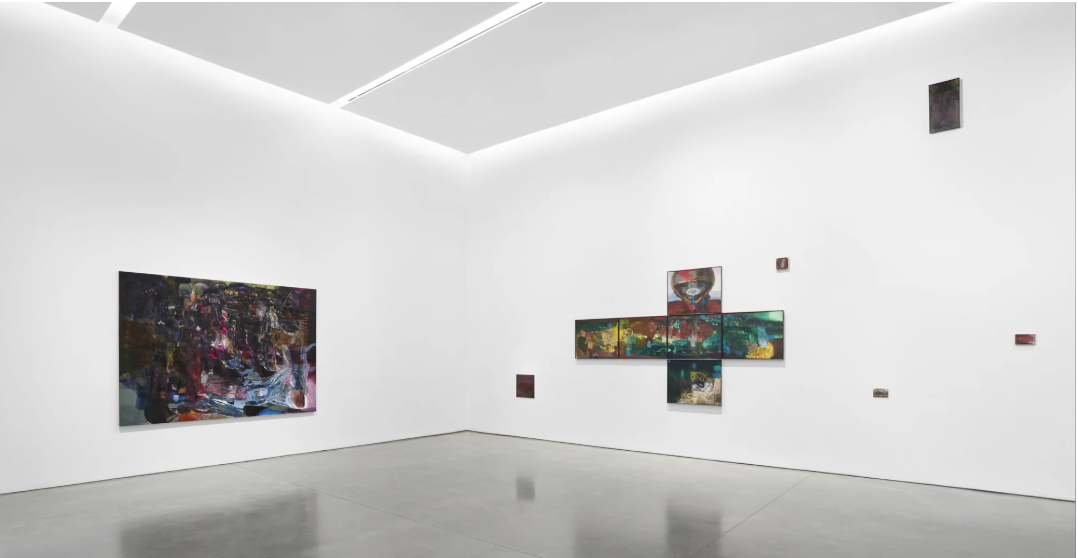
Installation view (detail): left to right, Li Hei Di, a kiss from the butterfly, 2026, oil paint, linen, 180 x 260 cm; Li Hei Di, the longest leg ever, 2026, oil paint, wood panel, dimensions variable. Li Hei Di: the year of mud, 2026, Pace Galley, New York.
Commercial galleries have experienced similar pressures, although often less visibly. Rather than announcing closure, many have shortened exhibition schedules, reduced staffing, consolidated premises or withdrawn from art fairs. Pace Gallery’s recent restructuring, following earlier consolidations of its Beijing and Hong Kong operations, reflects wider adjustments across the international gallery sector. As chief executive officer Marc Glimcher observed, the latter gallery system had become “too big, too commercial, too impersonal and too corporate.” His remarks suggest that current restructuring reflects changing expectations about institutional scale as much as immediate financial performance.
These developments are not simply a story of decline. International galleries including Lévy Gorvy Dayan, Lisson Gallery and Almine Rech continue to invest in Shanghai, while art fairs such as ART021, West Bund Art & Design, and Art Basel Hong Kong remain important platforms for artists, collectors and institutions across Asia. What appears to be changing is less China’s importance within the global art world than the assumptions that previously sustained its rapid expansion. Speculative collecting has become more measured, corporate philanthropy more selective and museums increasingly dependent on diversified income through memberships, education, partnerships and public engagement. Curatorial decisions therefore carry practical significance, linking artistic ambition more closely with long-term organisational sustainability.
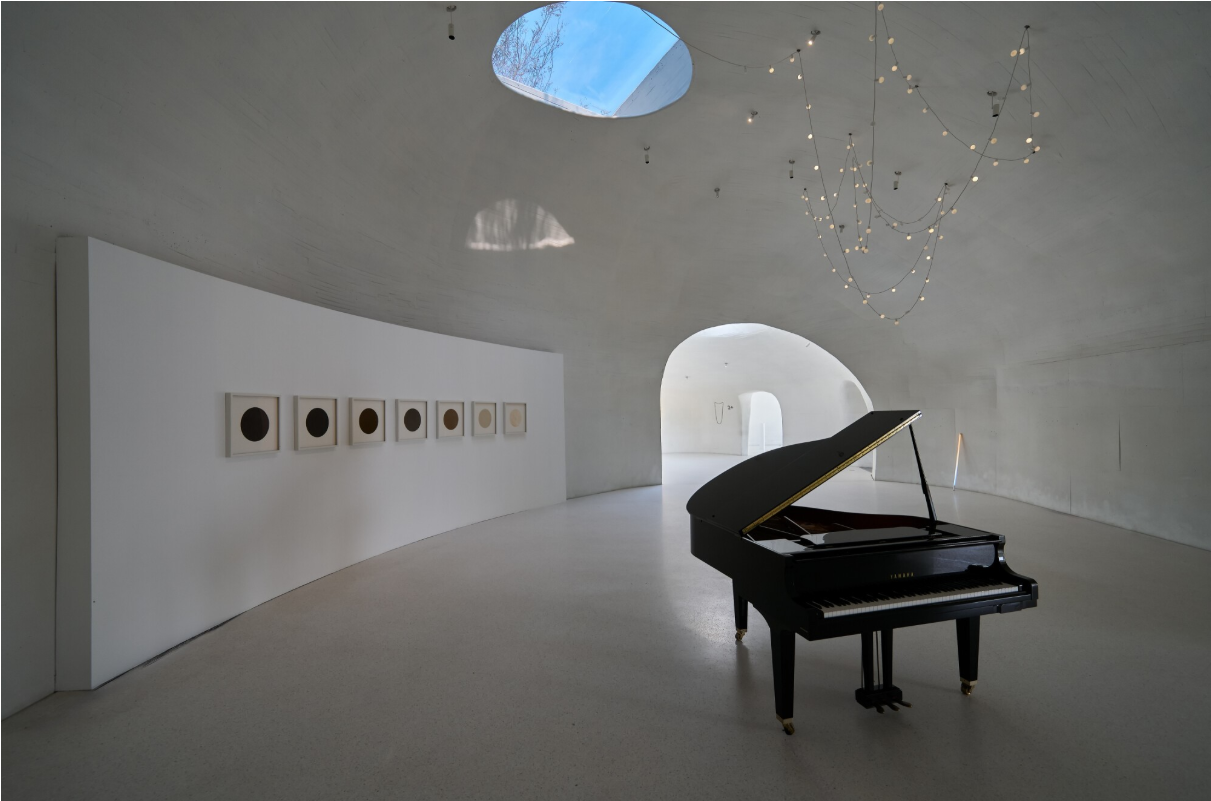
Installation view (detail): Katie Paterson: Across Deep Time, 2026, UCCA Dune, Qinhuangdao, China.
Comparable and less pronounced developments can also be observed across Australia and the wider Australasian region. Commercial galleries are responding to rising operating costs and changing collector behaviour through collaboration, consolidation and more selective programming, while museums continue to balance public funding with philanthropic support. Although the historical contexts differ, similar questions are emerging about the relationship between cultural ambition, financial sustainability and public participation.
The changing circumstances of China’s private museums and galleries invite reflection on what follows a period of exceptional growth. Buildings remain, collections continue to circulate, artists continue to produce new work, and audiences continue to seek meaningful encounters with contemporary art. As funding models, governance structures and patterns of patronage evolve, new institutional forms may emerge alongside those that disappear. Whether this marks the conclusion of one chapter or the beginning of another remains an open question, shaped by how cultural value continues to be imagined, supported and shared.
Dr Lansheng Zhang is a Sydney and Shanghai based Honorary Associate, Faculty of Arts and Social Sciences, Sydney University.
Images courtesy of the artists; UCCA Center for Contemporary Art, Beijing, China; Pace Galley, New York, United States of America; TAG Art Museum, Qingdao, China.
The article was first published in Artist Profile Issue 76, 2026.
This morning at 8.35 am, Elizabeth Ann Macgregor joined 702 ABC Radio’s Hamish Macdonald to discuss the ongoing controversy surrounding Lisa Havilah and the Powerhouse,...
Mona reveals itself slowly. Unlike classical museum architecture that conveys authority through monumental facades and grand, towering entranceways, visitors enter the Nonda Katsalidis-designed building through...
Tarr may not be a household name but he is an arthouse-hold name, known primarily for his mature, signature works as director—Damnation, 1987, Sátántangó, 1994,...
We call on the NSW Government to lift Lisa Havilah’s suspension and reinstate her as Chief Executive of Powerhouse, allowing her to lead the opening...
Two years ago, Macleod returned to his hometown of Christchurch, New Zealand, to be with his mother during the final phase of her life. At...
Edwards was born on Kaurna Yarta in 1998 and raised on Nauo Country in the small seaside community of Tulka, on the Lower Eyre Peninsula....

Under the auspices of Geelong Gallery’s director, Humphrey Clegg, and co-curated by Marianne Mathieu, former scientific director of the Musée Marmottan Monet, and Claire Durand-Ruel...
Nike Savvas: Purple Haze presents intimate screen prints and immersive large-scale installation and video work by Savvas from 2005–2026, each evocative of different places and...
Although physically he is of modest stature, Zofrea has devoted much of his life to grand projects that have been conceived and executed on a...