ESSAY I Salvatore Zofrea’s Day Cycle
Salvatore Zofrea is a legendary figure in the Australian art scene. This year, he turns eighty and has been exhibiting professionally for six decades. He has had over fifty solo exhibitions, has won numerous art prizes, been awarded many major commissions, and has a string of other career highlights.
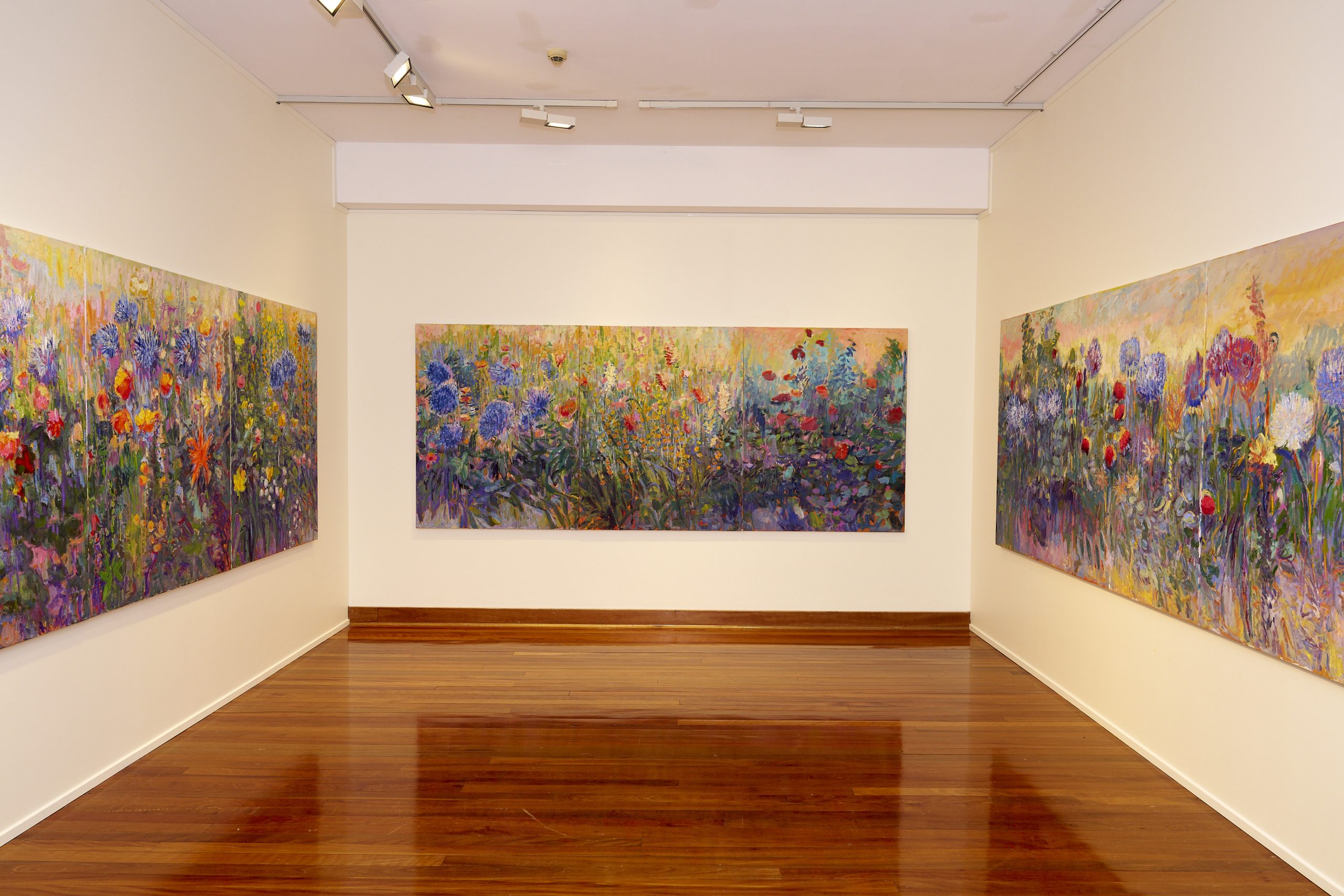
Although physically he is of modest stature, Zofrea has devoted much of his life to grand projects that have been conceived and executed on a monumental scale. These have included the painting on a large scale of all 150 Psalms (of which he has completed 105) and the hundred woodblocks of his Appassionata series, 1994–1999, recounting the artist’s journey from his birthplace in Borgia, Calabria in Southern Italy to his travel to Australia as a nine-year-old and his subsequent life and emergence as an artist.
Zofrea’s Day Cycle, 2012–2026, is one of his grandest projects to date. It is a huge, immersive multi-panel work that explores the passage of time and the transformation through light of the Australian bush, in part inspired by the Kurrajong area, where the artist has had a studio since 1981. The cycle was commenced in 2012 and concluded this year. The paintings stretch over 120 metres in total length and reflect the symphony of the day in four movements: Morning Light, Midday Light, Afternoon Light, and Evening Light.
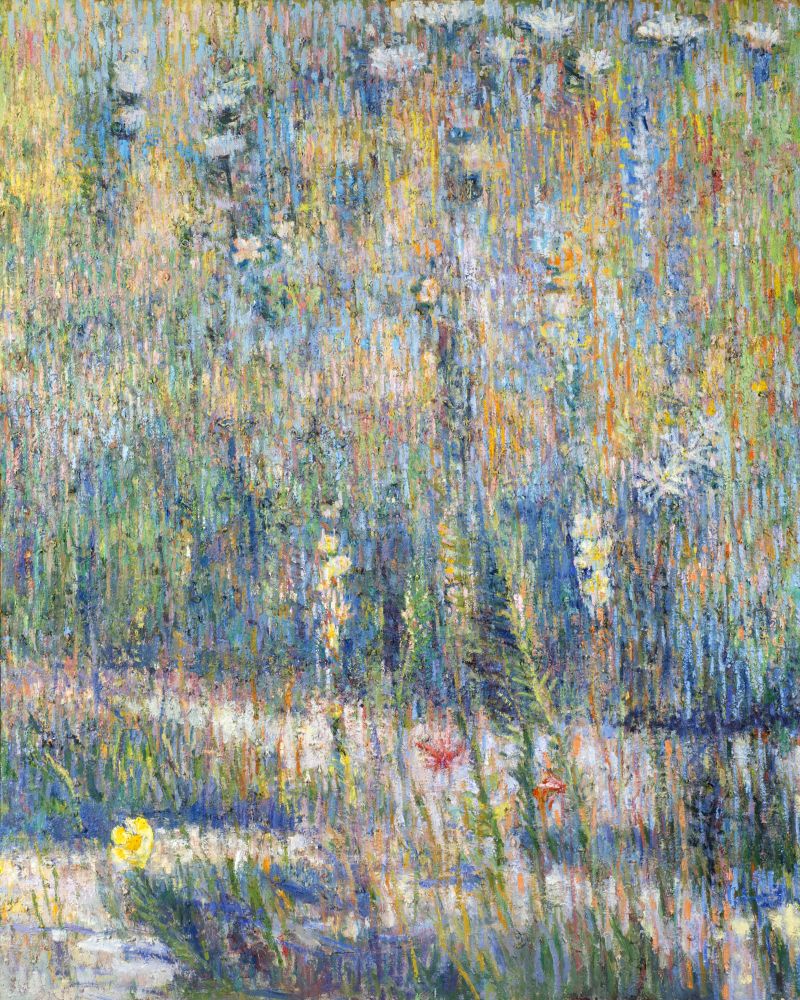
Detail, Midday light, 2026, oil paint, lapis lazuli, canvas, 152 x 3050 cm, 25 panels, each panel 152 x 122 cm.
What is inspirational about Zofrea’s Day Cycle is its intense sense of visual excitement, the profound depth of its philosophical content, that includes theosophy, Franciscan piety and Eastern mysticism, and the sheer technical skill in its execution. They may be described as “late paintings.” This is not intended as an ageist backhander but a comment on their maturity and profundity. Many artists who work within a romantic sensibility, something that applies to Zofrea, say all of what they intend to say in their art when aged in their twenties and thirties and for the rest of their careers, to quote T.S. Eliot’s (1888–1965) memorable turn of phrase, they cling to the experiences of youth, so that their art becomes “an insincere mimicry of their earlier work, or they leave their passion behind, and work only from the head, with a hollow and wasted virtuosity.”
The “old painters club,” to which Zofrea belongs, has amongst its historic members Titian (c. 1490–1576), Tintoretto (1518–1594), J.M.W. Turner (1775–1851) and Claude Monet (1840–1926). These were artists who created their most profound, pure and distilled paintings late in life, that have been subsequently viewed as a culmination of their life’s work. I think that all of them, to some extent, had left their safety harnesses behind them, plunging into what they knew would be the final phase of their work without bothering about the applauding crowds, arts apparatchiki and art critics. It is work that they felt needed to be done to complete the circle and that posterity will judge to be their greatest contribution to art.
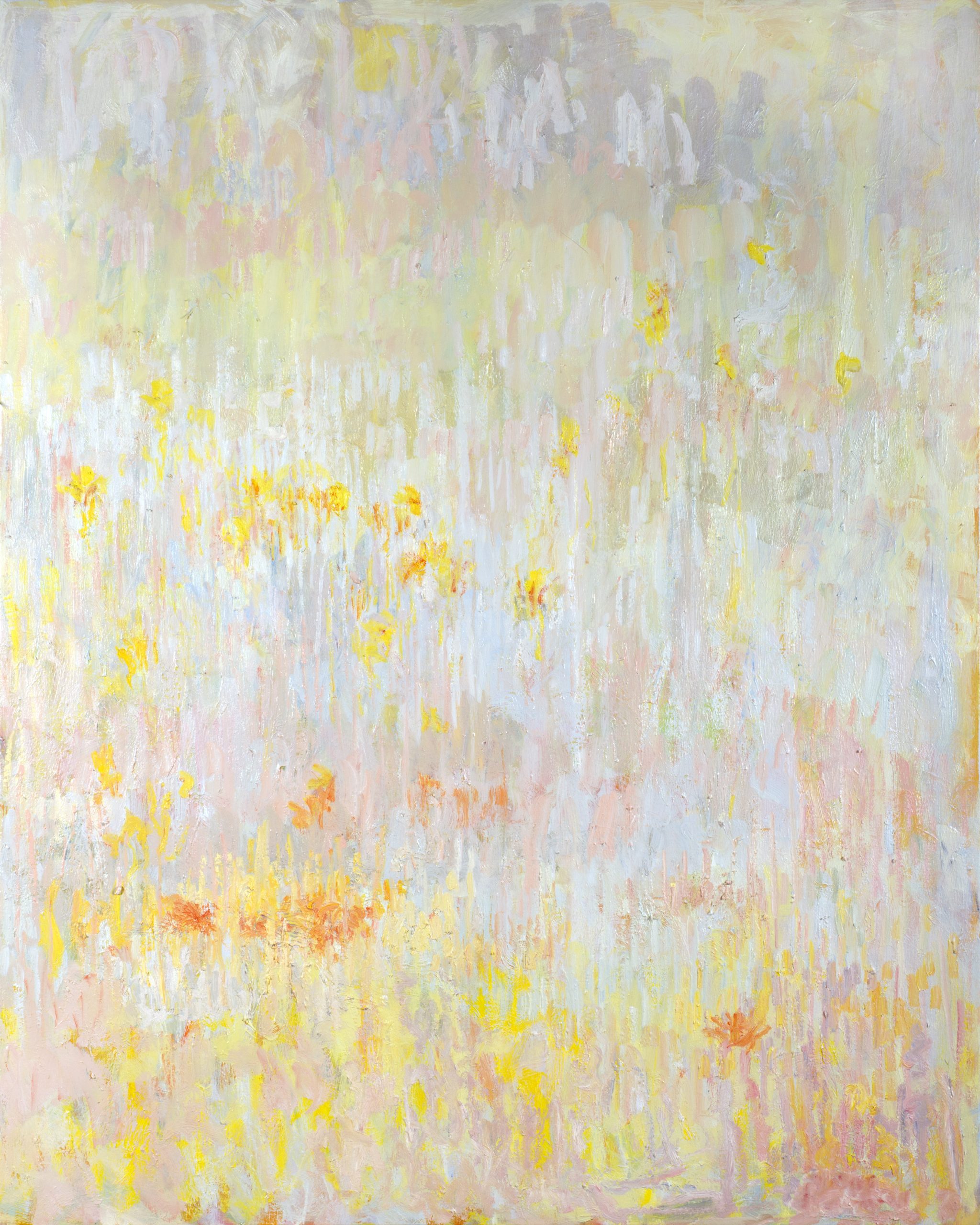
Detail, Midday light, 2026, oil paint, lapis lazuli, canvas, 152 x 3050 cm, 25 panels, each panel 152 x 122 cm.
Zofrea’s God, as he has frequently said, is nature. In his early work, he exhibited his remarkable mimetic skills, whether in tracing precisely a physiognomy, a topography or the petals of a flower. In his late work he is more concerned with the spirit of nature, the sounds and smells that it evokes, the spiritual sensations and the colour-saturated daydreams that surround it. Leonardo da Vinci (1452–1519) once famously observed, “Great love springs from great knowledge of the beloved object, and, if you know it, but little, you will be able to love it only a little or not at all.” Zofrea has great knowledge of the wildflowers and of the Australian bushland that surrounds him. He has studied these for decades and now seeks to celebrate them through an act of love on canvas. He poses such questions as how do you paint the perfume of flowers, the sound of birdsong and the radiance of colour within a field of Australian wildflowers? In this series of paintings, it is no longer a wattle tree, a grevillea shrub or a wax flower but becomes colour as energy as the artist creates form without form and takes things to another plane.
Claude Debussy (1862–1918), Alexander Scriabin (1872–1915), Olivier Messiaen (1908–1992), Arnold Schoenberg (1874–1951) and Igor Stravinsky (1882–1971) are some of the composers who form the background soundtrack to Zofrea’s Day Cycle. Each took music beyond the boundaries of the traditional romantic style, incorporating inventive rhythms, tonality, orchestration, but most importantly sounds of the outside world such as birdsong. Zofrea’s paintings are not confined to pigment on canvas; they burst these boundaries and engage with all of the senses as in the artistic traditions of synaesthesia that so preoccupied Wassily Kandinsky (1866–1944), more recently David Hockney (1937–2026) and, in Australia, Roy De Maistre (1894–1968).
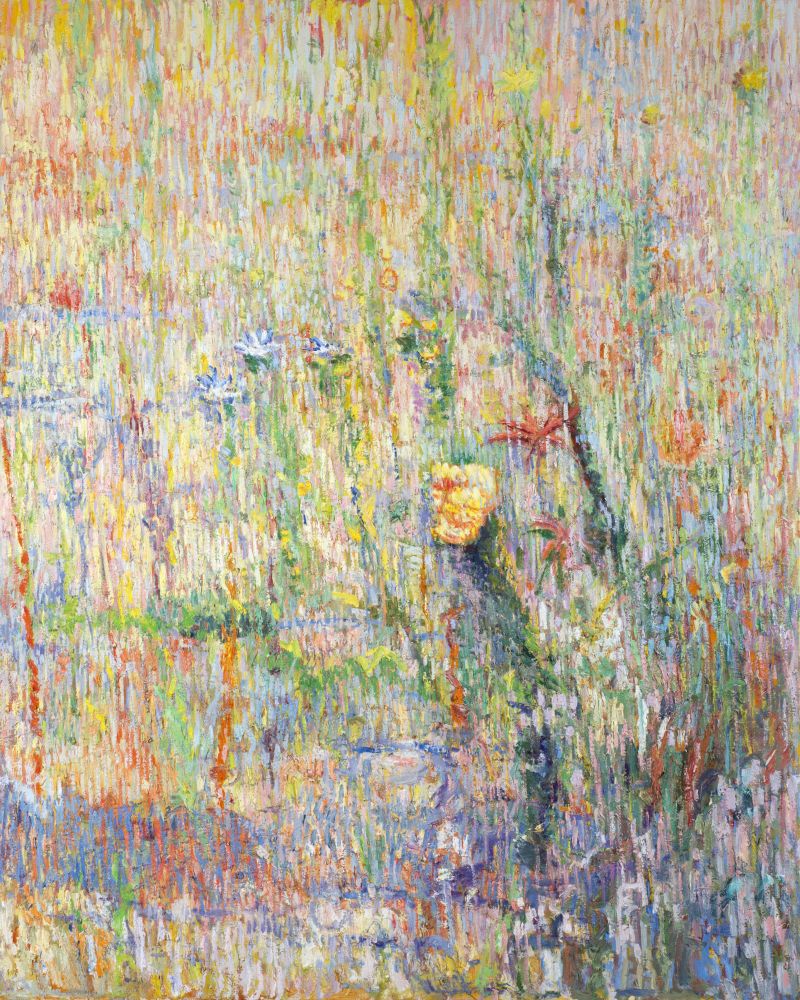
Detail, Midday light, 2026, oil paint, lapis lazuli, canvas, 152 x 3050 cm, 25 panels, each panel 152 x 122 cm.
To add to the mystery of synaesthesia, Zofrea injects his own alchemy of the precious pigments that he employs in his paintings, such as the celestial blue of the lapis lazuli pigment to bring touches of the sacred to the Australian bush. In many of his recent paintings, there is a luminous sparkle that dances around the picture space appearing like musical notation. Lapis lazuli has been prized since ancient times for its celestial blue colour. Medieval and renaissance artists had the stone ground up into a rough crystal powder and mixed with a binder. Back in the early fifteenth century, the Italian artist Cennino D’ Andrea Cennini (c. 1360–1427) in his Il Libro dell’ Arte (The Craftsman’s Handbook) described in considerable detail the grinding of lapis lazuli to make an ultramarine blue that, in his words, “is a colour illustrious, beautiful and most perfect, beyond all other colours.” This precious pigment, often used at the time on surfaces such as the blue garment of Mary, the Mother of God, not only possessed the purest tone of blue but, because of its crystalline nature, would stand out slightly in relief and catch the light to produce a shimmering effect.
Zofrea uses this sacred pigment in many of his paintings in the Day Cycle to trace the movement of time from dawn to nightfall. This hourly cycle comments on a transition in all forms of life and, even in the darkness of night, where there is the strongest presence of lapis lazuli, there is the promise of resurrection and regeneration with a new dawn.
Zofrea’s Day Cycle is a profoundly moving, immersive spiritual experience that explores the bush and its flowers on a scale and with a grandeur not previously encountered in Australian landscape art. In Zofrea’s words Day Cycle “has been a fourteen-year epic in praise of love and beauty.”
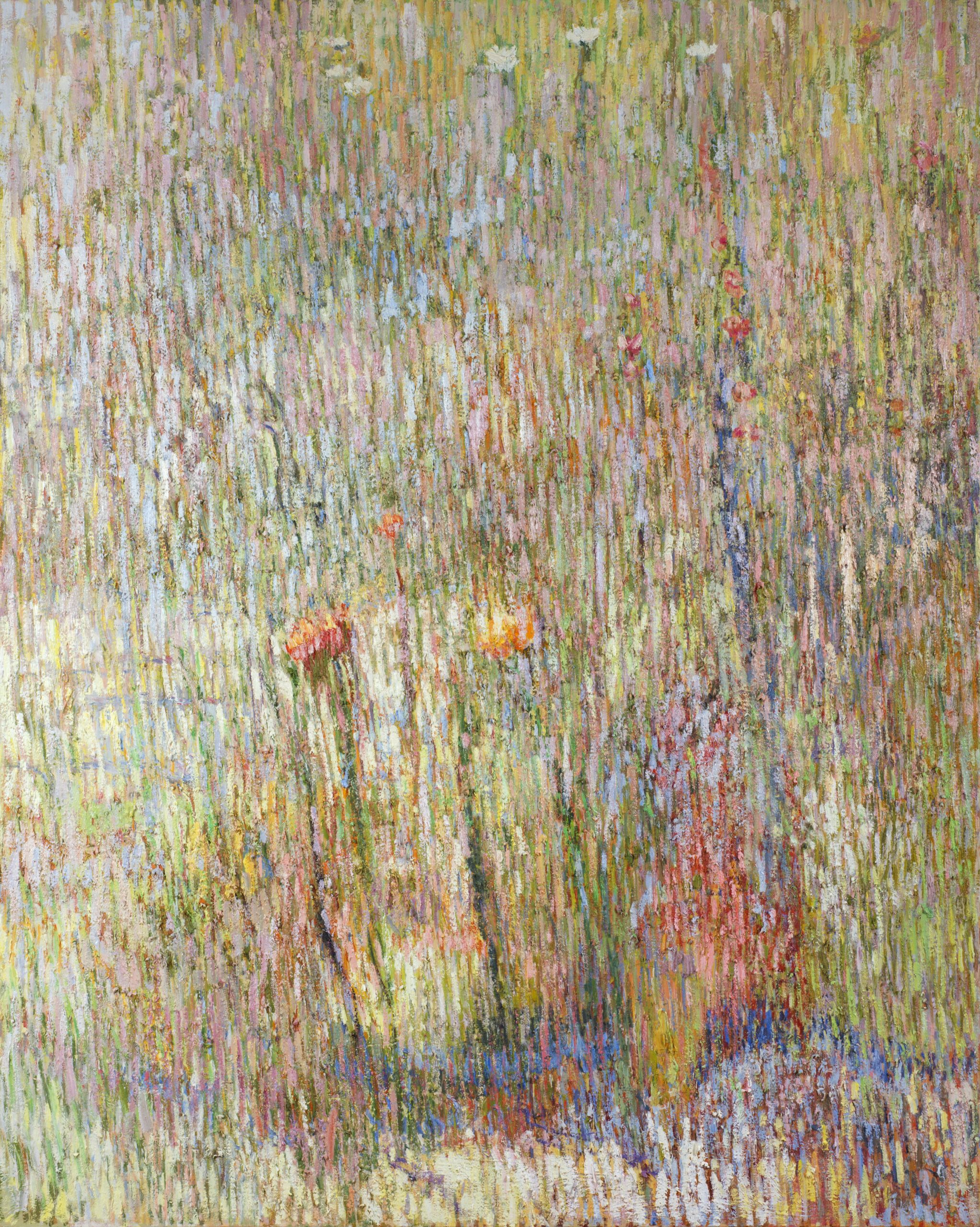
Detail, Midday light, 2026, oil paint, lapis lazuli, canvas, 152 x 3050 cm, 25 panels, each panel 152 x 122 cm.
Exhibitions
Day Cycle Midday Light and Evening Light: Salvatore Zofrea
19 August – 16 October 2026
Macquarie University Art Gallery, Sydney
Day Cycle, Afternoon Light: Salvatore Zofrea
5 – 25 November 2026
Fountain Court, Parliament of New South Wales, Sydney
Images courtesy of the artist; Australian Galleries Sydney + Melbourne; Macquarie University Art Gallery, Sydney; Effy Alexakis, Photowrite and Greg Weight.
Prof. Sasha Grishin AM, FAHA is emeritus professor at Australian National University who works internationally as an art historian, critic, curator; based in Canberra and Gippsland, Victoria.
The article was first published in Artist Profile Issue 76, 2026.
Through a multidisciplinary collaboration between Rotterdam-based curators, architect Paul Cournet of CLOUD and artist-designer Sabine Marcelis of Studio Sabine Marcelis, the exhibition explores the interplay...
Artificial intelligence will be used by young artists who started using it as kids on their phones. They will see it as a natural extension...

This year’s Biennale arrives under more complex circumstances than most. It is shaped by the profound loss of its curator, Koyo Kouoh (1967–2025), whose exhibition...
No artist creates in isolation. Every painting carries traces of the conversations, places and histories that shaped it, preserving within its surface a particular moment...
The weekend markets at Fairfield Showground have been one of Western Sydney’s great institutions for more than fifty years. Fresh fruit and vegetables, children’s clothes,...
In recent times, Yorgos Lanthimos has shifted toward photography, noting in a Guardian interview, 2026, that he needs respite, saying, “it might be a couple...

In Australia, political cartoons were altered by several events during the 1960s: the arrival of Les Tanner’s (1927‒2001) instinctual wit at The Bulletin, Bruce Petty’s...
Recognition of the importance of early bark paintings and their link to the world’s oldest continuing culture, is what makes them both highly sought and...
I had come to see my daughter sing in Deborah Kelly’s Creation Choir and was fortunate enough to make it inside the gallery for the...