REVIEW: The Talented Arrowsmith-Todd
Ruby Arrowsmith-Todd curates an inspirational cinematic experience at the Art Gallery of New South Wales on Wednesdays and Sundays. It’s nearly always a full house. Given the ubiquitous availability of cinema across various streaming services, it is revealing that we still crave the shared experience of sitting in a darkened space with that magical light.

Ruby Arrowsmith–Todd started attending the AGNSW film program in its early days as a self-educated, die-hard film fan, immersing herself in the cinematic sea of curator Robert Herbert’s vision. His film program ran for seventeen years before his untimely death. He would be a mentor for Arrowsmith-Todd, as well as a close friend, and under an internship taught her how to project films, source prints, and write to distributors, as well as develop film programs.
Arrowsmith-Todd got an “out of the blue” phone call from an extremely unwell Herbert, asking her to help take over his schedule as he knew she had the institutional know-how at that stage to deliver his final program. It was an incredible privilege despite being a great moment of cognitive dissonance; and offered an amazing opportunity under the most traffic of circumstances. In a way though, it has given Arrowsmith-Todd a great sense of purpose in carrying the baton with her own vision and what better way to have announced her arrival as a film curator than with her inaugural snapshot series of a year that shook the world, Cinema ’68 (28 February–6 May 2018).
Notably, 2018 was the fiftieth anniversary of that momentous year which, especially in hindsight, was an astonishing moment in time with its multiple revolutions and protests on every continent. Youth culture revolting against the silent generation, the anti-war movement, the increasing awareness of left-wing politics, the wildcat strikes in France, the beginning of the Troubles in Northern Ireland, guerrilla warfare in Brazil, civil rights, and feminism: these were just a few of the developments of 1968. Arrowsmith-Todd introduced herself with a film series presenting overlapping snapshots of film history and cultural upheavals, where cinema too experienced a parallel revolution with the New Wave movement looking beyond national and aesthetic borders. Some of the films she included were George A. Romero’s Night of the Living Dead, 1968; Sergio Leone’s Once Upon a Time in the West, 1968; and Kaneto Shindô’s Kuroneko, 1968; these were screened with Lucian Pintilie’s Reconstruction (Reconstituirea), 1968, a rare thirty-five millimetre film from Romania. The film arrived at the last minute from Bucharest wrapped in old pizza boxes, Arrowsmith-Todd tells me. It was like going on a world trip and you didn’t need a visa.
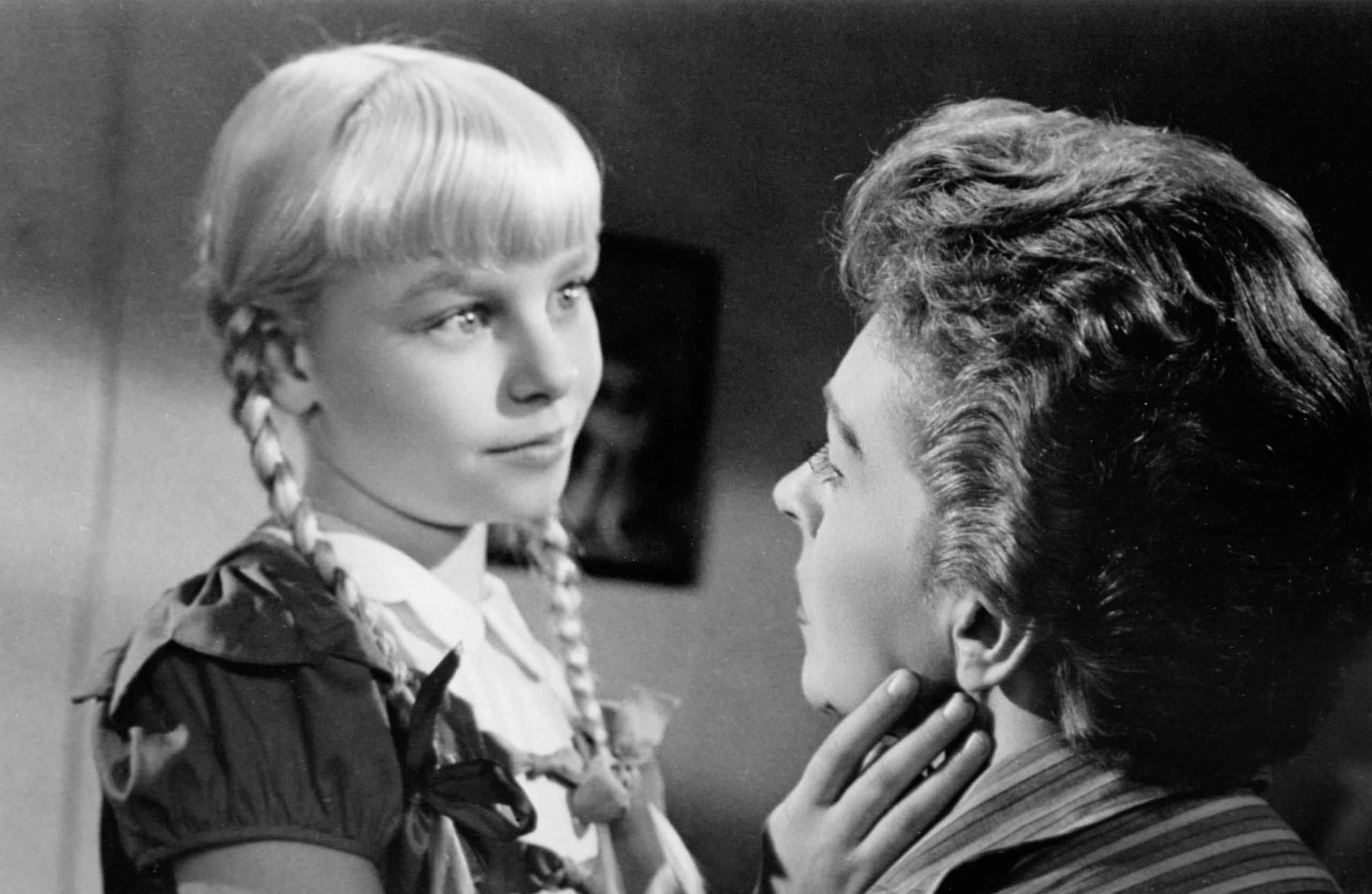
Mervyn LeRoy, The Bad Seed, 1956, still courtesy Roadshow. Art Gallery of New South Wales, Louise Bourgeois Goes to the Movies series, 2024-25.
While each film series is mainly autonomous there are also programs that occur in dialogue with major AGNSW exhibitions. For example, for Louise Bourgeois: Has the Day Invaded the Night or Has the Night Invaded the Day? (25 November 2023–28 April 2024) Arrowsmith-Todd curated Louise Bourgeois Goes to the Movies (29 November 2023–10 March 2024). This was a selection of films that Bourgeois favoured, they seemed to have a recurring thread of simmering feminist rage and frustration. I am thinking in particular of Claude Chabrol’s Story of Women, 1988; John Waters’ Pink Flamingos, 1972; and Mervyn LeRoy’s The Bad Seed, 1956. The Dotcom Baby series (8 January–2 February 2025) was inspired by the exhibition Cao Fei: My City is Yours (30 November 2024–13 April 2025) and was a collection of coming-of-age films made at the turn of the millennium that explored, by way of aesthetics, the impact of new technologies and experimental cinema from China.
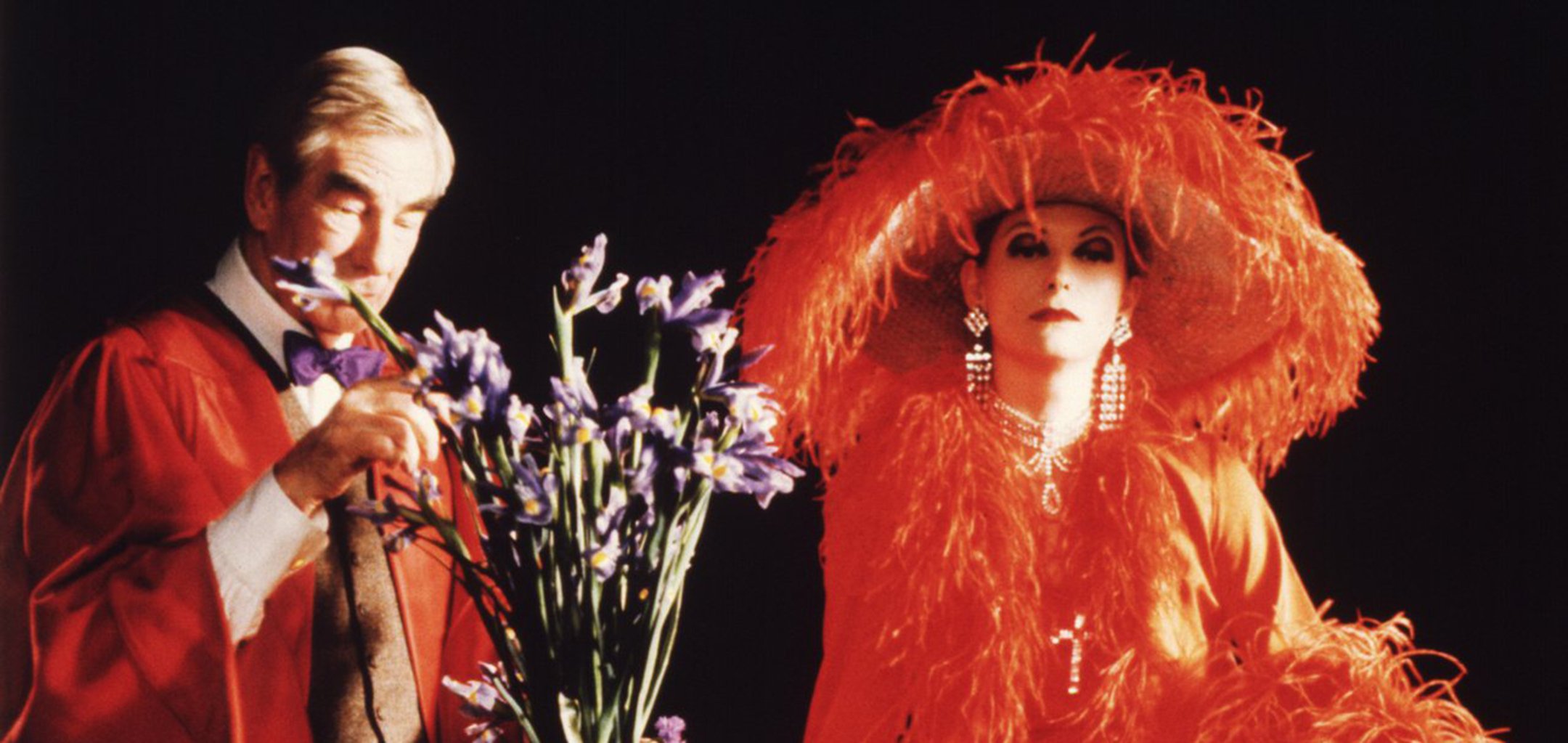
Derek Jarman, Wittgenstein, 1993, still courtesy BFI. Art Gallery of New South Wales, Magic Mirror Jarman series, 2025.
It was an unexpected joy to experience the Derek Jarman retrospective Magic Mirror (16 February–6 April 2025) earlier this year. I particularly enjoyed seeing the evolution of Jarman’s filmmaking, from his Super 8 films to classics such as Jubilee, 1978; Caravaggio, 1986; and Wittgenstein, 1993. I could now also make connections between his films and his music videos for The Smiths and Pet Shop Boys, recognising the themes of exiles and outsiders.
The pleasure of the cinematic experience is something in itself. Each series has given me a different appreciation and understanding of particular directors or movements. The audience during the Japanese film director Shōhei Imamura retrospective (9 October–10 November 2024) was quiet and discreet. However, during the series of works by renowned Taiwanese film director Edward Yang, Desire Lines: The Films of Edward Yang (19 June–11 August 2024) I felt as though I was in someone’s living room during a large family dinner. The constant chatter, the rattling of plastic bags, the texting, and the smell of food made for an unpredicted, immersive experience. It was amusing rather than annoying as the audience was so enthusiastic. Such a mood is infectious. The reactions in a group can amplify your own experience even when you realise that you are missing out on something when the rest of the audience laughs heartedly before you read the subtitles.
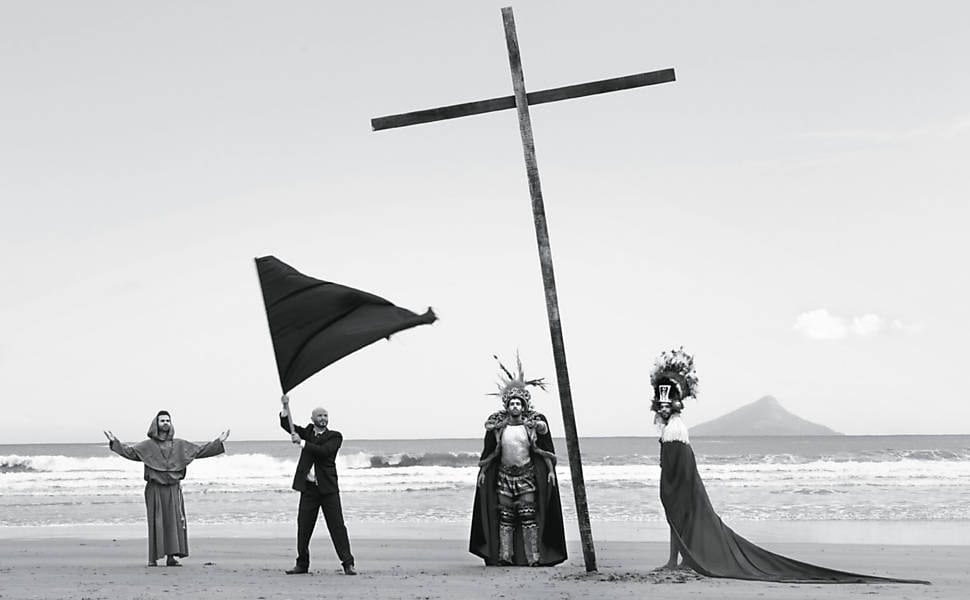
Glauber Rocha, Terra em Transe Land in anguish, 1967. Art Gallery of New South Wales, Brazil! Brazil! A century of cinema series, 2025.
The current series, Brazil! Brazil! (17 September–9 November 2025), is the largest retrospective of Brazilian films in Australia at this time and is guest curated by Stefan Solomon. It includes films by the great Glauber Rocha, a key figure of Cinema Novo, as well as the cult classic This Night I’ll Possess Your Corpse, 1967, with the Brazilian villain “Coffin Joe.” Arrowsmith–Todd will finish this year with a selection of Japanese films from the 1930s. I’m curious as to what she has selected given the depth of visionary filmmakers from this period. I am going to enjoy this trip and the best part is, it is free.
Images courtesy of the Art Gallery of New South Wales.
H. R. Hyatt-Johnston is an artist and writer, based in Sydney.
This article was first published in Artist Profile Issue 73.
In 2026 the Art Gallery of New South Wales’s film program has been rebranded Sydney Cinémathèque.
Opening Weekend: 7 – 8 March 2026
Domain Theatre, Art Gallery of New South Wales, Naala Nura, Sydney
Charges now apply to some screenings

Ron Mueck’s shockingly alive sculptures hit us at many points along the pathway from birth to death. But it’s more than just mortal decay that...
Women Photographers 1900–1975: A Legacy of Light draws on more than 300 photographs and photomedia from the National Gallery of Victoria’s (NGV) collection and the...

Motet Fail, 2026, reshapes Artist Run Initiative, West Space into an immersive backgammon board that operates as a site of reflection, encounter, and quiet concert....

Carvings have been made for all time by Aurukun men. However, the more recent innovation to emerge from Aurukun are paintings. Vested in Country and...

A stone’s throw from the Illawarra escarpment at Campbelltown Arts Centre, the introduction to Draper’s ecosphere is a gathering of rainbow forms which, as an...

In 1991, Maurice and Katia Krafft died during the Mount Unzen eruption on Japan’s island of Kyushu. Herzog’s documentary does meditate on their deaths and...

For most painters, tape has a prophylactic function. Stuck temporarily onto a canvas (or a doorframe, for that matter), tape protects what lies beneath or...
Deborah Halpern’s studio is engulfed with works in progress occasionally dispersed with other images and sculptures that illicit happiness. In the vast double window space,...
I recently left my home-studio on the Vaucluse clifftops in Sydney, with the whale and ocean views, and have set up a new studio in...