Barka: The Forgotten River
‘Barka: The Forgotten River’, recently presented at the Murray Bridge Regional Art Gallery, South Australia, is about symbiosis. It’s how the suffering of one individual affects a whole community. It’s how the decline of one river impacts connected systems. This story can’t be told by one person alone. This is about many rivers, many people, many stories.


‘Barka’ (river) speaks from the perspective of the Barkandji people on the Darling River. It combines work by Barkandji artist ‘Uncle Badger’ Bates created over the last twenty years with recent collaborations between contemporary artist Justine Muller and the Wilcannia community.
Their work advocates the importance of the Darling River, which forms part of the Murray Darling Basin. This system covers 77,000 kilometres of river ecology and supports innumerable symbiotic communities. It is critically threatened by poor governance, exploitation, and climate change. The story of the barka is the story of many rivers and the communities that live in unity with this system.
Badger Bates has featured stories of the Darling River throughout his career. His barka is the vibrant river from his youth, with plentiful water and wildlife, but also a river ravaged by colonisation and agriculture. Bates’ monochrome linocuts are distinctive and powerful. His lines and patterns incorporate designs and techniques developed from carving emu shells.
In Iron Pole Bend, Darling River Wilcannia (2007) Bates speaks to all ages of the river. Two Ngatyi (Rainbow Serpents) that created the river (and still live there) below a rainbow. It flows with rippling water over yabbies and catfish Bates caught as a boy. But in Lake Wytuycka the fish are dead from drought. A swan, which used to herald new waterflow, is only a skeleton. The abundance of the river’s past is juxtaposed with its present poverty.
Bates’ sculptural skill is seen in several large-scale works. In Drying Lake (2018), the flowing lines of his prints translate into steel wire – twisted and pressed, corrugated and welded. It simulates the cracked bed of a drying lake with meagre pools of water sheltering tin fish. Horse shoes, old chains, buckles; all reference agricultural irrigation killing the river system.
Justine Muller’s portraits of Wilcannia residents also balance elements of past, present and future. She photographs contemporary life in Wilcannia with its bold colours and character. She paints near-life sized paintings of Barkandji people who smile in greeting. Audio recordings share stories about their relationship to the river. Relatives and friends join in. It’s a conversation. It’s community.
Muller’s art is fundamentally political. Her work interprets stories from the community, environment, place specific to her subject. In Save our Mother the Barka (2018), she documents a protest led by Barkandji people to petition government for increased waterflow. In Sounds of a River (2018) she animates satellite imagery of the shrinking river to the sound of a flatlining heartbeat.
River of Hope (2018) is Muller’s centrepiece installation. River sand mimics the curved riverbed around Wilcannia, scattered with objects collected from location. Shells, feathers, bottles, bones – The remnants of ancient and post-colonial activities connected to the river. Hunting and fishing. Industry and agriculture. River life.
Among the detritus walk footprints of Wilcannia residents, cast by Muller in clay dug from the riverbank. The clay is cracked. This river is dry, like the Darling River is dry. But there is still life here. It’s a reminder the river is not just a memory, but part of a community fighting for its survival.
Every work, every story, brings the river into being – both as it used to be and as it is now. Many voices are needed to ensure the barka’s future.
EXHIBITIONS
Barka: The Forgotten River
11 December 2020 – 26 January 2021
Signal Point Gallery, SA
12 June – 5 September 2021
Maitland Regional Art Gallery, NSW

Under the auspices of Geelong Gallery’s director, Humphrey Clegg, and co-curated by Marianne Mathieu, former scientific director of the Musée Marmottan Monet, and Claire Durand-Ruel...
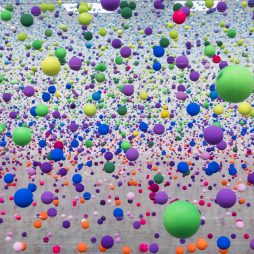
Nike Savvas: Purple Haze presents intimate screen prints and immersive large-scale installation and video work by Savvas from 2005–2026, each evocative of different places and...
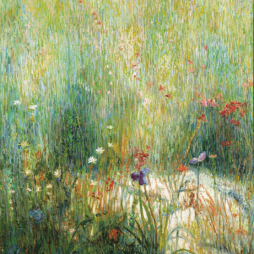
Although physically he is of modest stature, Zofrea has devoted much of his life to grand projects that have been conceived and executed on a...
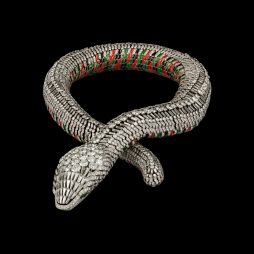
Through a multidisciplinary collaboration between Rotterdam-based curators, architect Paul Cournet of CLOUD and artist-designer Sabine Marcelis of Studio Sabine Marcelis, the exhibition explores the interplay...
Artificial intelligence will be used by young artists who started using it as kids on their phones. They will see it as a natural extension...

This year’s Biennale arrives under more complex circumstances than most. It is shaped by the profound loss of its curator, Koyo Kouoh (1967–2025), whose exhibition...
No artist creates in isolation. Every painting carries traces of the conversations, places and histories that shaped it, preserving within its surface a particular moment...
The weekend markets at Fairfield Showground have been one of Western Sydney’s great institutions for more than fifty years. Fresh fruit and vegetables, children’s clothes,...
In recent times, Yorgos Lanthimos has shifted toward photography, noting in a Guardian interview, 2026, that he needs respite, saying, “it might be a couple...